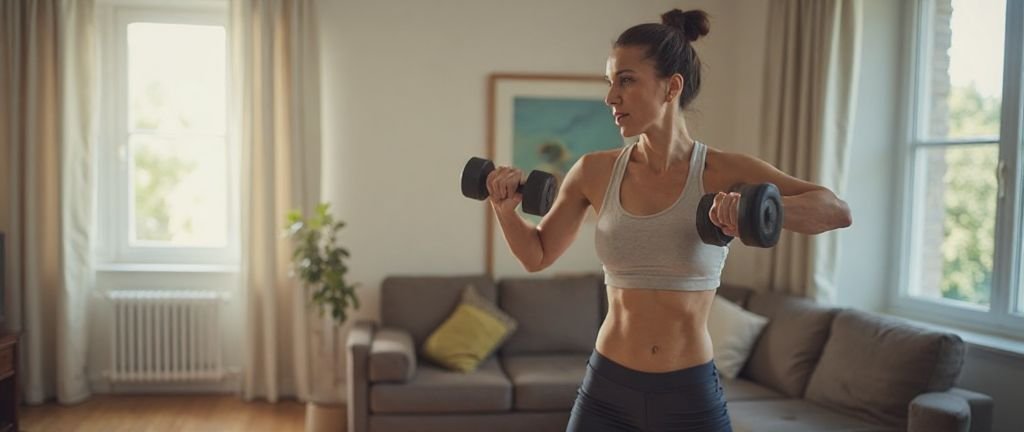
For decades, dumbbells have been sitting in gym corners and home workout spaces, often overlooked by women who’ve been told that cardio is the answer to everything. I’ve watched this shift dramatically over the past ten years, and honestly, this involves time.
The simple truth is that a pair of dumbbells might be the most versatile, accessible, and genuinely transformative piece of fitness equipment you’ll ever use.
What makes dumbbells particularly powerful for women extends beyond their ability to build strength, though they absolutely excel at that. They demand something from you that machines can’t copy: genuine control, stability, and a mind-muscle connection that translates directly into how you move through everyday life.
When you’re holding a dumbbell, there’s no assisted path, no predetermined range of motion. You, the weight, and your body have to figure out how to work together.
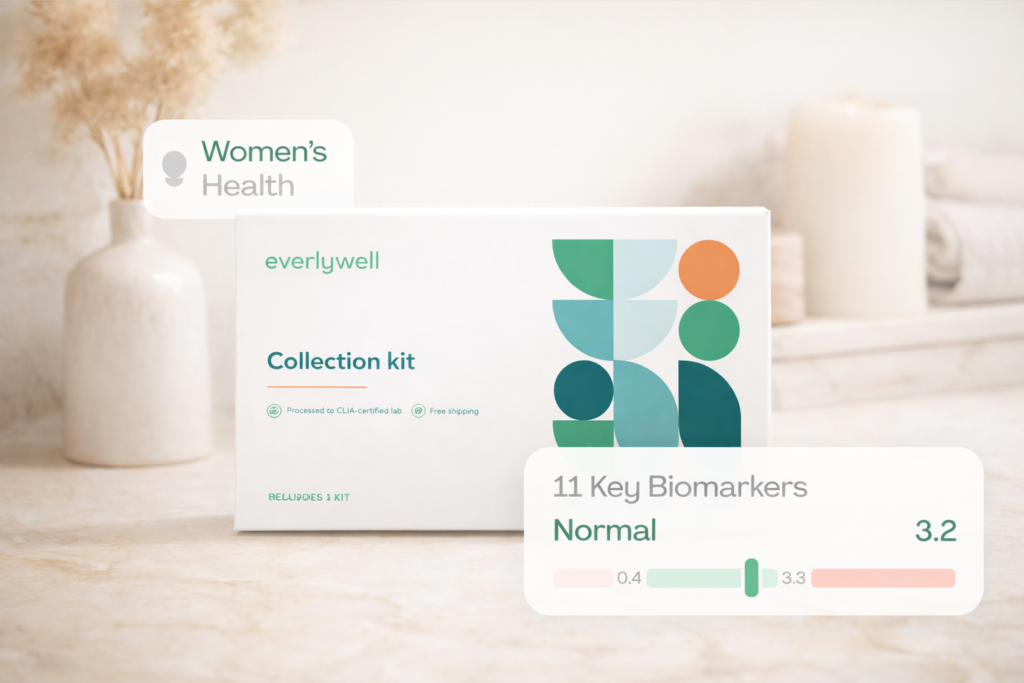
Everlywell 360 Full Body Test – 83 Biomarkers
Get a complete, high-level view of your health with one at-home test. This comprehensive panel measures 83 biomarkers across key health systems so you can spot trends, risks, and imbalances early.
- ✔ 83 biomarkers across metabolic, heart, thyroid, hormone & nutrient health
- ✔ CLIA-certified lab analysis
- ✔ Physician-reviewed results with clear explanations
- ✔ Simple at-home blood sample
FSA/HSA eligible • Comprehensive full-body insights
Understanding Why Dumbbells Work Differently for Women
The relationship between women and strength training has been complicated by decades of misinformation. I’ve heard countless women express fear about becoming “bulky” from lifting weights, and honestly, the physiology simply doesn’t support that concern.
Women typically have testosterone levels that are about 15 to 20 times lower than men, which means building significant muscle mass needs consistent, progressive training over months and years. A few weeks of moderate dumbbell work won’t create the dramatic muscle growth that many women fear.
What actually happens when women incorporate regular dumbbell training is far more interesting. Your muscle tissue becomes more effective at utilizing glucose, which supports metabolic health.
Your bones respond to the mechanical stress by increasing density, which becomes critically important as you age.
Your connective tissues strengthen, reducing injury risk in daily activities. And perhaps most noticeably, your posture improves as previously underused muscles in your back, shoulders, and core finally get the attention they’ve been craving.
The compound movements I’m about to share with you work many muscle groups simultaneously, creating what exercise physiologists call a systemic training effect. You’re strengthening your entire body to coordinate, stabilize, and produce force efficiently.
That’s the kind of strength that carries over into everything from carrying groceries to playing with your kids to maintaining independence as you age.
The Science of Progressive Adaptation
Your body is remarkably responsive to imposed demands, but only if those demands gradually increase. This principle, called progressive overload, is really the cornerstone of any effective training program.
Starting with dumbbells in the 3 to 5 kilogram range for upper body movements and 8 to 12 kilograms for lower body work gives most women a challenging but manageable entry point.
What matters most in the beginning is the quality of movement you’re establishing. I’ve watched women rush to heavier dumbbells before they’ve truly mastered the movement pattern, and it almost always leads to compensation patterns that limit long-term progress.
Your nervous system needs time to learn the motor patterns, your stabilizer muscles need to develop endurance, and your connective tissues need to adapt to new loading patterns. This typically takes about four to six weeks of consistent training.
The eccentric phase of each lift, that’s the lowering portion, deserves special attention because significant muscle damage and subsequent adaptation occurs there. Controlling the descent of a dumbbell for three to five seconds creates more time under tension than simply dropping the weight back to the starting position.
This controlled lowering also builds eccentric strength, which is particularly important for injury prevention during everyday movements like walking down stairs or lowering yourself into a chair.
Ten Movements That Transform How You Move
Bent-Over Row
The bent-over row stands out as one of the most functional upper body exercises you can perform because it directly counteracts the forward-hunched positioning that modern life encourages. When you spend hours looking at screens, driving, or cooking, your chest muscles shorten and your upper back muscles weaken and stretch.
This exercise reverses that pattern.
Starting with your feet hip-width apart, you’ll hinge at the hips and push your backside backward until your chest points toward the floor. The key here is maintaining what I call the “dinner plate visualization” where you imagine balancing a plate on your lower back throughout the movement.
Any rounding or excessive arching would send that plate tumbling.
With your knees slightly bent and arms extended holding dumbbells, you’ll row the weights toward your chest, keeping your elbows close to your sides. At the top of the movement, squeeze your shoulder blades together as if you’re trying to hold a pencil between them.
This squeezing action activates your rhomboids and middle trapezius muscles, which are often severely underdeveloped in women. Three sets of 10 to 13 repetitions with a weight that feels challenging by the final three reps builds genuine back strength while improving your posture throughout daily activities.
Goblet Squat
The goblet squat changed how I think about lower body training because it naturally encourages proper form through counterbalance. Holding a dumbbell vertically against your chest, you’ll stand with feet shoulder-width apart and toes pointing slightly outward.
As you inhale and begin lowering yourself, think about sitting back into an invisible chair as opposed to just bending your knees forward.
The descent should take about five seconds, much slower than most people naturally move. This controlled tempo builds tremendous strength in the eccentric phase while allowing you to find the optimal depth for your person hip structure.
Your thighs should reach parallel to the floor if mobility allows, though some women will comfortably descend deeper while others need more time to develop that range.
As you exhale and push through your feet to stand, focus on driving through your heels and squeezing your glutes at the top. This glute activation at the peak contraction is where many women miss significant benefit by rushing through repetitions.
Three sets of 10 reps, performed twice weekly, builds remarkable lower body strength while demanding genuine core stability throughout the movement.
Shoulder Press
Overhead pressing movements deserve a spot in every woman’s training program because shoulder strength supports countless daily activities while protecting the vulnerable rotator cuff complex. Standing with feet shoulder-width apart, you’ll hold dumbbells at shoulder height with palms facing forward and elbows out to the sides.
The core engagement here is crucial. Before you press anything overhead, draw your lower ribs toward your pelvis to create tension through your midsection.
This prevents excessive arching in your lower back as you press upward.
Exhale as you drive the dumbbells overhead until your arms are straight, pause for a full second at the top, then inhale as you lower back to shoulder height with control.
What I’ve noticed with shoulder presses is that women often underestimate their pressing strength because they’ve simply never trained it. Starting conservatively with lighter weights makes sense, but you’ll likely progress faster on this movement than you expect.
Three sets of 10 repetitions with proper core engagement builds shoulder stability that translates directly into improved posture and reduced neck tension.
Reverse Lunge
The reverse lunge provides all the benefits of forward lunges while being significantly gentler on your knees. This matters particularly as you age or if you’ve experienced any knee discomfort with traditional lunging patterns.
Standing with legs hip-width apart and dumbbells at your sides, you’ll step one foot back about two feet and lower your back knee slowly toward the ground.
The front knee should track in line with your front foot, not collapsing inward or pushing too far forward. Your chest stays upright and pointed forward throughout the movement, which demands substantial core engagement to maintain position.
Push through your front heel to return to the starting position, then repeat on the opposite leg.
The unilateral nature of lunges addresses something really important that bilateral movements like squats can mask: strength imbalances between your left and right sides. Most women find out about they have a stronger and weaker leg, often correlating with their dominant side.
Working each leg independently forces the weaker side to catch up as opposed to allowing the stronger side to compensate.
Three sets of six reps per leg with heavier dumbbells, or 12 reps per leg with moderate weight, builds remarkable single-leg stability.
Romanian Deadlift
The Romanian deadlift teaches proper hip hinge mechanics, which might be the single most important movement pattern for protecting your lower back during everyday activities. Standing with feet shoulder-width apart, you’ll hold dumbbells in front of your thighs with palms facing your body.
The movement begins by hinging at your hips and bending your knees slightly as you lower the dumbbells toward the ground.
Your back must stay flat throughout because any rounding in your spine under load creates injury risk. The dumbbells should travel close to your legs, almost brushing your shins as they descend.
You’ll feel significant tension building in your hamstrings and glutes, which is exactly what should happen.
Once the dumbbells reach about mid-shin height or you feel a strong stretch in your hamstrings, push your hips forward and squeeze your glutes to return to standing.
This glute squeeze at the top is critical. So many women finish the movement without fully extending their hips, missing the peak contraction where your glutes do their most important work.
Pausing briefly at the top before beginning the next repetition confirms you’re achieving full hip extension.
Three sets of 10 reps builds posterior chain strength that supports everything from athletic performance to bone density.
Chest Press
The horizontal pressing movement of the chest press develops pushing strength while allowing greater range of motion than barbell variations. Lying on your back with knees bent and feet flat on the floor, you’ll hold dumbbells by your chest with elbows bent and upper arms resting on the floor.
This starting position allows your chest to stretch under load, which enhances the training stimulus.
As you exhale, press the weights straight up until your arms are fully extended, pause for one second, then inhale as you lower back to the starting position. The key here is maintaining contact between your lower back and the floor throughout the movement.
If your lower back arches significantly off the floor, you’re likely using too much weight or not maintaining proper core engagement.
Chest strength supports all pushing movements in daily life and helps maintain shoulder joint health by balancing the pulling work you’re doing with rows. Three sets of 10 repetitions builds pressing strength without requiring a bench, making this exercise particularly valuable for home training.
Bicep Curl
The bicep curl isolates the front arm muscles, developing both strength and definition in your upper arms. Holding dumbbells at your sides with palms facing inward and arms straight down, you’ll stand with feet shoulder-width apart and heels driven into the ground.
A slight knee bend and braced core prevents momentum from assisting the movement.
Lift one dumbbell toward your shoulder, rotating your arm so your palm faces upward as it moves. This rotation, called supination, fully activates the bicep muscle through its finish range of motion.
Lower with control to the starting position, then repeat with the opposite arm.
Exhaling while lifting and inhaling while lowering maintains proper breathing rhythm.
What makes this movement valuable beyond aesthetics is grip strength development. Research increasingly shows that grip strength correlates with overall health markers, mortality risk, and even cognitive function in aging women.
The sustained isometric contraction required to hold and control dumbbells builds forearm and grip strength alongside bicep development.
Three sets of 10 to 12 repetitions with moderate weight provides enough stimulus without overtraining these smaller muscle groups.
Russian Twist
The Russian twist introduces rotational core work, which is often completely neglected in traditional training programs despite being essential for functional movement. Sitting on the floor in a V position with your torso and legs elevated, you’ll engage your abs to hold this position while holding a dumbbell in front of you at chest height.
Slowly twist your waist from left to right, maintaining the V position throughout. The emphasis here should be on deliberate, controlled motion as opposed to speed. Many women rush through this movement, using momentum as opposed to genuine core strength.
Keeping the rotation range moderate prevents excessive stress on your spine while ensuring your obliques do the work.
This rotational strength supports countless daily movements: reaching across your body, getting in and out of cars, playing sports, even vacuuming. Your obliques also play a crucial role in spinal stability during other exercises.
Three sets of 12 reps, where one rep equals a twist to each side, builds oblique strength and endurance.
Squat to Overhead Press
This dynamic compound movement combines lower and upper body work into a single, demanding exercise that challenges cardiovascular capacity alongside muscular strength. Holding dumbbells just above each shoulder, you’ll squat down by sending your bodyweight back through your heels.
Lower for about five seconds until your glutes are slightly lower than your knees if mobility allows.
Thrust back to the starting position, squeezing your glutes at the top, then immediately lift the dumbbells toward the ceiling in an overhead press. Lower the dumbbells back to shoulder height before beginning the next squat.
The finish pressing portion happens between squats, creating a natural rhythm to the movement.
What makes this exercise particularly valuable is the time efficiency: you’re training major muscle groups in both your lower and upper body while elevating your heart rate significantly. The metabolic demand of this movement is substantial, creating an afterburn effect where your body continues burning elevated calories for hours after training.
Three sets of 10 to 15 repetitions feels genuinely challenging by the final set.
Renegade Row
The renegade row represents an advanced compound movement that combines plank position stability with rowing strength. Beginning in a push-up position with your hands on dumbbells and feet wider than shoulder-width for stability, you’ll maintain a rigid plank position throughout the movement.
Row one dumbbell toward your hip while preventing any torso rotation. This anti-rotation demand is where your core does its most important work.
The challenge is resisting the urge to twist as you lift the weight.
Lower the dumbbell back to the floor with control, then repeat on the opposite side.
This exercise builds back strength, core stability, and shoulder girdle endurance simultaneously. I recommend mastering the other nine movements before incorporating renegade rows into your routine because they’re genuinely demanding.
Three sets of 8 to 10 reps per side with moderate dumbbells provides enough training stimulus without compromising form because of fatigue.
Designing Your Training Approach
Building these movements into a cohesive training program needs thoughtful consideration of frequency, intensity, and recovery. Training each major movement pattern at least twice weekly provides enough stimulus for adaptation without excessive fatigue.
For beginners, starting with 2 to 3 sets of 8 to 12 reps per exercise establishes work capacity while allowing focus on movement quality.
Rest periods between sets genuinely matter more than most training advice suggests. Recent research shows that 90-second rest intervals for strength-focused work significantly improves performance and recovery compared to the 30 to 45 second rests often recommended. This longer rest allows your phosphagen energy system to partially recover, enabling you to maintain better form and handle suitable loads across all sets.
The concept of progressive overload drives continued adaptation over months and years. This might mean adding one or two reps to each set, increasing the dumbbell weight by the smallest increment available, or slowing down the tempo to increase time under tension.
What doesn’t work is doing the same workout with the same weights indefinitely while expecting continued results.
Navigating Common Obstacles
Several predictable challenges emerge when women begin dumbbell training, and understanding them beforehand helps you navigate more successfully. The first is choosing suitable starting weights.
Most women initially choose dumbbells that are too light because they’ve been conditioned to be cautious.
A weight that feels challenging during the last 2 to 3 reps of a set but allows controlled movement throughout is appropriate. If you could easily finish 5 more reps, the weight is too light.
The fear of becoming bulky persists despite scientific evidence to the contrary. Building significant muscle mass needs consistent progressive training, substantial caloric surplus, and hormonal profiles that most women simply don’t have.
What you’ll actually experience is increased muscle definition, improved body composition, and enhanced functional strength.
Hormonal fluctuations throughout your menstrual cycle affect strength perception and recovery capacity in ways that male-focused training advice ignores. During the follicular phase (roughly days 1 to 14 of your cycle), many women experience improved strength and recovery, making this an optimal time for heavier training.
During the luteal phase (roughly days 15 to 28), fatigue increases and recovery slows, suggesting slightly reduced training intensity or volume makes sense.
For women over 40, particularly those experiencing perimenopause or menopause, dumbbell training becomes even more valuable but needs some adjustments. Joint sensitivity often increases because of hormonal changes affecting connective tissue, making proper warm-ups essential.
Bone density preservation becomes increasingly important, and the mechanical loading from resistance training provides stimulus that cardio cannot copy.
Many women in this age group report that consistent strength training significantly reduces joint discomfort they’d previously accepted as inevitable.
People Also Asked
Can women build muscle with just dumbbells?
Yes, women can absolutely build muscle with just dumbbells. Dumbbells provide enough resistance to stimulate muscle growth when used with progressive overload.
You’ll need to gradually increase the weight, reps, or sets over time to continue seeing muscle development.
Most women can make significant strength and muscle gains using dumbbells ranging from 5 to 25 kilograms.
What weight dumbbells should women start with?
Most women should start with 3 to 5 kilogram dumbbells for upper body exercises like shoulder presses and bicep curls, and 8 to 12 kilogram dumbbells for lower body exercises like goblet squats and Romanian deadlifts. The weight should feel challenging during the last few reps of each set while still allowing you to maintain proper form throughout the movement.
How often should women do dumbbell workouts?
Women should perform dumbbell workouts at least twice per week to see meaningful strength gains and muscle development. Training each major muscle group with 48 to 72 hours of recovery between sessions allows adequate time for muscle repair and adaptation.
Many women find that three full-body dumbbell sessions per week provides optimal results without overtraining.
Do goblet squats build glutes?
Goblet squats do build glutes, particularly when performed with proper depth and form. The glute activation happens most intensely during the upward phase of the squat and at the top position when you squeeze your glutes.
For most glute development, focus on pushing through your heels and pausing at the top of each rep to fully contract the glute muscles.
Can dumbbells help with bone density?
Dumbbells can significantly help with bone density improvement, especially for women over 40. The mechanical stress from weight-bearing exercises stimulates bone cells to increase density through a process called bone remodeling.
Studies show that consistent resistance training with weights can increase bone mineral density by 1 to 3 percent annually, which is substantial for preventing osteoporosis.
What are compound dumbbell exercises?
Compound dumbbell exercises work many muscle groups and joints simultaneously in a single movement. Examples include goblet squats (which work quads, glutes, hamstrings, and core), bent-over rows (which work back, biceps, and core), and squat to overhead presses (which work legs, core, and shoulders).
These exercises are more time-efficient and create greater metabolic demand than isolation exercises.
How long does it take to see results from dumbbell training?
Most women notice initial strength improvements within 2 to 3 weeks of consistent dumbbell training, though these early gains are primarily neurological adaptations. Visible muscle definition typically becomes noticeable after 6 to 8 weeks of regular training.
Significant body composition changes usually take 12 to 16 weeks with proper nutrition and progressive training.
Should women train to failure with dumbbells?
Women generally don’t need to train to finish muscle failure with dumbbells. Stopping 1 to 2 reps before failure provides enough stimulus for muscle growth while reducing injury risk and allowing for better recovery.
Training to failure occasionally can be useful for advanced lifters, but consistently training to failure increases fatigue and recovery time without necessarily improving results.
Key Takeaways
The ten essential dumbbell exercises (bent-over row, goblet squat, shoulder press, reverse lunge, Romanian deadlift, chest press, bicep curl, Russian twist, squat to overhead press, and renegade row) provide comprehensive full-body training that addresses all major movement patterns and muscle groups.
Starting with suitable weights (3 to 5 kilograms for upper body, 8 to 12 kilograms for lower body), performing 2 to 3 sets of 8 to 12 reps, and training at least twice weekly establishes the foundation for long-term strength development.
Progressive overload through gradually increasing weight, reps, or time under tension drives continued adaptation, while 90-second rest periods between sets support better performance and recovery than shorter intervals.
Women’s physiology, including lower testosterone levels and hormonal cycle variations, influences training response but doesn’t limit strength development. Consistent, progressive training produces remarkable results regardless of age or starting point.
These compound movements build functional strength that translates directly into improved daily life activities, enhanced bone density, better metabolic health, and reduced injury risk.
Everlywell 360 Full Body Test – 83 Biomarkers
Get a complete, high-level view of your health with one at-home test. This comprehensive panel measures 83 biomarkers across key health systems so you can spot trends, risks, and imbalances early.
- ✔ 83 biomarkers across metabolic, heart, thyroid, hormone & nutrient health
- ✔ CLIA-certified lab analysis
- ✔ Physician-reviewed results with clear explanations
- ✔ Simple at-home blood sample
FSA/HSA eligible • Comprehensive full-body insights
Find out our Recommended Home Workout Essentials for Women; visit: https://www.vitalwomenwellness.com/womens-home-workout-essentials/
Disclaimer
The information contained in this post is for general information purposes only. The information is provided by 10 Essential Dumbbell Exercises Every Woman Should Try and while we endeavor to keep the information up to date and correct, we make no representations or warranties of any kind, express or implied, about the completeness, accuracy, reliability, suitability or availability with respect to the website or the information, products, services, or related graphics contained on the post for any purpose.