
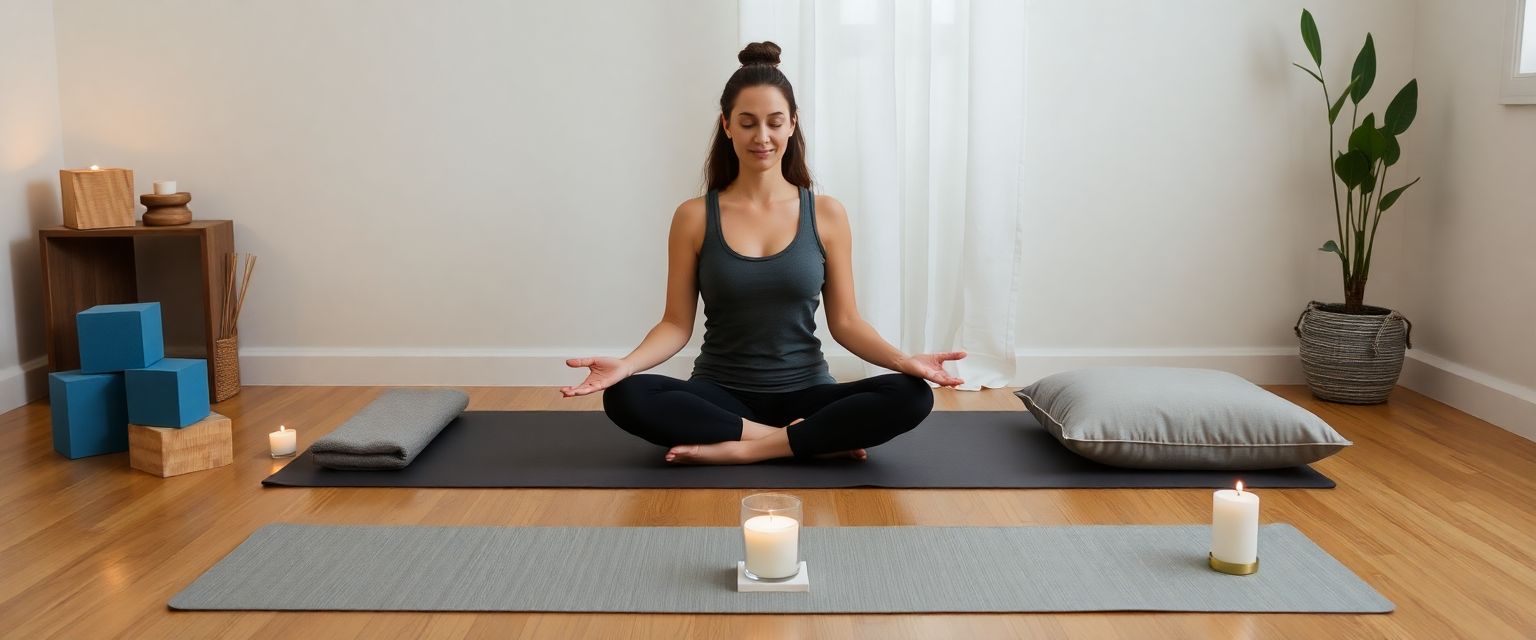
1. The Foundation: A High-Quality Yoga Mat
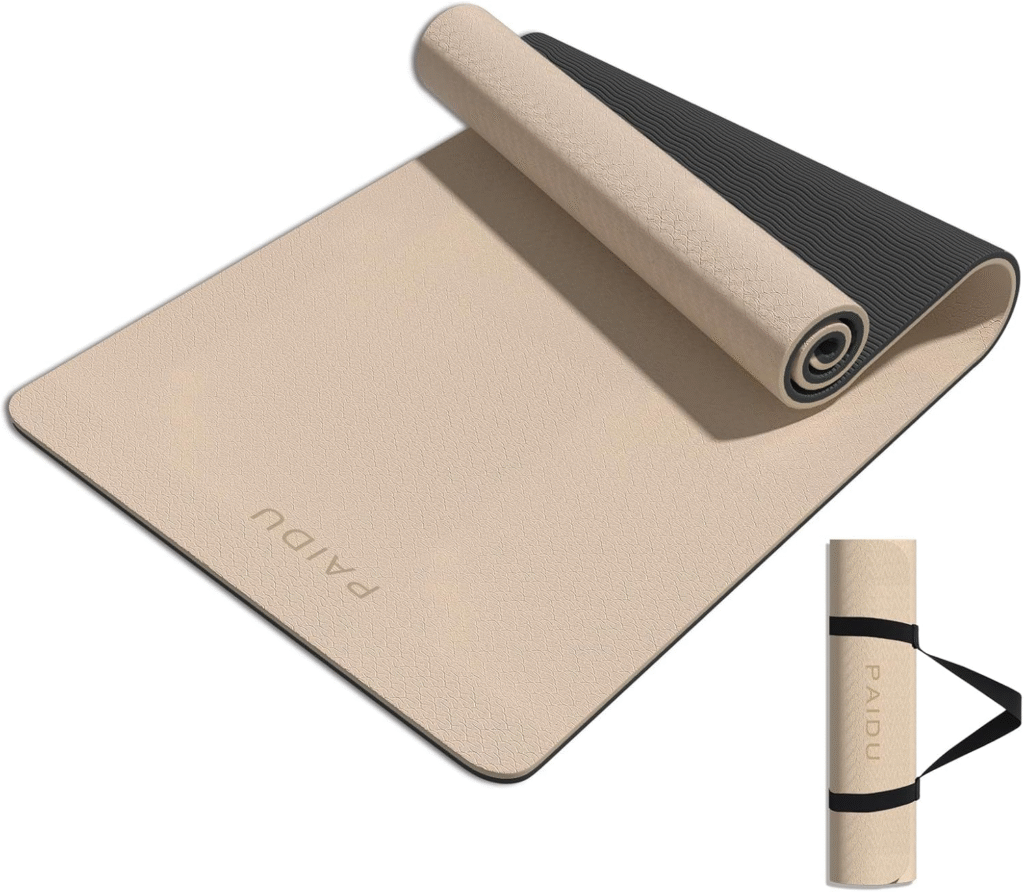
A good yoga mat is the cornerstone of any yoga practice. It provides the necessary cushioning and grip for your asanas, allowing you to focus on your practice without worrying about slipping or discomfort.
When choosing a yoga mat, consider factors like material, thickness, and texture.
Eco-friendly materials like natural rubber or sustainable cork offer excellent traction and durability. These materials are also kinder to the environment, aligning with the yogic principle of ahimsa (non-harm).
The thickness of your mat matters too. If you have sensitive joints, a thicker mat (around 5-6mm) provides extra cushioning.
However, if you prefer more stability for standing poses, a thinner mat might be better suited.
Texture plays a crucial role in preventing slippage, especially during sweaty practices. Some mats feature raised patterns or textured surfaces that enhance grip.
I’ve found that investing in a high-quality mat makes a significant difference in my practice. Don’t only focus on comfort, this involves creating a safe, stable foundation that allows me to fully immerse myself in the poses and breathwork.
Recommended Product: PAIDU Yoga Mat
2. Meditation Cushions: Your Gateway to Comfort
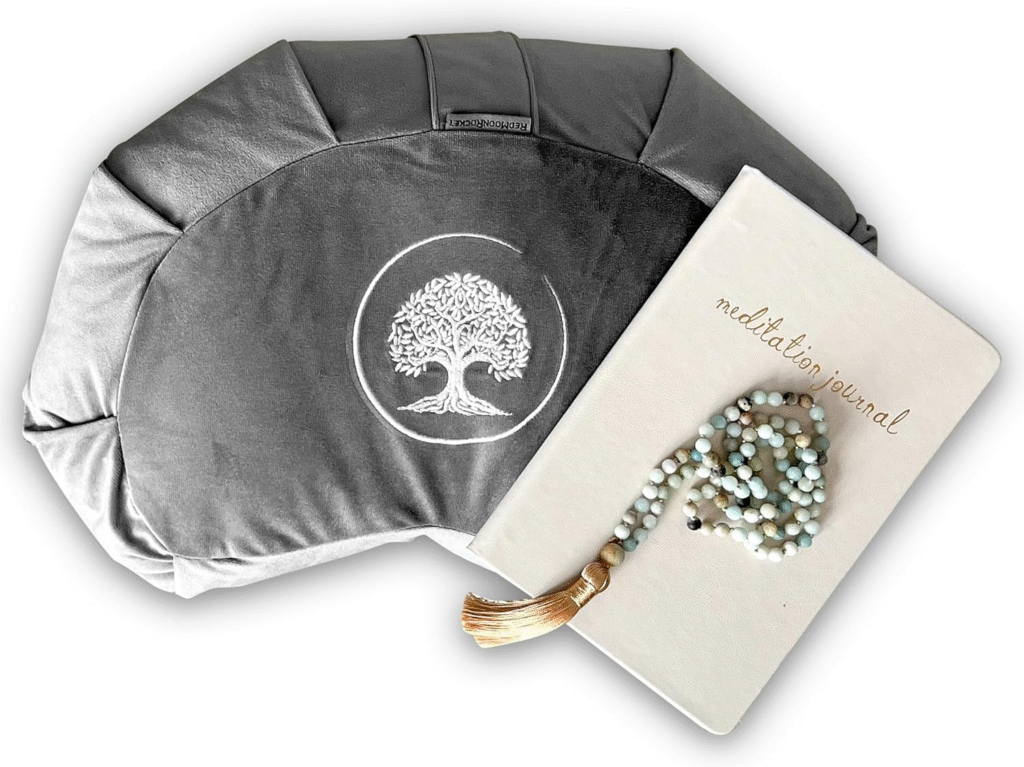
Maintaining proper posture during meditation is crucial for both comfort and effectiveness. A meditation cushion, also known as a zafu, can help you achieve the ideal seated position, allowing for better alignment of your spine and easier breathing.
These cushions come in various shapes and sizes, filled with materials like buckwheat hulls or foam. The most common shapes are round and crescent.
Round cushions are versatile and work well for various sitting positions.
Crescent-shaped cushions provide excellent support for the hips and lower back, allowing for longer periods of comfortable sitting.
When choosing a meditation cushion, consider your height and flexibility. Taller people or those with less hip flexibility might benefit from a higher cushion.
The firmness of the cushion is also important – it should be firm enough to provide support but soft enough for comfort.
I personally prefer a crescent-shaped cushion filled with buckwheat hulls. The shape contours to my body, and the buckwheat filling allows me to adjust the cushion’s height and firmness by shifting the hulls around.
Using a meditation cushion has transformed my practice. It’s eliminated the discomfort and distraction of an aching back or numb legs, allowing me to focus more deeply on my breath and mindfulness.
Recommended Product: RedMoonRocket Meditation Cushion
3. Singing Bowls: Harmonizing Your Practice
Singing bowls have been used in meditation practices for centuries, and for good reason. The rich, resonant tones produced by these bowls can help calm the mind and induce a state of relaxation.
Whether used at the beginning of your practice to set the mood or at the end to signal closure, singing bowls can add a beautiful auditory dimension to your stress-relief routine.
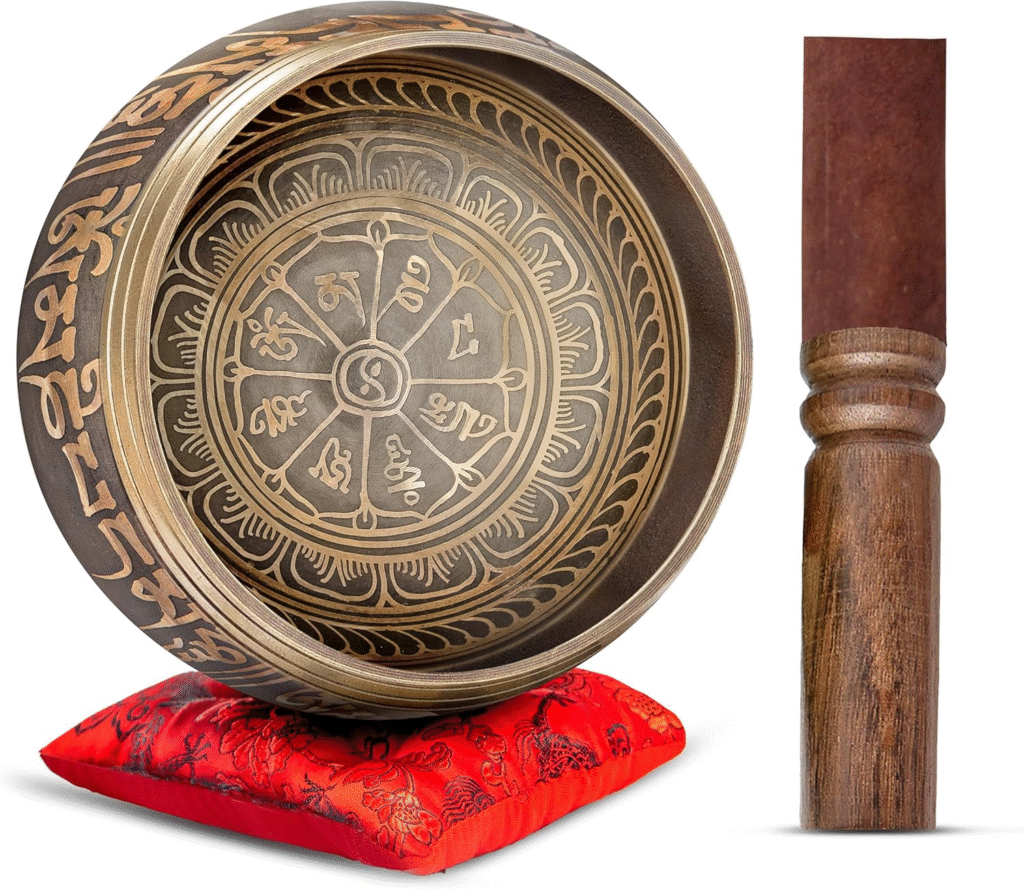
Singing bowls come in various sizes and materials, each producing a unique sound. Traditional Tibetan singing bowls are made of a bronze alloy containing several metals.
Modern versions are often made of crystal or quartz.
The size of the bowl affects its pitch – larger bowls produce deeper tones, while smaller ones create higher pitches.
To use a singing bowl, gently strike the rim with a mallet and then run the mallet around the bowl’s edge to create a sustained, soothing sound. As you listen to the vibrations, focus on your breath and allow the sound to wash over you, melting away tension.
The science behind singing bowls is fascinating. The vibrations they produce can help synchronize brain waves, promoting relaxation and reducing stress.
Some practitioners believe that different tones can affect different parts of the body or energy centers.
I’ve incorporated a singing bowl into my daily meditation practice, and the difference is noticeable. The sound helps me transition from the busyness of the day into a calm, meditative state.
It’s become a signal to my mind and body that it’s time to relax and let go of stress.
Recommended Product: Tibetan Singing Bowl Set Authentic
4. Essential Oils: Aromatherapy for Relaxation
The power of scent in influencing our mood and state of mind is well-documented. Essential oils can be a valuable addition to your stress-relief toolkit, helping to create a calming atmosphere for your practice.
Some essential oils particularly renowned for their relaxing properties include:
- Lavender: Known for its calming and sleep-promoting effects
- Chamomile: Helps reduce anxiety and promote relaxation
- Frankincense: Often used in meditation to deepen breathing and calm the mind
- Bergamot: Uplifting and stress-reducing
- Ylang-ylang: Promotes relaxation and can help lower blood pressure
You can use essential oils in various ways:
Adding a few drops to a diffuser during your practice fills the room with a calming scent. This method is great for creating an overall relaxing atmosphere.
Applying diluted oils to your pulse points before meditation allows you to carry the scent with you. Always dilute essential oils with a carrier oil like coconut or jojoba oil before applying to the skin.
Placing a drop on your yoga mat creates a subtle, grounding scent that stays with you throughout your practice.
Keep in mind that essential oils are potent and should be used with care. Always perform a patch test before use, as some people may be sensitive to certain oils.
Pregnant women, children, and those with certain health conditions should ask a healthcare provider before using essential oils.
I’ve experimented with various essential oils in my practice and found that lavender works best for me during evening sessions, while citrus scents like bergamot are great for morning practices when I need a bit of an energy boost along with stress relief.
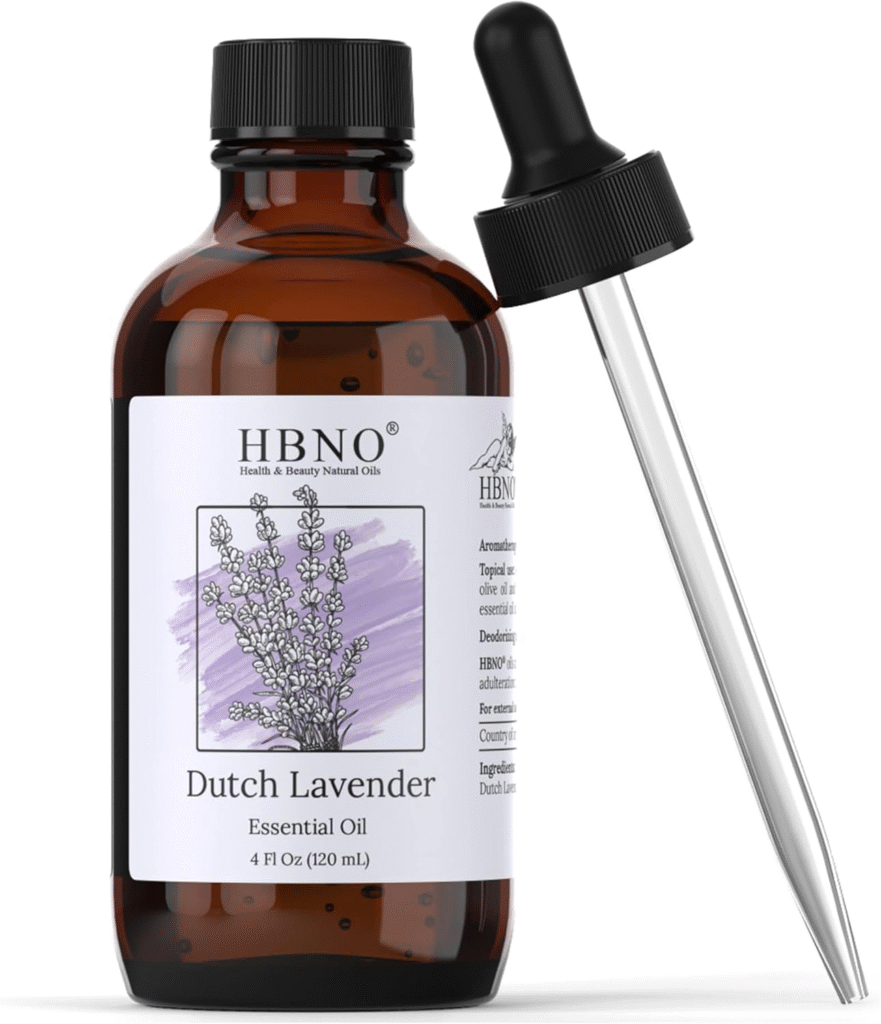
Recommended Product: HBNO California Bottled Dutch Lavender Essential Oil
5. Yoga Props: Enhancing Comfort and Alignment
Yoga props are invaluable tools for practitioners of all levels. They can help you maintain proper alignment, prevent injury, and make challenging poses more accessible.
Using props isn’t a sign of weakness, it’s a smart way to honor your body’s current capabilities while gradually building strength and flexibility.
Some essential yoga props include:
Yoga Blocks
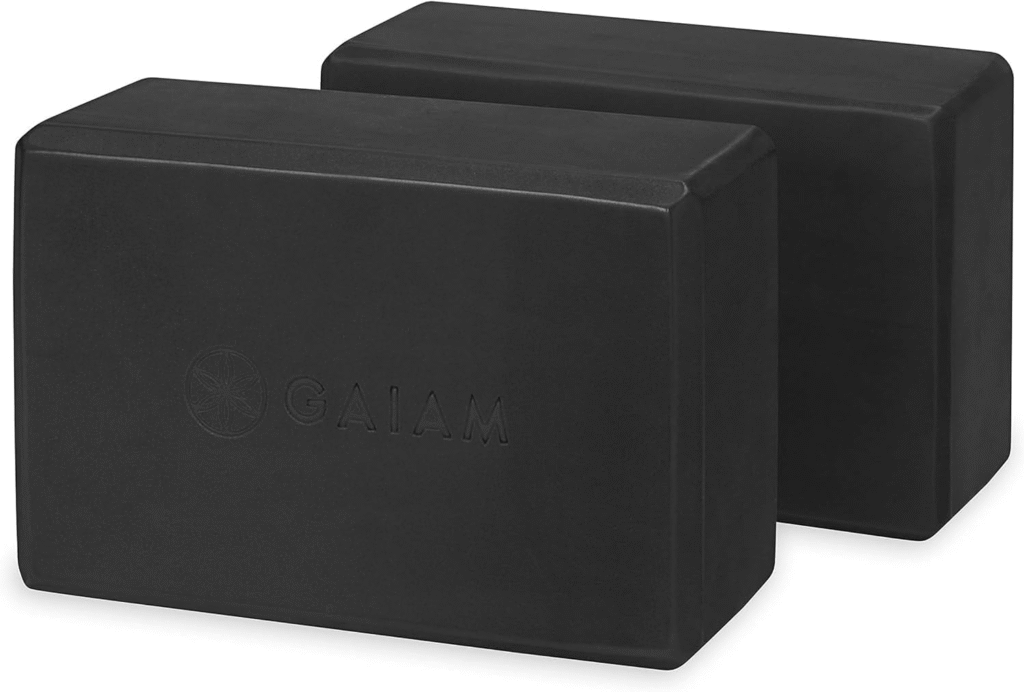
These versatile props can bring the floor closer to you in standing poses or provide support in seated postures. Blocks come in various materials like foam, cork, or wood.
Foam blocks are lightweight and affordable, making them great for beginners.
Cork and wood blocks are heavier and more stable, ideal for more advanced practices.
In standing poses like Triangle Pose (Trikonasana), placing a block under your lower hand can help you maintain proper alignment if you can’t comfortably reach the floor. In seated poses like Half Pigeon (Ardha Kapotasana), a block under the hip of your bent leg can ease pressure on the knee.
Recommended Product: Gaiam Yoga Block
Yoga Straps
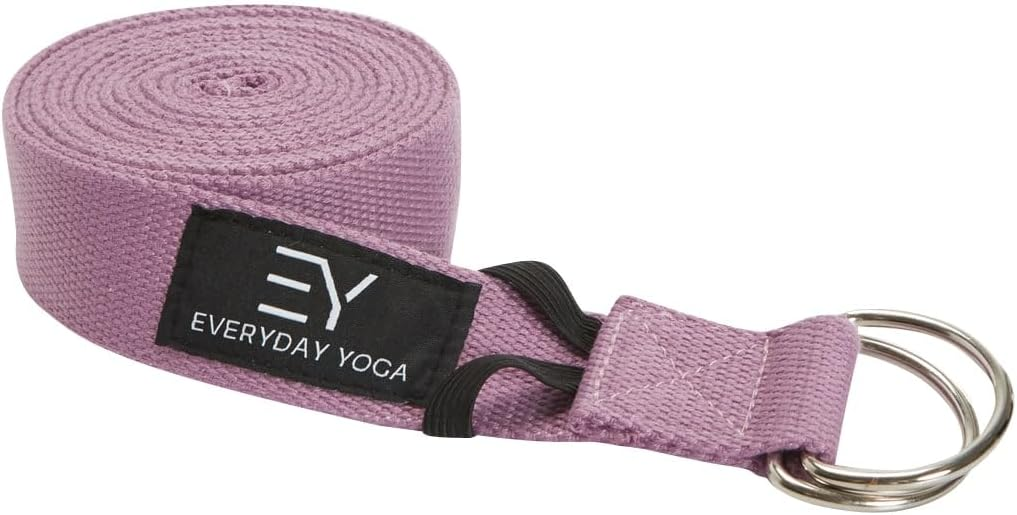
Straps are excellent for improving flexibility and assisting in poses where you can’t quite reach your feet or hands. They’re particularly useful in poses that need you to bind or clasp your hands behind your back.
In seated forward folds, looping a strap around your feet allows you to get the benefits of the stretch even if you can’t reach your toes. In poses like Cow Face Pose (Gomukhasana), a strap can help you connect your hands behind your back if your shoulders are tight.
Recommended Product: Everyday Yoga Super Strong Strap
Bolsters
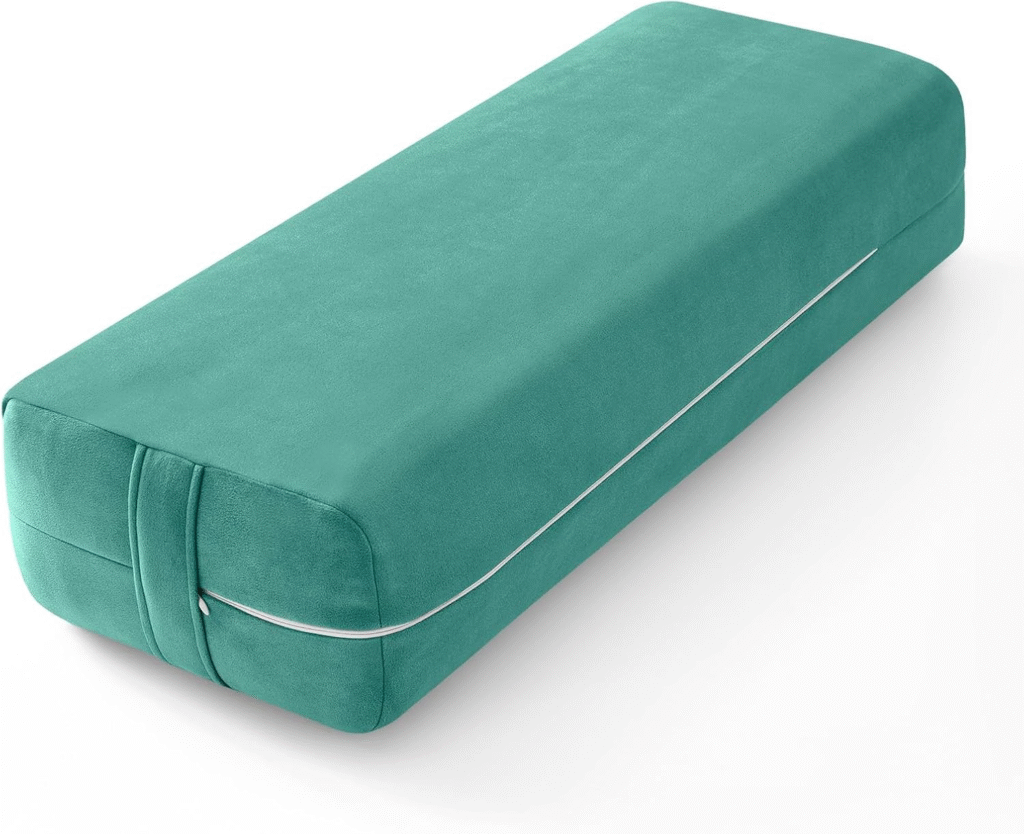
These long, firm cushions are perfect for restorative yoga practices, providing support and comfort in reclined poses. Bolsters come in various shapes, including rectangular, cylindrical, and pranayama bolsters designed specifically for breathwork.
In restorative poses like Supported Fish Pose, a bolster under your spine can open your chest and promote deeper breathing. In Savasana, a bolster under your knees can ease lower back tension.
Recommended Product: Wellsin Rectangular Yoga Bolster
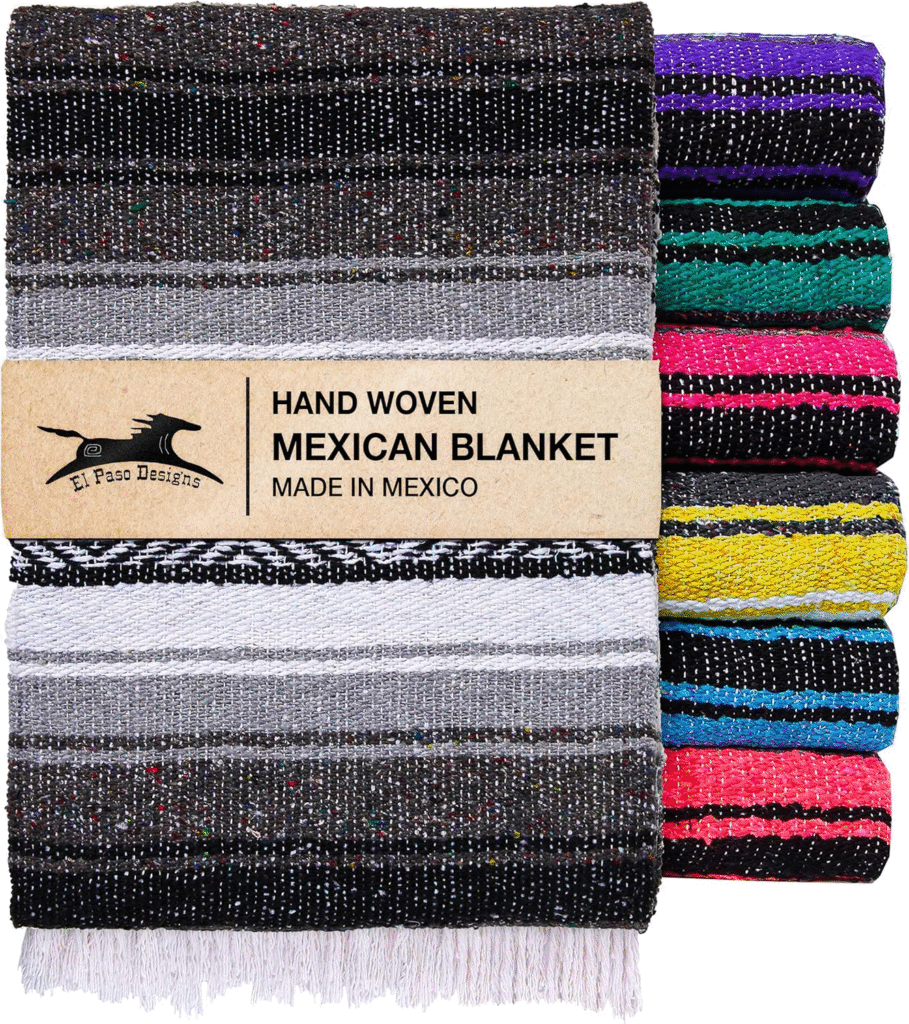
Yoga Blankets
Blankets are incredibly versatile props. They can be folded to provide height in seated poses, rolled for support in backbends, or used for warmth during relaxation.
In seated meditation, a folded blanket under your sit bones can help tilt your pelvis forward, promoting a more comfortable, aligned spine. In Shoulderstand, folded blankets under your shoulders protect your neck and help you find the fix alignment.
I’ve found that incorporating props into my practice has allowed me to explore poses more deeply and safely. They’ve helped me understand proper alignment and gradually work towards more challenging variations of poses.
Recommended Product: El Paso Designs Mexican Yoga Blanket
6. Eye Pillows: Soothing Sensory Relief
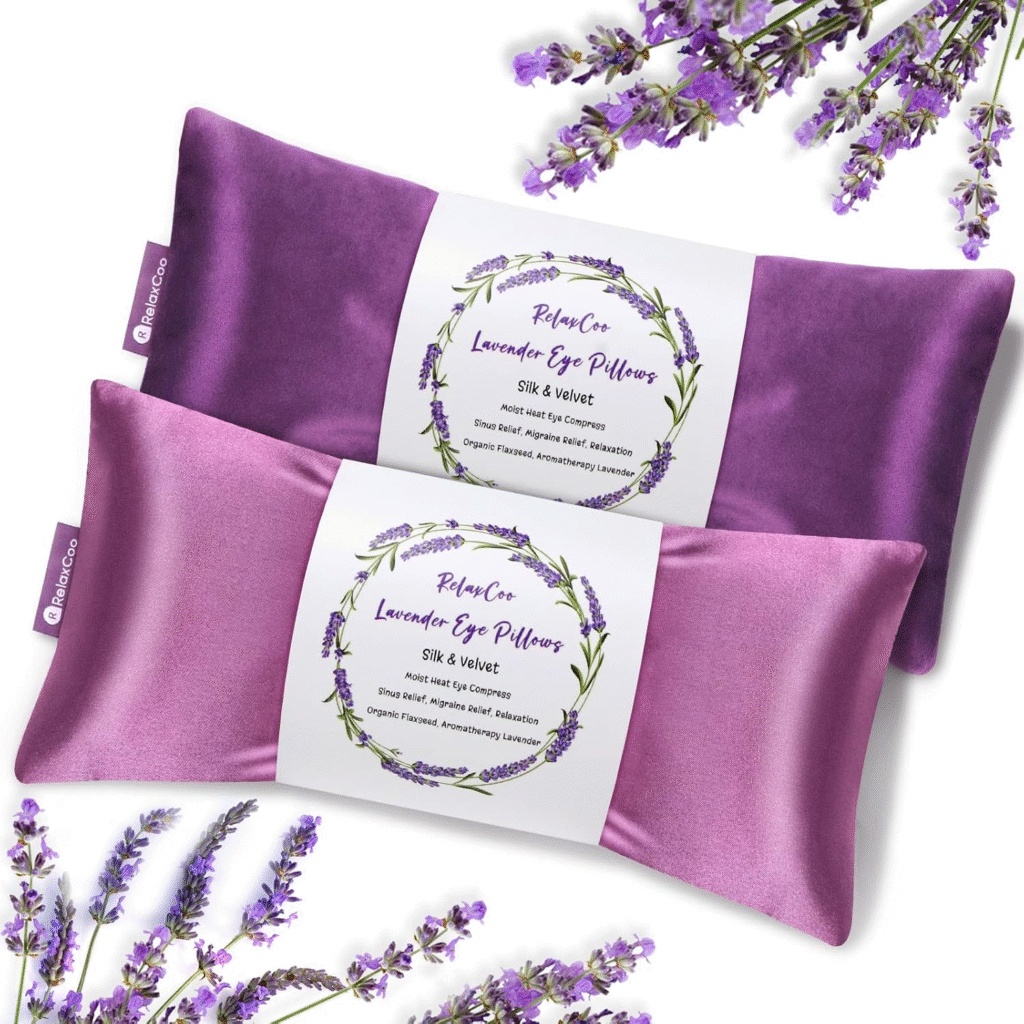
An often-overlooked tool in the stress-relief arsenal is the humble eye pillow. These small, weighted pillows are typically filled with flax seeds or rice and sometimes infused with calming scents like lavender.
When placed over your eyes during savasana or meditation, eye pillows provide several benefits:
- Gentle pressure that can help relieve tension in the face and eyes
- Darkness that encourages deeper relaxation by blocking out visual stimuli
- Cooling effect (if refrigerated before use) that can soothe tired eyes
- Aromatherapy benefits if scented
The weight of the eye pillow stimulates the vagus nerve, which plays a crucial role in the parasympathetic nervous system – the system responsible for the “rest and digest” state. This stimulation can help lower heart rate and blood pressure, promoting a deeper state of relaxation.
When choosing an eye pillow, consider the following:
- Fill material: Flax seeds are popular because of their ability to conform to the contours of your face. Rice is another common option.
- Cover material: Soft, natural fabrics like silk or cotton are gentle on the skin.
- Scent: While lavender is common, some pillows come unscented or with other calming aromas like chamomile.
- Size and weight: Ensure the pillow covers your eyes comfortably without being too heavy.
I’ve found that using an eye pillow during savasana or before bed significantly enhances my relaxation. The gentle pressure and darkness help me turn my focus inward more easily, leading to a deeper meditative state.
Recommended Product: RelaxCoo Lavender Eye Pillow
7. Meditation Bench: An Alternative to Cushions
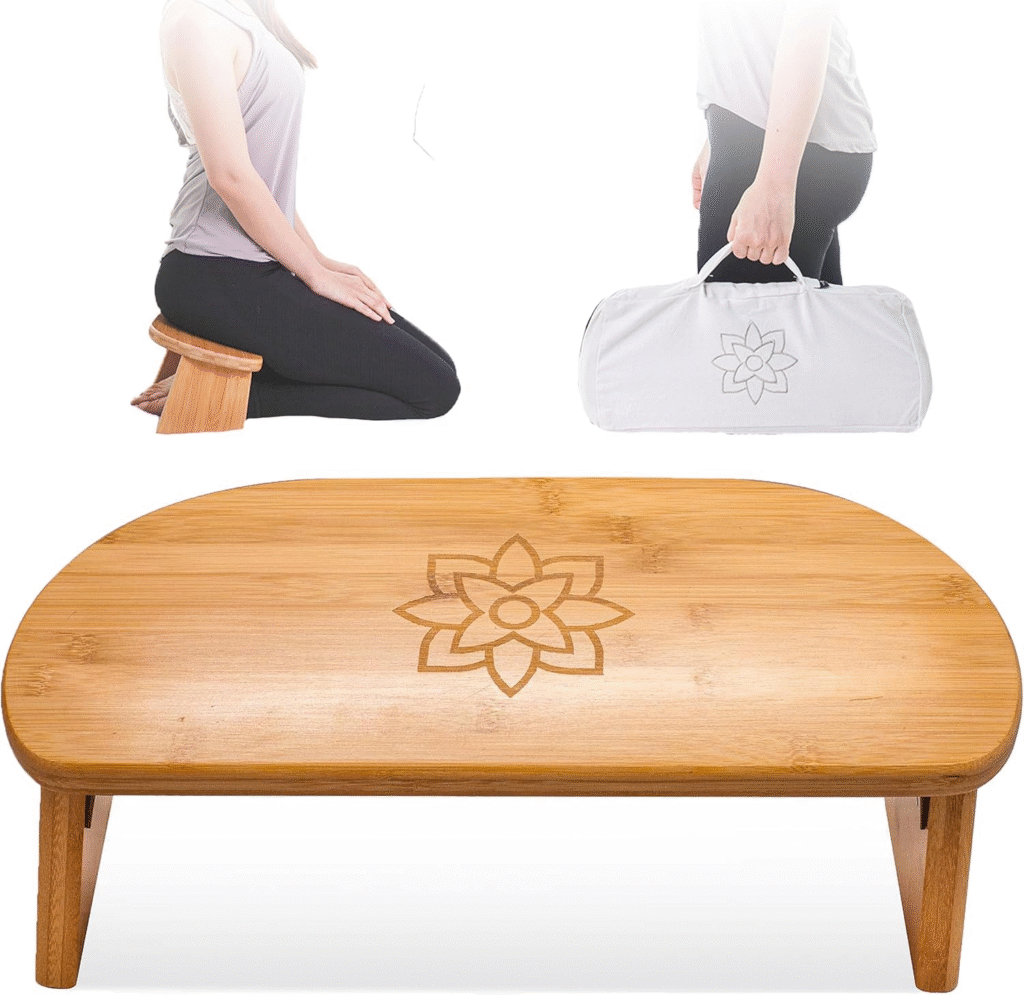
For those who find cross-legged sitting uncomfortable, a meditation bench can be a game-changer. These benches allow you to kneel with your bottom resting on the seat, taking pressure off your ankles and knees while maintaining a straight spine.
Meditation benches come in various designs, including:
- Fixed benches: These have a set height and angle.
- Adjustable benches: Allow you to change the height or angle to suit your body.
- Folding benches: Ideal for travel or storage in small spaces.
When choosing a meditation bench, consider:
- Height: Your hips should be higher than your knees when seated.
- Width: Ensure it’s wide enough to support your sit bones comfortably.
- Angle: A slight forward tilt helps maintain proper spine alignment.
- Material: Common options include wood (durable but hard) or padded tops (more comfortable but less traditional).
Using a meditation bench offers several benefits:
- Reduces pressure on knees and ankles
- Promotes proper spinal alignment
- Can be more comfortable for longer meditation sessions
- May be easier for people who have limited flexibility
I was skeptical about meditation benches at first, preferring traditional cushions. However, after trying one during a long meditation retreat, I was amazed at how much more comfortable it was for extended sitting.
It allowed me to focus on my meditation without the distraction of aching knees or a sore back.
Recommended Product: Mindful Modern Folding Meditation Bench
8. Mindfulness Journal: Reflecting on Your Journey
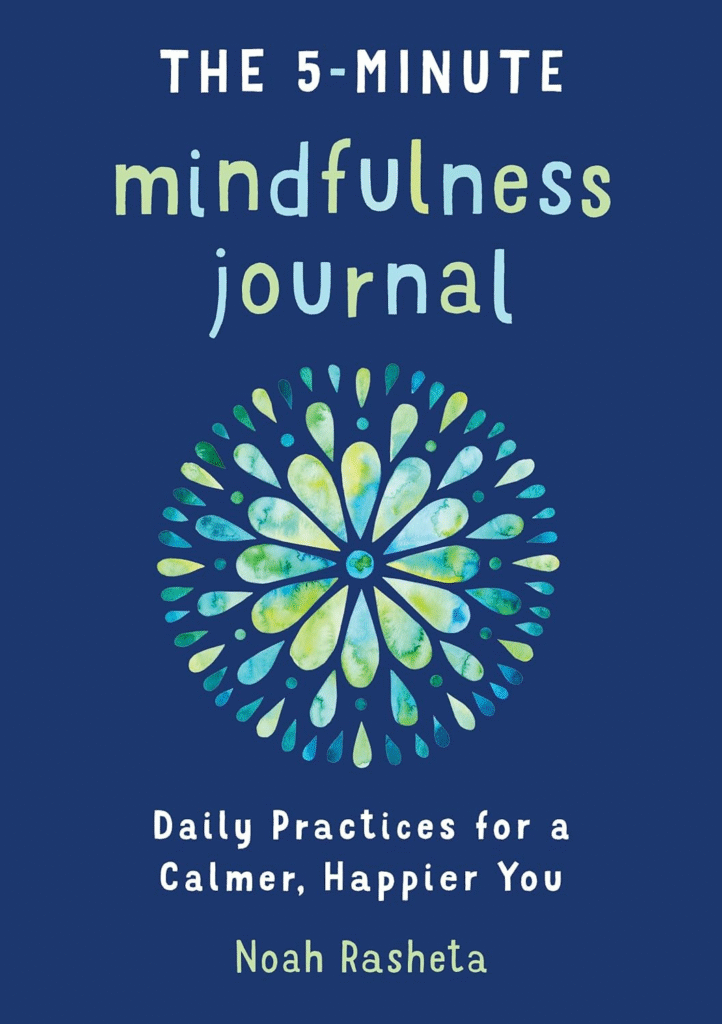
While not a tool used during practice per se, a mindfulness journal can be an invaluable companion in your stress-relief journey. Use it to record your experiences, insights, and progress.
Regular journaling can help you:
- Identify patterns in your stress levels and triggers
- Track the effectiveness of different techniques
- Set intentions for your practice
- Express gratitude, which is itself a powerful stress-reducer
- Process emotions and experiences
- Cultivate self-awareness
When choosing a journal, consider:
- Size: Small enough to carry with you, or large enough for expansive writing
- Paper quality: Smooth paper that doesn’t bleed through with your preferred pen
- Layout: Blank, lined, or guided pages depending on your preference
- Cover: Durable and appealing to you
To make the most of your mindfulness journal:
- Set aside regular time for journaling, even if it’s just a few minutes a day
- Write without judgment or self-censorship
- Include both positive and challenging experiences
- Use prompts if you’re unsure what to write about
- Review your entries periodically to track your progress
I’ve found that keeping a mindfulness journal has added a new dimension to my practice. It helps me process my experiences, track my progress, and maintain motivation.
On days when I feel stressed or unmotivated, reading through past entries reminds me of how far I’ve come and inspires me to continue my practice.
Recommended Product: The 5-Minute Mindfulness Journal
People Also Asked
What are the best yoga mats for beginners?
For beginners, look for mats with good cushioning and grip. Brands like Manduka, Lululemon, and Jade Yoga offer excellent options for newcomers.
Consider thickness (around 4-5mm is good for most), material (PVC-free options are eco-friendly), and texture (to prevent slipping).
How often should I meditate to reduce stress?
Consistency is vital in meditation. Even 5-10 minutes daily can have significant benefits.
As you become more comfortable, you can gradually increase your session length.
Some studies suggest that 20-30 minutes of daily meditation can lead to noticeable stress reduction.
Can essential oils help with anxiety?
Yes, certain essential oils have been shown to help reduce anxiety. Lavender, chamomile, and bergamot are particularly effective.
However, it’s important to use them correctly and be aware of any potential allergies or sensitivities.
What’s the difference between a meditation cushion and a yoga bolster?
Meditation cushions (zafus) are designed for seated meditation, providing height to help maintain proper posture. Yoga bolsters are larger, cylindrical or rectangular cushions used for support in various yoga poses, particularly in restorative yoga.
Are singing bowls scientifically proven to reduce stress?
While more research is needed, some studies suggest that the vibrations from singing bowls can induce relaxation responses in the body. They’ve been shown to reduce tension, anger, and fatigue in some participants.
How do I choose the right mala beads?
Consider the material (wood, stone, seeds), the significance of different gemstones if applicable, and your personal connection to the mala. Some people choose based on intentions (e.g., rose quartz for love, amethyst for peace), while others choose based on feel or appearance.
Can meditation apps be as effective as in-person classes?
While apps can be very effective, especially for beginners or those with busy schedules, in-person classes offer benefits like personalized guidance and community support. Many practitioners find a combination of both to be ideal.
What’s the best position for meditation if I can’t sit cross-legged?
If cross-legged sitting is uncomfortable, try using a meditation bench, sitting in a chair with your feet flat on the floor, or even lying down (though be careful not to fall asleep). The key is finding a position where you can be comfortable and alert.
How long does it take to see benefits from regular yoga practice?
Many people report feeling more relaxed and flexible after just a few sessions. However, for more significant physical and mental benefits, consistent practice over several weeks to months is typically needed. everyone’s journey is unique.
Can yoga and meditation replace medication for stress and anxiety?
While yoga and meditation can be powerful tools for managing stress and anxiety, they should not be considered a replacement for prescribed medication without consulting a healthcare professional. For many, a combination of lifestyle practices and medical treatment works best.
Key Takeaways:
- Invest in a high-quality yoga mat for a stable foundation
- Use meditation cushions or benches for comfortable seated practice
- Incorporate sensory elements like singing bowls and essential oils
- Utilize props to enhance your yoga practice safely
- Leverage technology with meditation apps for guided sessions
- Don’t underestimate the power of simple tools like eye pillows and journals
Disclaimer
The information contained in this post is for general information purposes only. The information is provided by Essential Yoga and Meditation Tools for Effective Stress Relief and while we endeavor to keep the information up to date and correct, we make no representations or warranties of any kind, express or implied, about the completeness, accuracy, reliability, suitability or availability with respect to the website or the information, products, services, or related graphics contained on the post for any purpose.