

There’s something really frustrating about feeling off in your own body. You wake up exhausted despite sleeping eight hours.
Your hair seems thinner.
The scale creeps up even though you haven’t changed your eating habits. Your brain feels foggy, like you’re thinking through molasses.
And when you mention these symptoms to friends or even your doctor, you often hear, “That’s just aging” or “Maybe you need to exercise more.”
But sometimes, these vague symptoms aren’t just about getting older or needing better habits. Sometimes they’re signaling that your thyroid, that butterfly-shaped gland in your neck that you probably don’t think about much, isn’t functioning the way it should.
The thyroid is essentially your body’s metabolic control center, producing hormones that affect nearly every cell, tissue, and organ in your body. When it’s off, everything feels off.
The challenge is that traditional healthcare often needs multiple appointments, waiting weeks for lab orders, taking time off work to get to a lab during business hours, and then waiting again for results. And when you’re already exhausted from potential thyroid dysfunction, the logistics feel impossible.
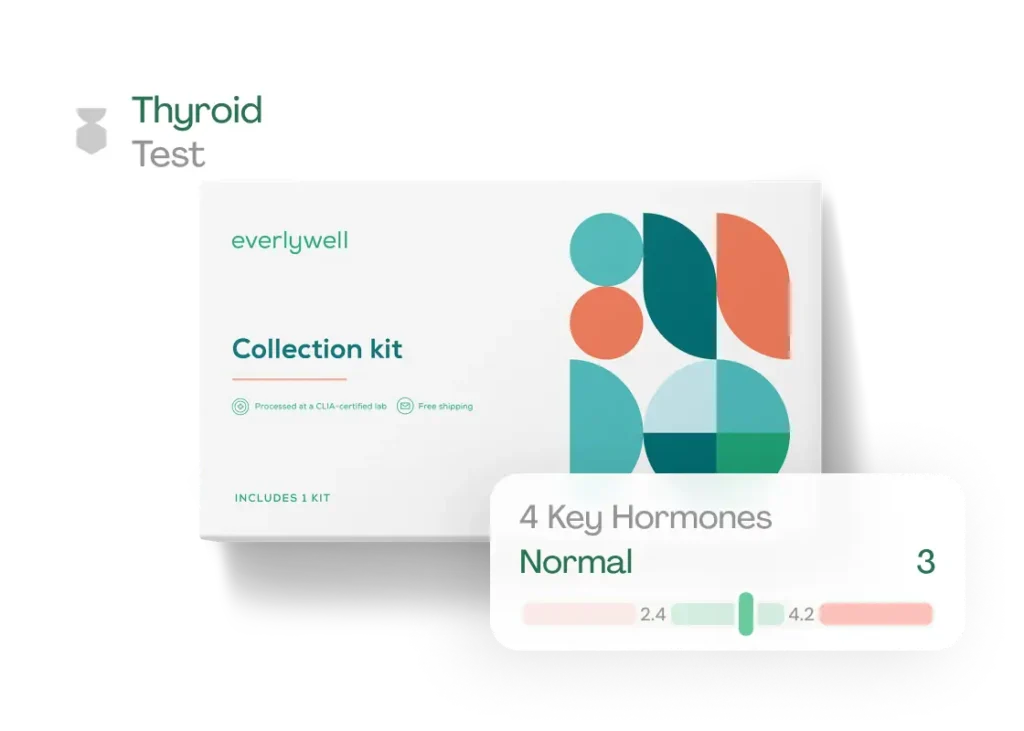
This is where at-home testing has really changed the landscape. The Everlywell Thyroid Test represents one approach to this modern testing paradigm, promising to measure the key markers your doctor would typically check, all from the comfort of your home with a simple finger prick.
But like any health tool, it has specific capabilities, limitations, and contexts where it makes sense or doesn’t. Before you decide whether this test is right for you, let’s dig into what it actually measures, how it works, and what you need to know to make the most informed decision possible.
Everlywell Thyroid Test – At-Home Thyroid Screening
Experiencing fatigue, weight gain, hair thinning, or brain fog? This at-home test checks key thyroid markers so you can get answers without lab visits.
- ✔ Measures TSH, Free T3, Free T4 & TPO antibodies
- ✔ CLIA-certified lab analysis
- ✔ Physician-reviewed results
- ✔ Finger-prick sample from home
FSA/HSA eligible • Results in ~5 days
Understanding What You’re Actually Testing
When you order the Everlywell Thyroid Test, you’re measuring four specific biomarkers that together paint a picture of thyroid function: Thyroid Stimulating Hormone (TSH), Free T3 (triiodothyronine), Free T4 (thyroxine), and Thyroid Peroxidase Antibodies (TPOab). Each marker tells you something different, and understanding what they measure helps you make sense of your results.
TSH is produced by your pituitary gland and essentially tells your thyroid how much hormone to produce. Think of it as the thermostat in your home.
When the temperature drops, the thermostat signals the heating system to kick in. When thyroid hormone levels drop, your pituitary produces more TSH to tell the thyroid to work harder.
Conversely, when thyroid hormone levels are high, TSH drops because the pituitary senses there’s enough hormone circulating.
This inverse relationship is why a high TSH typically shows hypothyroidism (underactive thyroid) while a low TSH suggests hyperthyroidism (overactive thyroid). Many people find this confusing at first because it seems backward: high TSH means low thyroid function, but once you understand that TSH is the signal as opposed to the hormone itself, it clicks.
Free T4 is the storage form of thyroid hormone. Your thyroid produces mostly T4, which then needs to be converted to the active form, T3, in your tissues.
The “free” part is important because it refers to the hormone that’s not bound to proteins and is therefore available for your body to use.
Total T4 measurements include both bound and unbound hormone, but free T4 gives you a clearer picture of what’s actually available to your cells.
Many doctors test only TSH and total T4, but measuring free T4 provides more clinically relevant information. You can have normal total T4 but low free T4 if protein binding is off, which means you’d still be functionally hypothyroid even though standard testing might miss it.
Free T3 is where the metabolic action really happens. This is the active thyroid hormone that enters your cells and influences metabolism, energy production, body temperature regulation, and countless other functions.
Some people have adequate T4 levels but struggle with converting T4 to T3, which means they can still experience hypothyroid symptoms despite seemingly normal T4 readings.
This conversion problem can happen for several reasons. Chronic stress elevates cortisol, which inhibits the enzyme that converts T4 to T3.
Inflammation from infections, autoimmune conditions, or gut issues can interfere with conversion.
Nutrient deficiencies in selenium, zinc, or iron make it harder for your body to produce the enzymes needed for conversion. Certain medications, like beta blockers and some antidepressants, can also slow conversion.
TPO antibodies tell you something completely different. They show whether your immune system is attacking your thyroid gland.
Elevated TPO antibodies are the hallmark of Hashimoto’s thyroiditis, an autoimmune condition that’s actually the most common cause of hypothyroidism in developed countries.
You can have elevated antibodies years before your thyroid function actually declines, making this an important early warning system. Knowing you have thyroid antibodies changes the conversation from “your thyroid isn’t working well” to “your immune system is attacking your thyroid,” which has different implications for treatment and lifestyle management.
If you catch the autoimmune process early, before significant damage occurs, you have more opportunities to slow progression through dietary changes, stress management, addressing gut health, and ensuring adequate vitamin D and selenium levels. Once the thyroid is substantially damaged, you’re looking at lifelong hormone replacement regardless of what other interventions you make.
The Practical Reality of At-Home Blood Testing
Let’s be honest about what it’s actually like to use this test. You receive a kit in the mail with a finger-prick device, a small collection card, and detailed instructions.
The process needs you to prick your finger and collect several drops of blood onto the card, which you then mail back to a CLIA-certified laboratory for analysis.
The finger prick itself is relatively straightforward, but there are some practical challenges worth knowing about upfront. Getting enough blood from a finger prick can be surprisingly difficult.
Your hands need to be warm to confirm good blood flow.
Many people find it helpful to wash their hands in warm water, do some light exercise like jumping jacks, or let their arms hang down for a minute beforehand to get blood flowing to the fingers.
You’ll typically need to squeeze your finger repeatedly to get adequate blood drops. You’re aiming for large drops that soak into specific circles on the collection card.
Small, weak drops won’t provide enough sample for accurate testing.
Some people need multiple pricks to collect enough sample, particularly if they have poor circulation or cold hands.
The collection needs to happen during specific times of day for accurate results, particularly for TSH, which fluctuates throughout the day. TSH is highest in the early morning hours, typically between 2 AM and 4 AM, and decreases as the day progresses.
By afternoon, TSH can be 50% lower than morning levels.
This means if you’re trying to track levels consistently or compare results to previous tests, you need to collect samples at the same time of day. Most practitioners recommend testing first thing in the morning before eating for the most consistent and comparable results.
Once you mail back your sample, it goes to a laboratory where actual lab technicians process it using the same equipment and methods as traditional blood draws. This is an important point that addresses concerns about accuracy.
The analysis itself is identical to what happens at a conventional lab.
The difference is only in how the blood is collected, finger prick versus venous draw, not in how it’s tested.
Results typically come back within five business days and are reviewed by a physician before being released to you through an online portal. The physician review is somewhat minimal; they’re checking that results were processed correctly and flagging anything critically abnormal, but you’re not getting a comprehensive consultation.
The results you receive include your specific numbers for each marker along with reference ranges. These reference ranges represent what’s considered “normal” based on population statistics, typically encompassing about 95% of healthy individuals.
You’ll see whether your results fall within, above, or below these ranges, often with color coding to make it visually clear: green for normal, yellow for borderline, red for abnormal.
When At-Home Testing Makes Sense
There are specific scenarios where the Everlywell Thyroid Test really shines as a practical tool. If you’re experiencing potential thyroid symptoms but haven’t yet received a diagnosis, this test can serve as a screening tool to decide whether your symptoms warrant further medical investigation.
Rather than waiting weeks for a doctor’s appointment just to get a lab order, then more time to actually do the lab work, then another wait for a follow-up appointment to talk about results, you can gather initial data within a week or so and then approach your healthcare provider with concrete information.
Having results in hand changes the dynamic of that appointment. Rather than asking for testing based on vague symptoms that might be dismissed, you’re now discussing specific abnormal findings that need medical attention.
This often speeds up the path to diagnosis and treatment considerably.
For people who already have a thyroid condition and are on medication, periodic monitoring is essential to confirm dosing stays suitable. Thyroid hormone needs can change based on factors like weight changes, aging, stress, pregnancy, other medications, and disease progression.
Most endocrinologists recommend testing every six to twelve months once your levels are stable, and more often when adjusting medication. The convenience of at-home testing makes it easier to check levels quarterly or biannually without the hassle of scheduling lab appointments around work and life obligations.
The test is particularly valuable for people who live in areas with limited access to healthcare facilities or endocrinologists. If the nearest lab is an hour away, or if getting time off work for medical appointments is genuinely difficult, at-home testing removes significant barriers to monitoring your health.
Rural communities and people working multiple jobs or unconventional schedules benefit enormously from this flexibility.
There’s also something to be said for the empowerment factor. Taking charge of your own health data, understanding what’s being measured and why, and being able to track trends over time creates a different relationship with your health than passively showing up for tests and waiting to hear what the doctor says.
This active engagement often leads to better health literacy and more productive conversations with healthcare providers. You’re not just a patient being told what to do; you’re a collaborator who understands what’s happening in your body and can advocate more effectively for suitable care.
Recommended Product:
The Gaps You Need to Know About
Despite its usefulness, the Everlywell Thyroid Test has limitations that are important to understand before making decisions based on its results. The most significant omission is Reverse T3 (RT3), which several thyroid specialists consider valuable for understanding thyroid function, particularly in complex cases.
Reverse T3 is an inactive form of T3 that’s produced when your body converts T4 in a slightly different way. Under stress, illness, calorie restriction, or certain inflammatory conditions, your body may produce more RT3 instead of active T3 as a protective mechanism to slow metabolism and conserve energy.
If you have adequate Free T3 levels but significant RT3, those T3 molecules may be blocked from entering cells properly, leading to hypothyroid symptoms despite seemingly normal numbers. This is sometimes called “thyroid resistance” or “low T3 syndrome,” and it’s particularly common in people with chronic stress, severe calorie restriction, chronic illness, or heavy metal exposure.
The absence of RT3 testing means that people with this particular pattern of thyroid dysfunction might get results that look relatively normal but don’t explain their symptoms. This doesn’t make the test useless; it catches the majority of thyroid problems, but it means the test is screening for the most common thyroid issues as opposed to catching every possible pattern.
Another limitation involves interpretation and follow-up. While a physician reviews your results, you’re not getting a comprehensive consultation or personalized treatment plan.
You receive educational information about what your results mean and suggestions to follow up with your healthcare provider, but you’re largely on your own to figure out next steps.
For someone who’s new to thyroid issues and unfamiliar with medical terminology, this can feel overwhelming. You might understand that your TSH is high but not know whether that’s something that needs urgent attention, whether you should see your regular doctor or an endocrinologist, what treatment options exist, or how quickly you should act.
The test also can’t detect thyroid nodules, goiter, or structural abnormalities of the thyroid gland. These need physical examination or imaging studies like an ultrasound.
Blood tests only tell you about hormone levels and antibodies, not about the physical condition of the gland itself.
You could have a large nodule producing extra hormone (causing hyperthyroidism) or a nodule that turns out to be cancerous, and blood tests alone wouldn’t catch it. Physical examination of your neck and, when warranted, thyroid ultrasound are important parts of a comprehensive thyroid evaluation that at-home testing can’t replace.
There’s also the question of reference ranges. The standard reference ranges used by most labs have been criticized by some practitioners as being too broad, particularly for TSH.
The typical TSH reference range is often 0.5 to 4.5 or even 5.0 mIU/L, but many people feel symptomatic when TSH rises above 2.5, and some functional medicine practitioners aim for TSH between 1.0 and 2.0 for optimal function.
The test gives you the standard ranges, but doesn’t provide context about where within that range might be optimal for you specifically. A TSH of 3.8 might be technically “normal,” but could be causing fatigue, weight gain, and brain fog for someone who feels best at 1.5.
Making Sense of Your Results
When your results come back, you’ll need to interpret what the numbers actually mean for your health. This is where things get nuanced. Let’s walk through some common result patterns and what they typically show.
If your TSH is elevated (above 4.5 mIU/L) with normal or low Free T4 and Free T3, this is the classic pattern of primary hypothyroidism. Your pituitary is screaming at your thyroid to produce more hormone, but the thyroid isn’t responding adequately.
If you also have elevated TPO antibodies, this points to Hashimoto’s thyroiditis as the underlying cause.
Without elevated antibodies, the hypothyroidism might be because of iodine deficiency, thyroid damage from radiation or surgery, or certain medications.
If your TSH is suppressed (below 0.5 mIU/L) with elevated Free T4 and Free T3, this suggests hyperthyroidism. Your thyroid is producing too much hormone, so your pituitary has dialed down TSH production to try to slow things down.
This could show Graves’ disease (an autoimmune condition causing hyperthyroidism), toxic multinodular goiter, or thyroiditis.
Hyperthyroidism needs medical evaluation fairly promptly because it can affect heart function, potentially causing rapid heart rate, irregular rhythms, and increased risk of heart failure. Weight loss, anxiety, tremors, heat intolerance, and increased bowel movements are common symptoms.
A trickier pattern is subclinical hypothyroidism, where TSH is mildly elevated (typically 4.5 to 10 mIU/L), but Free T4 and Free T3 are still within normal range. This represents early thyroid dysfunction where the pituitary is having to work harder to maintain normal hormone levels.
The thyroid is struggling but managing to keep up, for now.
Whether to treat subclinical hypothyroidism is somewhat controversial. Some practitioners treat symptoms even at this stage, particularly if antibodies are present, while others wait for more pronounced dysfunction to develop.
Research suggests that treating subclinical hypothyroidism can improve cholesterol levels, reduce cardiovascular risk, and alleviate symptoms like fatigue and cognitive dysfunction in symptomatic individuals.
Some people have normal TSH but low Free T3 with normal Free T4. This can show a conversion problem where T4 isn’t being efficiently converted to active T3.
This pattern sometimes occurs with chronic stress, inflammation, nutrient deficiencies (particularly selenium, zinc, and iron), liver or kidney problems, or certain medications like beta blockers and propranolol.
Without measuring RT3, you can’t see the full picture here, you don’t know if low T3 is because conversion to active T3 is impaired or because conversion to inactive RT3 is increased, but the pattern itself is informative and suggests that addressing conversion factors may help more than simply increasing thyroid medication.
Elevated TPO antibodies with now normal thyroid function are also significant. This tells you that autoimmune thyroid disease is present, even though it hasn’t yet damaged enough of the gland to affect hormone levels.
This is a window of opportunity for interventions that may slow disease progression.
Research shows that addressing gut health (particularly healing leaky gut and balancing the microbiome), managing stress, ensuring adequate vitamin D and selenium, reducing gluten and dairy in some people, and addressing other autoimmune triggers may help reduce antibody levels and slow thyroid destruction.
What to Do With the Information
Getting test results is just the beginning. The real question is what you do next.
If your results are clearly abnormal, particularly if TSH is significantly elevated above 10 or suppressed below 0.1, or if Free T4 or Free T3 are substantially outside normal range, you need to connect with a healthcare provider promptly.
The Everlywell results can be shared with your doctor and, in most cases, will be taken seriously because they come from a legitimate CLIA-certified laboratory using the same testing methods as conventional labs. Most physicians will either accept these results or, at least, use them as justification to order their own confirmatory testing.
If you’re already working with a doctor who’s been reluctant to order thyroid testing, having results in hand changes the conversation substantially. Rather than asking for testing based on vague symptoms that might be dismissed as stress or depression, you’re now discussing specific abnormal findings that need medical attention and potentially treatment.
For results that fall in gray zones, like subclinical hypothyroidism or elevated antibodies with normal function, you may need to advocate more strongly for treatment or monitoring. Not all providers are proactive about treating subclinical cases, viewing them as “not quite sick enough yet” to warrant intervention.
But if you’re symptomatic, there’s good evidence that treatment can improve quality of life. Bringing research to your appointment and clearly describing how symptoms affect your daily functioning can help make the case for intervention.
If results are normal but you still feel terrible, don’t dismiss your symptoms. Remember that this test doesn’t measure everything about thyroid function, particularly RT3 and cellular thyroid sensitivity.
It also doesn’t assess other hormones that can cause similar symptoms, like cortisol (adrenal function), sex hormones (estrogen, progesterone, testosterone), insulin (blood sugar regulation), or nutrient levels like iron, vitamin D, and B12.
Normal results on this specific panel mean your basic thyroid function appears intact, but they don’t rule out all possible causes of your symptoms. You might need more comprehensive testing to identify what’s actually going on.
You might consider repeating the test in three to six months if you’re in a monitoring phase, particularly if you have antibodies or subclinical dysfunction. Thyroid function can change over time, and tracking trends is more informative than a single snapshot.
Seeing TSH gradually rise even within the normal range, say, from 2.0 to 2.8 to 3.4 over consecutive tests, can show progressive thyroid decline that warrants closer attention and potentially earlier intervention.
Comparing Testing Options
The Everlywell Thyroid Test costs $149, which is moderately priced compared to other at-home options that range from around $99 for basic panels to over $300 for more comprehensive testing. To put this in context, if you were paying out-of-pocket at a traditional lab, these four markers might cost anywhere from $150 to $400, depending on the facility, so the pricing is actually competitive with conventional labs when paying without insurance.
Insurance coverage is where things get more complicated. Most health insurance covers thyroid testing when ordered by a physician, especially if you have documented symptoms or a history of thyroid issues. Your copay might be $20 to $50, making it significantly cheaper than out-of-pocket at-home testing.
However, insurance-covered testing needs a doctor’s order, which means scheduling an appointment (potentially waiting weeks), taking time off work, paying a copay for the office visit, then going separately to a lab, then waiting for results, then scheduling another follow-up appointment to talk about results. The time investment and logistical complexity can be substantial.
Other at-home thyroid tests are available from companies like LetsGetChecked, Paloma Health, and Labcorp OnDemand. Some include RT3 or extra markers that Everlywell doesn’t measure.
Paloma Health, for instance, specifically caters to thyroid patients and includes more extensive educational resources and optional physician consultation services built into their model, which can be valuable if you’re new to thyroid issues and want more guidance.
Traditional lab testing through Quest or Labcorp with a physician order stays the gold standard when a comprehensive evaluation is needed, particularly for initial diagnosis. The advantage is that your doctor can order extra tests based on initial findings, you’re guaranteed follow-up care, and results combine into your medical record for longitudinal tracking across providers.
The disadvantage is time, convenience, and potentially cost if insurance doesn’t cover testing or if your deductible hasn’t been met.
People Also Asked
Is the Everlywell Thyroid Test accurate?
The Everlywell Thyroid Test uses CLIA-certified laboratories that employ the same testing methods and equipment as traditional labs. The accuracy of the analysis itself is comparable to conventional venous blood draws.
The main difference is in sample collection, finger prick versus venous draw, which can occasionally affect results if not enough blood is collected or if the sample degrades during shipping.
Studies comparing capillary blood (finger prick) to venous blood for thyroid testing show good correlation for TSH and thyroid hormones, though TSH values from finger prick samples are sometimes slightly higher than venous draws.
What thyroid tests should I get?
At least, you should test TSH and Free T4 to assess basic thyroid function. Adding Free T3 provides information about thyroid hormone conversion and activation, which is valuable because some people have normal T4 but low T3.
TPO antibodies identify autoimmune thyroid disease.
For more comprehensive evaluation, especially if you have symptoms despite normal basic testing, consider adding Reverse T3, thyroglobulin antibodies, and thyroid ultrasound to check for structural abnormalities.
Can I use Everlywell results to get thyroid medication?
You can bring Everlywell results to your healthcare provider as documentation of thyroid dysfunction. Most doctors will consider these results when making treatment decisions, though some may want to confirm with their own lab testing before prescribing medication.
You cannot use these results to directly obtain medication without a physician evaluation and prescription, as thyroid medications like levothyroxine need a prescription and medical supervision.
How often should I test my thyroid?
If you have hypothyroidism and are on thyroid medication, test every six to eight weeks when adjusting dosage, then every six to twelve months once stable. If you have thyroid antibodies but normal function, testing every six to twelve months helps watch whether the condition is progressing.
If you’re experiencing new symptoms or made medication changes, test six to eight weeks after the change to assess the impact.
What is a normal TSH level for women?
The standard reference range for TSH is typically 0.4 to 4.5 mIU/L, though some labs use slightly different ranges. However, many practitioners and patients find that optimal TSH for symptom relief is between 1.0 and 2.5 mIU/L.
Women may need different target ranges depending on age, pregnancy status, and individual symptom presentation.
Pregnant women need lower TSH targets, typically below 2.5 in the first trimester.
Can stress affect thyroid test results?
Severe acute stress or chronic stress can affect thyroid function and test results. Stress increases cortisol, which can suppress TSH production and decrease conversion of T4 to active T3 while increasing conversion to inactive Reverse T3.
This can result in lower TSH, lower Free T3, and higher Reverse T3.
For the most accurate baseline results, avoid testing during periods of severe acute stress when possible.
What are the symptoms of high TPO antibodies?
Elevated TPO antibodies themselves don’t directly cause symptoms. They show that your immune system is attacking your thyroid gland.
Symptoms develop when this autoimmune attack damages enough of the thyroid to affect hormone production, causing hypothyroid symptoms like fatigue, weight gain, cold sensitivity, constipation, dry skin, hair loss, brain fog, and depression.
However, you can have elevated antibodies for years before developing symptoms or abnormal thyroid function tests.
Key Takeaways:
The Everlywell Thyroid Test measures TSH, Free T3, Free T4, and TPO antibodies using legitimate laboratory methods, with results typically available within five business days and reviewed by a physician before release.
At-home testing makes sense for initial screening when you have symptoms, ongoing monitoring of known thyroid conditions, and situations where conventional lab access is difficult, but it doesn’t measure Reverse T3 and provides minimal personalized follow-up guidance.
Understanding what each marker measures physiologically, TSH as the pituitary signal, T4 as a storage hormone, T3 as an active hormone, and TPO antibodies as autoimmune markers, allows you to interpret results more meaningfully and have more productive conversations with healthcare providers.
Normal results don’t rule out all thyroid issues, particularly T4 to T3 conversion problems, thyroid resistance, or early autoimmune disease that hasn’t yet significantly affected hormone levels.
The test works best as part of a broader approach to thyroid health that includes symptom tracking, lifestyle optimization, suitable medical care when needed, and ongoing education about thyroid function and what influences it.
Recommended Product:
Disclaimer
The information contained in this post is for general information purposes only. The information is provided by Everlywell Thyroid Test Review: In-Depth Analysis and while we endeavor to keep the information up to date and correct, we make no representations or warranties of any kind, express or implied, about the completeness, accuracy, reliability, suitability or availability with respect to the website or the information, products, services, or related graphics contained on the post for any purpose.