

The conversation around menopause feels stuck in a weird place. On one hand, there’s this clinical, medicalized approach that treats every symptom like a disorder needing immediate intervention.
On the other, there’s this vague wellness-industry narrative about “embracing your inner goddess” while you’re literally soaked in sweat at 3 AM wondering if you’ll ever sleep normally again.
Neither version captures what’s actually happening or what you can realistically do about it.
Here’s what the actual science shows: menopause is a transition that roughly 50% to 75% of women experience with varying degrees of intensity. There are genuinely effective ways to manage it that go way beyond what most people know about.
The real issue is that many of us aren’t getting the full picture of what’s actually available and what genuinely works based on solid research as opposed to marketing.
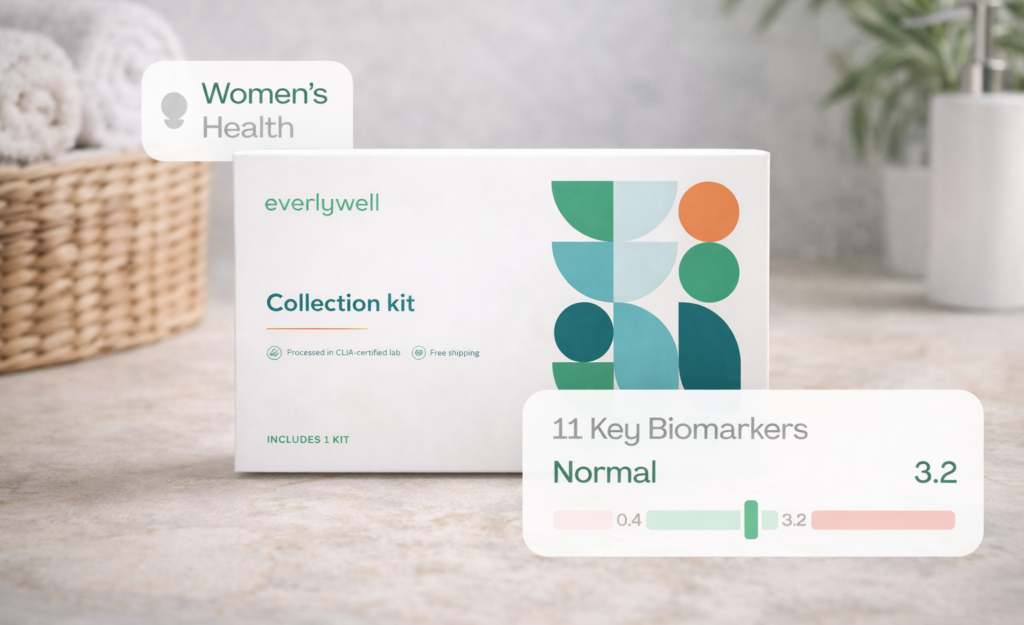
Everlywell Women’s Health Test – At-Home Screening
Wondering about your hormonal health, reproductive wellness, or perimenopause symptoms? This at-home test provides insights into key hormones affecting your overall health, all from the comfort of your home.
- ✔ Measures estradiol, progesterone, FSH, and LH
- ✔ CLIA-certified lab analysis
- ✔ Physician-reviewed, easy-to-read results
- ✔ Simple finger-prick blood sample from home
FSA/HSA eligible • Test from home • Personalized hormone insights
Understanding What’s Really Happening
When we talk about menopause, we’re discussing a complex hormonal shift that affects many body systems simultaneously. The decline in estrogen doesn’t just trigger hot flashes.
It influences bone density, cardiovascular function, vaginal tissue health, sleep patterns, mood regulation, and cognitive function.
These aren’t separate issues you can address one at a time. They’re interconnected changes happening to your entire physiological system.
What really surprised me in the research is how long this actually lasts. We’ve been conditioned to think of menopause as a brief, uncomfortable phase you push through and then you’re done.
The reality is that vasomotor symptoms typically continue for more than seven years. For some women, they continue even longer.
Genitourinary symptoms often become chronic and ongoing, sometimes requiring treatment indefinitely.
This isn’t a sprint through discomfort. This is adjusting to a new physiological baseline that needs thoughtful, sustainable management strategies you can actually maintain over years.
The other critical piece that often gets glossed over is the distinction between perimenopause and postmenopause. During perimenopause, you’re still having periods, though they might be wildly irregular, showing up twice in one month or disappearing for three months straight.
Your hormone levels are fluctuating unpredictably, sometimes wildly so.
This phase can actually be more challenging than postmenopause because of that erratic hormonal rollercoaster where you might feel fine one week and completely derailed the next.
Once you’re fully postmenopausal, defined as twelve consecutive months without a period, hormone levels stabilize at their new lower baseline. This can sometimes make symptoms more predictable and easier to address because at least you’re not dealing with constant fluctuation anymore.
The Hormone Therapy Conversation Nobody’s Having Properly
Let’s start with hormone replacement therapy because there’s been so much confusing messaging around this that many women who could genuinely benefit are avoiding it entirely out of fear based on outdated or misunderstood information.
The current medical consensus is actually more permissive than many people realize. Estrogen therapy is considered suitable and relatively safe for people younger than 60 and within 10 years of menopause onset.
That window matters because timing affects both benefits and risks.
The effectiveness is really remarkable. Systemic estrogen therapy reduces vasomotor symptom frequency by about 75%.
That’s not a marginal improvement where you go from ten hot flashes a day to eight.
That’s a substantial reduction in symptoms that can dramatically affect quality of life. Hot flashes and night sweats typically improve within weeks of starting hormone therapy, though other symptoms like mood changes and vaginal dryness take several months to show improvement.
The key here is timing and person risk assessment. The “window of opportunity” concept matters significantly.
Starting hormone therapy closer to menopause onset appears to offer cardiovascular benefits, while starting it many years after menopause may carry different risk profiles.
Your doctor should be looking at your person health history, family history, and current risk factors to decide whether hormone therapy makes sense for you specifically.
Healthcare providers typically recommend using the lowest effective dose for the shortest duration needed to relieve symptoms. But “shortest duration” doesn’t mean you need to rush off it after a year if you’re still benefiting and your risk profile supports continued use.
Some women use hormone therapy for several years when the benefits clearly outweigh the risks for their person situation.
For vaginal symptoms specifically, low-dose vaginal estrogen available as cream, tablet, or ring produces subjective improvement in symptoms in 60% to 80% of cases. This is particularly important because genitourinary syndrome of menopause, the collection of symptoms including vaginal dryness, burning, irritation, and painful intercourse, can significantly impact sexual function and overall quality of life.
Yet it’s often undertreated because women feel embarrassed to bring it up with their healthcare providers, or they assume it’s just something they have to live with now.
The critical point about vaginal estrogen is that it stays mostly localized to vaginal tissue with minimal systemic absorption. This means women who can’t use systemic hormone therapy may still be able to use vaginal estrogen safely, depending on their specific contraindications and health history.
When Hormones Aren’t the Right Fit
Not everyone can or wants to use hormone therapy. Some women have contraindications because of personal or family history of certain cancers, blood clots, or other conditions.
Others simply prefer to avoid hormones if there are effective choices.
The effectiveness gap narrows somewhat, but there are genuinely useful alternatives backed by solid research.
Selective serotonin reuptake inhibitors and serotonin-norepinephrine reuptake inhibitors, medications we typically associate with depression, reduce hot flash frequency by about 40% to 65%. Paroxetine is specifically FDA-approved for vasomotor symptoms at a low dose.
Venlafaxine shows similar effectiveness.
These aren’t just treating depression that happens to exist alongside menopause. They’re actually working on the neurotransmitter pathways involved in thermoregulation, the mechanism your body uses to control temperature.
Gabapentin represents another option, particularly effective when taken at bedtime for nighttime hot flashes and sleep improvement. It’s originally an anti-seizure medication, but it’s shown consistent benefit for vasomotor symptoms at doses lower than those used for seizure control.
Many women find this helpful specifically because it addresses the night sweats that disrupt sleep without requiring them to take hormones.
The genuinely exciting development is fezolinetant, marketed as Veozah, which received FDA approval in May 2023. This is a completely different mechanism, a neurokinin 3 receptor antagonist.
It represents the first novel non-hormonal pharmaceutical approach to menopause in decades.
Clinical trials showed it significantly reduces vasomotor symptoms compared to placebo without working through hormonal or traditional neurotransmitter pathways. It’s working on a specific receptor in the brain involved in temperature regulation.
For vaginal symptoms without systemic hormones, there are several options worth knowing about. Vaginal prasterone, sold as Intrarosa, is a human-made DHEA derivative that improves symptom severity by 40% to 80%.
Ospemifene is an oral selective estrogen receptor modulator that improves severity by 30% to 50% and has shown documented improvements in sexual function scores in clinical trials.
These medications provide estrogen-like benefits to vaginal tissue without full systemic hormone exposure, making them suitable for some women who can’t use traditional hormone therapy.
The Psychological Dimension That Actually Works
Here’s something that initially struck me as counterintuitive but makes total sense once you understand the mechanism. Cognitive behavioral therapy doesn’t reduce the frequency of hot flashes.
But it significantly reduces how much they bother you.
A 2018 meta-analysis found that behavioral interventions significantly decreased the perceived severity of vasomotor symptoms in both short-term periods of less than 20 weeks and medium-term periods of 20 weeks or longer. What’s happening here is a fundamental shift in how you relate to the symptom.
Instead of catastrophizing when a hot flash starts, thinking “Oh no, here it comes, this is terrible, everyone can see, I can’t stand this, when will this end,” CBT helps you develop a more neutral, observational stance.
You learn to think “I’m having a hot flash, it’s uncomfortable, it will pass in a few minutes.”
This matters more than it might initially seem. When you’re dealing with symptoms that continue for seven-plus years, the psychological burden of distress layered on top of physical discomfort becomes its own problem.
Anxiety about when the next hot flash will hit, embarrassment about visible symptoms, frustration about ongoing disruption to your life, all of this creates additional suffering beyond the physical sensation itself.
If CBT can reduce that distress without medication, that’s a meaningful quality-of-life improvement.
Telephone-based CBT has shown particular promise for improving sleep in perimenopausal and postmenopausal women with insomnia related to hot flashes. This is especially relevant because it removes barriers around access.
You don’t need to find a specialized therapist in your geographic area or arrange transportation to appointments.
You can receive evidence-based treatment from your own home on a schedule that works for you.
Clinical hypnosis also shows up in the research more substantively than I expected. Small randomized controlled trials demonstrated that weekly clinical hypnosis sessions over five weeks reduced hot flash severity and frequency in both breast cancer survivors and postmenopausal women with frequent hot flashes. This isn’t stage hypnosis or entertainment.
Clinical hypnosis is a structured therapeutic approach involving deep relaxation and specific mental imagery designed to help you gain better control over your body’s responses.
Mindfulness training specifically reduced distress from hot flashes and night sweats in research studies. Again, we’re seeing this pattern where the intervention doesn’t necessarily stop the symptom but fundamentally changes your experience of it.
You learn to observe the sensation without adding layers of judgment, anxiety, or resistance that make the experience worse.
The Lifestyle Modifications That Actually Move the Needle
There’s this tendency to recommend exercise and healthy eating for every health condition to the point where it becomes meaningless background noise. But with menopause, some lifestyle factors have really specific, measurable effects on particular symptoms.
Obesity is directly linked to more frequent and severe hot flashes. I’m not talking about aesthetics or fitting into certain clothing sizes.
Adipose tissue affects how your body manages temperature regulation.
Excess weight can genuinely worsen vasomotor symptoms because it interferes with your body’s ability to dissipate heat effectively. Weight loss, when suitable and done in a healthy manner, can provide tangible symptom relief for many women.
Smoking affects both the timing of menopause, with smokers tending to experience it earlier, and the severity of symptoms once it begins. If there’s ever been a compelling time to quit smoking, the perimenopausal transition is it.
Smoking cessation can actually reduce symptom severity.
The practical approaches to managing hot flashes are worth implementing even if they feel almost too simple to be effective. Dressing in layers you can easily remove, wearing sleeveless tops and breathable fabrics like cotton, lowering room temperatures, using fans directed at your face and upper body, applying cold packs under pillows, and avoiding known triggers like caffeine, alcohol, and spicy foods all matter.
None of these will eliminate symptoms entirely, but in combination, they can make person episodes more manageable and less disruptive.
For sleep specifically, the standard sleep hygiene advice actually matters here in ways it might not for other conditions. Skipping caffeine after early afternoon, avoiding alcohol close to bedtime, exercising during the day but not immediately before bed, and maintaining consistent sleep and wake times all help.
When hot flashes are disrupting sleep, addressing them directly through medication, CBT, or other interventions often improves sleep more than general sleep strategies alone.
Here’s something interesting that doesn’t get emphasized enough. Maintaining sexual activity, whether partnered or solo, increases blood flow to vaginal tissues and can actually ease discomfort over time.
This is physiologically accurate for vaginal tissue health during menopause.
Regular blood flow to the area helps maintain tissue elasticity and moisture.
The Unsexy But Important Vaginal Health Conversation
Genitourinary syndrome of menopause affects a huge proportion of postmenopausal women, yet it remains significantly undertreated because of embarrassment, lack of awareness, or the mistaken belief that it’s just something you have to live with now that you’re older.
Water-based vaginal lubricants are available over-the-counter and serve as a reasonable first-line approach. Vaginal moisturizers, used several times weekly on an ongoing basis as opposed to just during sexual activity, mitigate dryness symptoms consistently.
Lubricants address painful intercourse on an as-needed basis during sexual activity.
When over-the-counter approaches aren’t enough, the prescription options have meaningfully different risk profiles than systemic hormone therapy. Low-dose vaginal estrogen remains mostly localized to vaginal tissue with minimal systemic absorption.
For women who have contraindications to systemic hormones, vaginal estrogen may still be suitable depending on their person circumstances and specific risk factors.
The oral SERM ospemifene works systemically but selectively, providing estrogen-like effects to vaginal tissue while acting differently in other tissues like breast and uterine tissue. In a 12-week multicenter randomized controlled trial, postmenopausal women with moderate to severe vaginal dryness who took ospemifene experienced superior outcomes compared to placebo for reducing dryness and improving painful intercourse and sexual function scores.
Some emerging treatments like CO2 laser therapy marketed as MonaLisa Touch and radiofrequency treatments like ThermiVa are generating interest despite lacking FDA approval and insurance coverage. The evidence base is still developing here, so these stay more experimental options that may or may not prove effective as more research accumulates.
What Doesn’t Work Despite the Marketing
I really wish I could tell you that the shelves full of herbal supplements marketed for menopause were evidence-based solutions backed by solid research. Unfortunately, most aren’t.
Black cohosh is probably the most widely used herbal remedy for menopause symptoms, yet it has limited proof of effectiveness. It can potentially harm the liver, requiring monitoring of liver enzymes with prolonged use.
It may pose specific risks for people with breast cancer history.
The disconnect between how commonly it’s recommended and how weak the evidence actually is remains pretty striking when you look at the research objectively.
Red clover, kava, dong quai, DHEA supplements, evening primrose oil, and wild yam similarly lack scientific proof of effectiveness. Some may actually be harmful.
The supplement industry isn’t required to prove efficacy before marketing products, which creates a landscape where popularity and actual effectiveness have very little correlation.
Marketing budgets matter more than clinical evidence in determining what appears prominently on store shelves.
Here’s another counterintuitive finding. Regular exercise is generally not effective specifically for vasomotor symptoms.
While exercise provides enormous benefits for weight management, bone strengthening, cardiovascular health, mood regulation, and stress reduction, it doesn’t directly address hot flashes.
That doesn’t mean you shouldn’t exercise during menopause. It means you need different strategies specifically targeting vasomotor symptoms if those are your primary concern.
Phytoestrogens from foods like soy have weak evidence and inconsistent results across studies. Some women report benefit from adding soy products to their diets, but large-scale studies haven’t demonstrated consistent effectiveness that would justify recommending this as a primary treatment approach.
Less Obvious Approaches Worth Considering
Paced breathing might sound too simple to actually work, but it may provide relief of hot flashes when practiced for 20 minutes three times daily. This is deep, slow, diaphragmatic breathing, typically six to eight breaths per minute as opposed to the usual 12 to 14 breaths most people take.
It’s thought to work by modulating the autonomic nervous system response involved in hot flash initiation.
The challenge is that it needs consistent daily practice to see benefits, and most people give up before reaching that threshold.
Acupuncture may help reduce hot flashes in the short term, though the research base remains mixed and more investigation is needed. Some women find it helpful, particularly when combined with other approaches. The placebo effect here may account for some of the benefit, but if it provides relief without harmful side effects, that still has value.
Selective estrogen receptor modulators like raloxifene and tamoxifen deserve more attention in the menopause conversation. These drugs provide estrogen-like benefits in some tissues like bone without full hormone therapy effects elsewhere.
Raloxifene, for instance, can lower breast cancer risk while providing bone protection, a really useful profile for women with elevated breast cancer risk who need bone density support but can’t take traditional hormone therapy.
For women still in perimenopause, low-dose birth control pills can provide dual benefits: contraceptive protection, because surprise pregnancies can still happen during perimenopause before you’re fully menopausal, alongside symptom relief, particularly for the irregular, heavy bleeding that characterizes this transition phase for many women.
Building Your Personalized Approach
The single most important insight from all this research is that menopause management needs individualization. The woman who achieves 75% symptom reduction with low-dose estrogen therapy has a completely different experience than the woman who gets meaningful relief from CBT and lifestyle modifications.
She has a different experience than the woman who finds gabapentin plus vaginal estrogen to be her ideal combination.
Start by honestly assessing which symptoms most affect your quality of life. For some women, it’s the sleep disruption from night sweats that’s making them unable to function at work.
For others, it’s vaginal symptoms affecting sexual function and intimate relationships.
For still others, it’s the unpredictability of hot flashes in professional or social settings that’s causing the most distress. The symptoms bothering you most should guide your treatment priorities.
Consider your person health history and risk factors. Personal or family history of breast cancer, blood clots, stroke, or heart disease influence which treatments are suitable for you specifically.
Previous experience with medications matters.
If you’ve had bad side effects from SSRIs when you tried them for depression years ago, that might inform whether you want to try them for hot flashes now.
Think about your tolerance for different intervention types. Some women are comfortable with pharmaceutical approaches and want the most effective option available regardless of whether it’s hormonal.
Others strongly prefer to start with behavioral and lifestyle approaches before considering medication.
Neither preference is wrong, but being honest about it helps you find approaches you’ll actually stick with over the years-long timeframe these symptoms often continue.
People Also Asked
Does menopause cause weight gain?
Many women experience weight gain during menopause, particularly around the abdomen. The hormonal changes affect metabolism and fat distribution.
Lower estrogen levels contribute to increased abdominal fat storage.
This weight gain can worsen hot flashes and increase health risks, making weight management particularly important during this transition.
How long do hot flashes last?
Vasomotor symptoms typically continue for more than seven years. Some women experience them for much longer, occasionally more than a decade.
The duration varies significantly between people.
Symptoms usually peak in the first few years after final menstrual period and gradually decrease in frequency and severity over time.
Can you take hormone therapy after 60?
Starting hormone therapy after age 60 or more than 10 years past menopause carries different risk profiles than starting it during the optimal window. The cardiovascular risks may outweigh benefits when started later.
However, women already taking hormone therapy who are doing well may continue it past 60 with suitable monitoring and discussion with their healthcare provider about ongoing risk-benefit analysis.
What helps vaginal dryness after menopause?
Over-the-counter vaginal moisturizers used several times weekly and water-based lubricants during sexual activity help many women. When these aren’t enough, low-dose vaginal estrogen in cream, tablet, or ring form provides effective relief with minimal systemic absorption.
Prescription options like ospemifene or vaginal prasterone offer alternatives for women who can’t use vaginal estrogen.
Does exercise help with menopause symptoms?
Exercise provides enormous benefits for weight management, bone density, cardiovascular health, and mood during menopause. However, it doesn’t directly reduce hot flash frequency.
Exercise remains important for overall health during this transition, but specific vasomotor symptoms usually need targeted treatments beyond general physical activity.
What are the first signs of perimenopause?
The first signs typically include irregular menstrual cycles, with periods becoming unpredictable in timing and flow. Many women notice changes in sleep quality, mood fluctuations, and occasional hot flashes even while still menstruating.
Cognitive changes like difficulty concentrating or memory issues sometimes appear during early perimenopause.
Can you get pregnant during perimenopause?
Yes, pregnancy is still possible during perimenopause until you’ve gone 12 consecutive months without a period. Ovulation becomes irregular but hasn’t stopped completely.
Women who don’t want to become pregnant need to continue using contraception throughout perimenopause.
Low-dose birth control pills can provide both contraception and symptom relief during this phase.
Is gabapentin effective for hot flashes?
Gabapentin reduces hot flash frequency and severity in clinical trials, particularly when taken at bedtime for nighttime symptoms. It works through neurotransmitter pathways as opposed to hormones.
Many women find it helpful for improving sleep disrupted by night sweats.
The dosing for hot flashes is lower than for seizure control or nerve pain.
Key Takeaways
Hormone therapy remains the most effective treatment for vasomotor symptoms, reducing hot flash frequency by about 75% when started during the suitable window of within 10 years of menopause onset in women under 60. Vaginal symptoms often need separate, ongoing treatment independent of hot flash management, with low-dose vaginal estrogen providing 60% to 80% symptom improvement.
Non-hormonal options like SSRIs, gabapentin, and the newer fezolinetant offer meaningful alternatives for women who can’t or don’t want to use hormones.
Cognitive behavioral therapy significantly reduces how bothersome symptoms feel even when it doesn’t eliminate them entirely. Most popular herbal supplements lack solid scientific evidence despite widespread marketing.
The individualized, multi-pronged approach combining suitable pharmaceutical interventions, behavioral strategies, and lifestyle modifications typically provides better outcomes than any single intervention alone.
Everlywell Women’s Health Test – At-Home Screening
Wondering about your hormonal health, reproductive wellness, or perimenopause symptoms? This at-home test provides insights into key hormones affecting your overall health, all from the comfort of your home.
- ✔ Measures estradiol, progesterone, FSH, and LH
- ✔ CLIA-certified lab analysis
- ✔ Physician-reviewed, easy-to-read results
- ✔ Simple finger-prick blood sample from home
FSA/HSA eligible • Test from home • Personalized hormone insights
Disclaimer
The information contained in this post is for general information purposes only. The information is provided by Embracing Aging: Menopause and Your Golden Years and while we endeavor to keep the information up to date and correct, we make no representations or warranties of any kind, express or implied, about the completeness, accuracy, reliability, suitability or availability with respect to the website or the information, products, services, or related graphics contained on the post for any purpose.