The importance of stretching for beginners cannot be overstated, yet it remains one of the most overlooked components of fitness and daily wellness routines.
Many people move directly into intense workouts or spend long hours seated without considering what muscles need to function properly. Tightness in the lower back after prolonged sitting or stiffness upon waking in the morning are common signals that the body requires attention and mobility support.
Stretching provides benefits that extend far beyond basic flexibility. Research links regular stretching to improvements in circulation, joint health, posture, stress regulation, and even aspects of cardiovascular and cognitive function.
One of the most accessible aspects of stretching is its simplicity. It requires no specialized equipment, no gym membership, and minimal time investment, making it an effective and sustainable practice for beginners seeking long-term health benefits.
Everlywell 360 Full Body Test – 83 Biomarkers
Get a complete, high-level view of your health with one at-home test. This comprehensive panel measures 83 biomarkers across key health systems so you can spot trends, risks, and imbalances early.
- ✔ 83 biomarkers across metabolic, heart, thyroid, hormone & nutrient health
- ✔ CLIA-certified lab analysis
- ✔ Physician-reviewed results with clear explanations
- ✔ Simple at-home blood sample
FSA/HSA eligible • Comprehensive full-body insights
Understanding What Stretching Actually Does
When you deliberately lengthen your muscles through stretching, you’re initiating a cascade of biological responses that most beginners never even consider. You’re triggering vasodilation, which is the widening of your blood vessels.
This process increases oxygen delivery throughout your entire body and improves how efficiently your cardiovascular system functions.
What really fascinates me is the neuromuscular component. Stretching enhances the communication between your nervous system and your muscles, improving something called proprioception.
This is essentially your body’s awareness of where it is in space.
Better proprioception means better balance, more effective movement patterns, and significantly reduced injury risk. For beginners, this connection between stretching and nervous system function represents one of the most underappreciated benefits of a regular practice.
The metabolic waste removal aspect is equally compelling. During any physical activity, even just sitting at a desk in poor posture, your muscles produce waste products like lactic acid.
Stretching actively flushes these metabolites out through increased blood flow.
This is why you feel genuinely better after a good stretching session, even if you haven’t exercised.
Your muscles also respond to stretching by becoming more pliable over time. The connective tissue surrounding muscle fibers, called fascia, can become sticky and restricted when you move through limited ranges of motion repeatedly.
Stretching helps maintain the sliding quality of this fascia, allowing your muscles to move smoothly against each other instead of getting caught up in adhesions.
The temperature changes that occur during stretching matter more than most people realize. As blood flow increases to stretched muscles, the tissue literally warms up.
Warmer muscles are more elastic and less prone to tears or strains.
This is why you feel looser and more mobile after you’ve been moving for a while compared to when you first start.
The Two Essential Types of Stretching
Dynamic stretching involves moving through ranges of motion actively as opposed to holding static positions. Think leg swings, arm circles, or walking lunges.
This type of stretching is what you want before any physical activity because it increases your body temperature, prepares your muscles for movement, and literally gets your nervous system ready for action.
Research shows it improves performance by making muscles more responsive and reducing that sluggish feeling at the start of workouts.
For beginners, the timing distinction between dynamic and static stretching is really important. I’ve seen too many people do static stretching before exercise, holding stretches for 30 seconds or more on cold muscles.
This approach can actually decrease performance and increase injury risk.
Your muscles need to be warm before you stretch them passively. Save the static stretching for after your workout or on dedicated flexibility days.
Static stretching involves holding a stretch in a comfortable position without movement. This is your post-workout cooldown stretching, and it’s also what you’d do as a standalone practice on rest days.
The purpose here is different from dynamic stretching.
You’re promoting relaxation, improving flexibility over time, and helping your nervous system transition from an active state to a recovery state. Holding stretches for 15 to 30 seconds starts producing measurable increases in blood flow and range of motion.
The key difference between these two approaches comes from what they accomplish at the muscular level. Dynamic stretching activates your muscles while lengthening them, preparing them for contraction and movement.
Static stretching relaxes your muscles while lengthening them, encouraging them to release tension and extend their resting length over time.
Both types trigger different neurological responses. Dynamic stretching excites your nervous system, increasing alertness and coordination.
Static stretching calms your nervous system, activating your parasympathetic response that promotes recovery and relaxation.
Understanding this distinction helps you choose the right type for the right situation.
Why Beginners Need This More Than They Realize
The modern lifestyle creates muscle shortening patterns that most people don’t even notice until they become problematic. Sitting for extended periods literally shortens your hip flexors and hamstrings.
Looking down at your phone chronically tightens your neck and shoulder muscles.
Driving, working at a computer, even sleeping in certain positions contributes to these imbalances.
What happens over time is genuinely concerning. These shortened muscles pull on your skeletal structure, creating postural problems that then create more muscle imbalances in a negative feedback loop.
Your body starts compensating for these restrictions by moving in ways it wasn’t designed to move.
This compensation leads to strain in unexpected places, like lower back pain from tight hip flexors or headaches from tense shoulder muscles.
A 2024 review confirmed that combining stretching with targeted strengthening reduces musculoskeletal pain and encourages proper spinal alignment. For beginners, this means stretching actively reverses damage that’s already accumulated, even if you’re relatively young and haven’t experienced significant pain yet.
The postural distortions created by repetitive positioning accumulate silently. Your body is incredibly adaptable, which means it will find ways to function even when muscles are chronically shortened. But these adaptations come at a cost.
You’re creating compensation patterns that put stress on joints and connective tissues in ways they weren’t designed to handle.
Most beginners don’t realize that the stiffness they feel isn’t just muscle tightness. It’s your nervous system increasing muscle tension as a protective mechanism because it senses instability or weakness.
When you stretch regularly, you’re essentially telling your nervous system that it’s safe to reduce this protective tension because you’re actively working to improve the underlying mobility issues.
The Cardiovascular Connection Nobody Talks About
This is where stretching gets really interesting from a health perspective. A 12-week study on older adults demonstrated that regular stretching improved artery flexibility.
Your arteries need to be elastic to handle the pressure changes that occur with each heartbeat.
As arteries stiffen with age or poor lifestyle habits, your risk of high blood pressure, heart disease, and stroke increases significantly.
Stretching addresses this through the vasodilation response I mentioned earlier. When you stretch, your muscles release chemicals that actively widen blood vessels.
This is measurable and clinically relevant.
Regular stretching has been shown to lower blood pressure, which is particularly valuable for beginners who might not be ready for high-intensity cardiovascular exercise.
For someone just starting a fitness routine, this means stretching offers legitimate cardiovascular benefits without the intensity or joint stress of running or high-impact activities. You’re literally making your circulatory system work better, delivering oxygen and nutrients more efficiently throughout your body.
The mechanism behind this cardiovascular benefit involves nitric oxide, a molecule that signals blood vessels to relax and dilate. Stretching increases nitric oxide production in your vascular system.
This is the same molecule that medications for high blood pressure target, but you’re stimulating it naturally through mechanical stretch of your tissues.
The cumulative effect of improved circulation extends beyond just cardiovascular health. Better blood flow means improved nutrient delivery to all your tissues, including your brain. Studies have shown that increased cerebral blood flow from regular stretching correlates with improvements in cognitive function, particularly in memory and processing speed.
Building Your Foundation
Starting with five to 10 minutes of stretching two to three times weekly produces measurable results within weeks. A Colorado State University study found that stretching five times per week for just six weeks increased range of motion by up to 2.4 degrees per week in each muscle group with holds lasting only 15 to 60 seconds.
This finding really changed how I think about time investment. You don’t need hour-long sessions to see progress.
The major muscle groups you want to focus on as a beginner include your calves, hamstrings, hip flexors, quadriceps, lower back, shoulders, and neck. These areas experience the most stress from modern daily activities and respond particularly well to consistent stretching.
I recommend starting with one or two stretches for each of these areas, holding each stretch for 15 to 30 seconds initially.
Your morning routine offers an ideal opportunity for establishing a stretching habit. After you’ve been sleeping for several hours, your muscles have literally shortened and tightened. This is why you feel stiff when you first wake up.
Gentle stretching within the first 30 minutes of waking increases blood circulation throughout your body, delivering oxygen to your brain and muscles naturally.
This process boosts energy levels more sustainably than relying solely on caffeine.
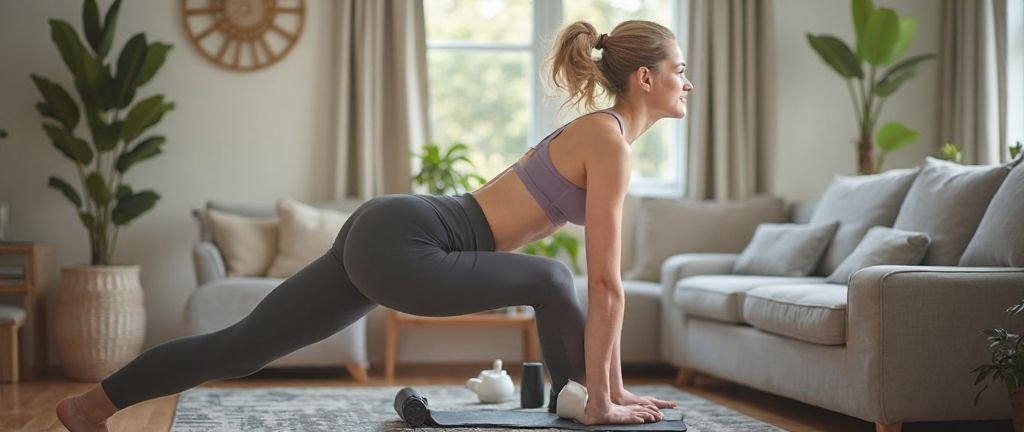
For your initial practice, focus on major movement patterns as opposed to trying to stretch every single muscle. A simple sequence might include a standing forward fold for your hamstrings and lower back, a low lunge for your hip flexors, a doorway chest stretch for your pectoral muscles, and gentle neck tilts and rotations.
This basic routine hits all the areas that get most compromised by sitting and screen time.
The progression you’ll experience won’t be linear. Some days you’ll feel more flexible than others based on factors like hydration, activity levels, and sleep quality.
This variability is completely normal.
The key is maintaining consistency even when progress seems to plateau temporarily.
The Mental Health Dimension
A 2019 study revealed that just 10 minutes of stretching and yoga poses reduced tension, anxiety, depression, anger, fatigue, and confusion while simultaneously improving mood. What struck me about this research was the duration, 10 minutes produced clinically meaningful improvements in many psychological measures.
For beginners struggling with stress management, this represents an incredibly effective intervention.
The connection between physical tension and psychological stress operates bidirectionally. Psychological stress causes muscle tension, particularly in the neck, shoulders, and jaw.
This physical tension then sends feedback to your brain that reinforces the stress response.
Stretching interrupts this cycle by releasing the physical component, which then signals to your nervous system that it’s safe to relax.
Combining stretching with mindful breathing amplifies these benefits substantially. When you focus on your breath while stretching, you’re essentially practicing a form of moving meditation.
This combination addresses stress from multiple angles simultaneously: the physical release of muscle tension, the psychological benefits of mindfulness, and the physiological calming that comes from controlled breathing.
The stress reduction mechanism also involves cortisol, your primary stress hormone. Chronic elevation of cortisol contributes to many health problems, from weight gain to immune system suppression.
Regular stretching has been shown to reduce cortisol levels, particularly when performed in a calm, mindful manner as opposed to as an aggressive flexibility pursuit.
Many beginners find that stretching becomes a form of self-care that they genuinely look forward to. Unlike high-intensity exercise that needs motivation and energy reserves, stretching can feel restorative even when you’re tired or stressed. This makes it a more sustainable practice for people who struggle with exercise adherence.
Common Beginner Mistakes That Undermine Progress
Overstretching represents one of the most frequent errors I see with beginners. There’s this misconception that stretching should hurt, or that you need to push yourself into extreme positions to see results.
The reality is that gentle, consistent stretching within comfortable ranges produces better results than aggressive stretching that causes pain. Pain indicates you’re damaging tissue, not improving flexibility.
The proper sensation during stretching should be mild tension or pull, never sharp pain. You should be able to breathe normally and relax into the position. If you’re grimacing or holding your breath, you’ve gone too far.
Bouncing while stretching is another problematic habit that stems from outdated approaches to flexibility training. These ballistic movements can cause small muscle tears and trigger a protective reflex that actually makes muscles tighten as opposed to lengthen.
Your stretches should be smooth and controlled, with steady holds as opposed to bouncing or jerking movements.
Inconsistency undermines even the best stretching routine. The Colorado State study showed that frequency matters tremendously.
Five times per week produced significantly better results than sporadic stretching, even when the actual time spent stretching was relatively brief.
For beginners, establishing a regular schedule is more important than the duration of person sessions.
Holding your breath during stretches is surprisingly common and completely counterproductive. Proper breathing enhances relaxation and oxygen delivery to the muscles you’re stretching.
I recommend taking slow, deep breaths throughout each stretch, consciously relaxing deeper into the position on each exhale.
Another mistake involves stretching only the muscles that already feel tight while neglecting opposing muscle groups. If your chest is tight from hunching forward, you need to stretch your chest muscles, but you also need to strengthen your upper back.
Flexibility imbalances can be just as problematic as tight muscles themselves.
Addressing Specific Problems
If you’re experiencing lower back pain, hip flexibility becomes critically important. A 2020 study demonstrated that targeted hip stretching effectively improves function and decreases back pain. This connection exists because tight hip flexors pull on your lumbar spine, creating strain that manifests as lower back discomfort.
Beginners with back pain should prioritize hip flexor stretches, pigeon poses, and gentle spinal twists.
The hip flexor stretch can be performed in a low lunge position, where you kneel on one knee with the other foot forward. Gently press your hips forward until you feel a stretch in the front of your back hip.
This position directly lengthens the iliopsoas muscle, which is the primary hip flexor that attaches to your lumbar spine.
Tension headaches often originate from chronic neck and shoulder tightness. Hours spent looking at screens create this tension pattern, which then restricts blood flow and creates referred pain that you experience as headaches.
Neck stretches, shoulder rolls, and upper trapezius stretches specifically address this problem.
I’ve found that incorporating these stretches into midday breaks prevents tension from accumulating to the point where headaches develop.
For desk workers, the postural problems created by prolonged sitting need targeted intervention. Your hip flexors shorten from constant sitting, your chest muscles tighten from hunching forward, and your upper back muscles weaken from lack of use.
A stretching routine that addresses all three of these areas helps break the negative postural cycle before it becomes severe.
The forward head posture that develops from screen use places enormous strain on your neck muscles. For every inch your head moves forward from its neutral position over your shoulders, it effectively adds 10 pounds of weight that your neck muscles must support.
Stretching the front of your neck and chest while strengthening the back of your neck helps reverse this pattern.
The Aging Factor
For older adults, stretching becomes progressively more important and useful. One in four older adults falls annually, and research shows that a 10-week stretching program significantly decreases fall risk through improved balance and proprioception.
This public health dimension of stretching often gets overlooked in discussions focused on athletic performance or fitness goals.
Muscles naturally shorten and tighten with age, making everyone more susceptible to injury and mobility limitations. Regular stretching counteracts this age-related flexibility decline, helping maintain independence in daily activities like bending to tie shoes, reaching overhead to get items from shelves, or getting in and out of cars.
These seemingly simple movements become genuinely difficult when flexibility decreases substantially.
Joint health also benefits dramatically from regular stretching in aging populations. Stretching increases blood flow to joint cartilage, delivering oxygen and nutrients that support joint tissue health.
For conditions like knee osteoarthritis, combining stretching with low-impact activities like walking has been shown to improve function and reduce pain more effectively than either intervention alone.
The loss of flexibility with aging isn’t inevitable, it’s largely a consequence of decreased movement variability and range of motion usage. When you stop moving through full ranges of motion regularly, your body adapts by reducing the length of muscles and connective tissues to match your actual movement patterns.
This is why maintaining a stretching practice becomes increasingly valuable as you age.
Older adults who maintain good flexibility also tend to maintain better posture, which affects everything from breathing capacity to digestive function. The forward stooping that often accompanies aging compresses internal organs and restricts lung expansion.
Stretching the muscles that contribute to this postural collapse helps maintain more upright positioning.
People Also Asked
Does stretching help reduce muscle soreness?
Yes, stretching helps reduce delayed onset muscle soreness (DOMS) by increasing blood flow to muscles, which helps flush out metabolic waste products like lactic acid that accumulate during exercise. Static stretching after workouts promotes this recovery process by maintaining elevated circulation to exercised muscles while your body transitions from activity to rest.
How long should I hold a stretch?
Hold each stretch for 15 to 30 seconds to see benefits. Research shows that this duration is sufficient to trigger increases in muscle length and blood flow.
Holding stretches longer than 60 seconds doesn’t appear to provide extra benefits for most people and may actually trigger protective muscle contraction that limits flexibility gains.
Can stretching improve posture?
Stretching significantly improves posture by lengthening chronically shortened muscles that pull your skeleton out of alignment. Tight hip flexors, chest muscles, and neck muscles from sitting and screen time create forward-leaning postures.
Regular stretching of these areas combined with strengthening of opposing muscle groups restores more neutral skeletal positioning.
Should I stretch before or after exercise?
Perform dynamic stretching before exercise and static stretching after exercise. Dynamic stretches like leg swings and arm circles prepare your muscles for movement by increasing temperature and nerve activation.
Static stretches where you hold positions are most effective after exercise when muscles are warm and promote recovery and flexibility development.
Does stretching help with anxiety?
Stretching reduces anxiety through multiple mechanisms including physical release of muscle tension, activation of the parasympathetic nervous system, and reduction of cortisol levels. Studies show that just 10 minutes of stretching can produce measurable decreases in anxiety symptoms, particularly when combined with mindful breathing.
What causes tight hip flexors?
Prolonged sitting causes tight hip flexors by keeping these muscles in a shortened position for hours. When muscles stay shortened consistently, they adapt by reducing their resting length.
This is why office workers, drivers, and people who sit frequently often experience hip flexor tightness that contributes to lower back pain.
Can stretching lower blood pressure?
Regular stretching lowers blood pressure by improving arterial flexibility and promoting vasodilation. A 12-week stretching program has been shown to produce clinically meaningful reductions in blood pressure, particularly in older adults.
The mechanism involves increased nitric oxide production that signals blood vessels to relax and widen.
How often should beginners stretch?
Beginners should stretch two to three times weekly initially, gradually increasing to five times weekly as the habit becomes established. Research shows that stretching five times per week produces optimal flexibility gains of about 2.4 degrees per week per muscle group when stretches are held for 15 to 60 seconds.
Key Takeaways
Stretching produces measurable benefits within weeks when performed consistently for just five to 10 minutes two to three times weekly. The distinction between dynamic stretching before activity and static stretching after activity is crucial for maximizing benefits and preventing injury.
The cardiovascular benefits of stretching extend beyond simple flexibility improvements, including reduced blood pressure, improved artery elasticity, and decreased risk of stroke and heart disease. Mental health improvements from brief stretching sessions are clinically meaningful and occur within 10-minute timeframes.
Age-related flexibility decline is preventable and reversible through consistent stretching practice, with particular importance for fall prevention and independence maintenance in older adults. Muscle imbalances created by modern lifestyle habits respond well to targeted stretching that addresses hip flexors, shoulders, and postural muscles.
Starting with minimal time investment and gradually increasing frequency produces better long-term results than aggressive initial approaches that lead to burnout or injury. The neuromuscular benefits of stretching, including improved proprioception and movement efficiency, represent underappreciated advantages that compound over time with consistent practice.
Everlywell 360 Full Body Test – 83 Biomarkers
Get a complete, high-level view of your health with one at-home test. This comprehensive panel measures 83 biomarkers across key health systems so you can spot trends, risks, and imbalances early.
- ✔ 83 biomarkers across metabolic, heart, thyroid, hormone & nutrient health
- ✔ CLIA-certified lab analysis
- ✔ Physician-reviewed results with clear explanations
- ✔ Simple at-home blood sample
FSA/HSA eligible • Comprehensive full-body insights
Disclaimer
The information contained in this post is for general information purposes only. The information is provided by Importance of Stretching: A Beginner’s Guide and while we endeavor to keep the information up to date and correct, we make no representations or warranties of any kind, express or implied, about the completeness, accuracy, reliability, suitability or availability with respect to the website or the information, products, services, or related graphics contained on the post for any purpose.