
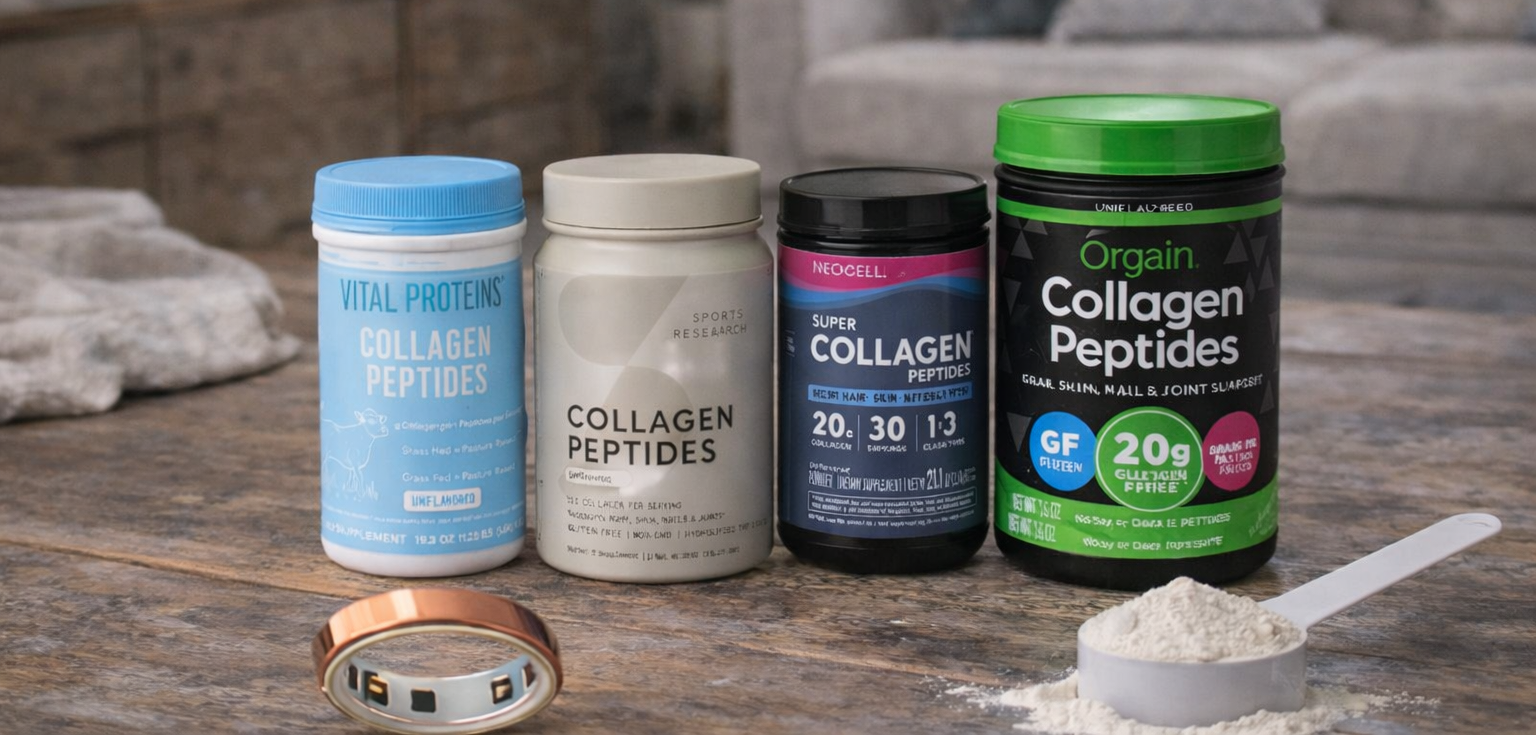
Walk into any health store and you’ll see products ranging from $12 budget powders sitting next to $75 luxury sachets. The marketing makes every single one sound like the fountain of youth.
When I first started comparing what I was actually getting for my money, I uncovered some pretty shocking truths that completely changed how I approach collagen supplementation.
The reality is that price doesn’t necessarily correlate with quality or effectiveness. Some of the most expensive products on the market contain significantly less actual collagen than their budget counterparts.
If you’re confused about whether to splurge on that influencer-promoted marine collagen or stick with a basic bovine powder, understanding the real differences between luxury and budget options can save you hundreds of dollars annually while potentially getting better results.
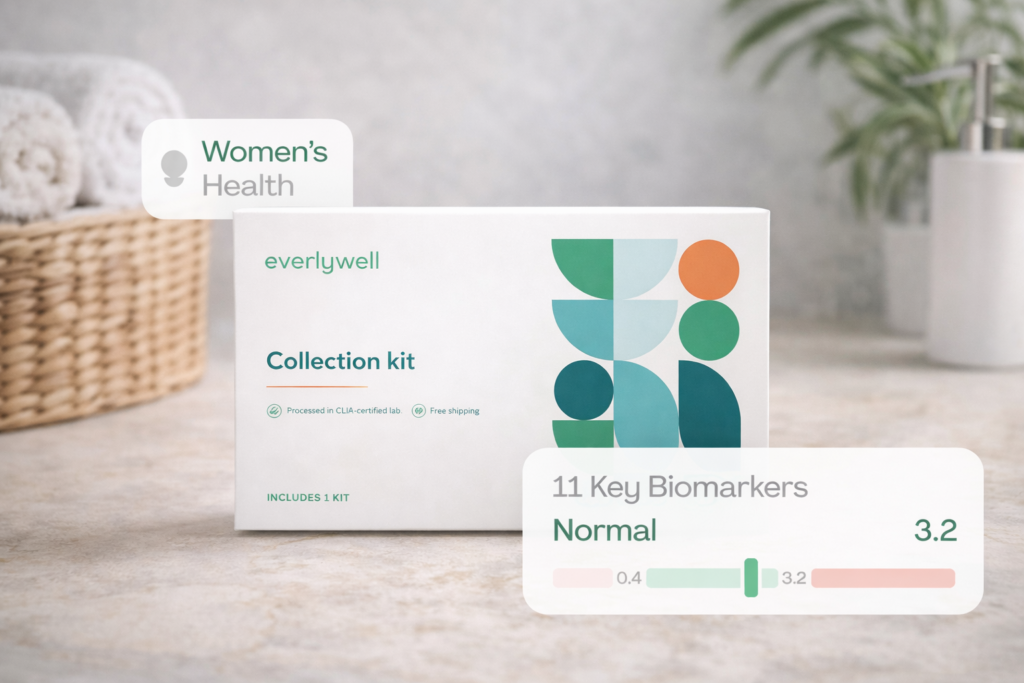
Everlywell Cholesterol & Lipids Test – At-Home Screening
Want to monitor your heart health and lipid levels without a lab visit? This at-home test provides a comprehensive look at key cholesterol markers so you can better understand your cardiovascular risk.
- ✔ Measures total cholesterol, LDL, HDL, and triglycerides
- ✔ CLIA-certified lab analysis
- ✔ Physician-reviewed, easy-to-read results
- ✔ Simple finger-prick blood sample from home
FSA/HSA eligible • Test from home • Personalized cardiovascular insights
Understanding What You’re Really Paying For
The collagen supplement industry has become incredibly sophisticated at creating perceived value distinctions that don’t always reflect actual product differences. When you’re looking at a $60 bottle versus a $15 option, you need to understand which factors legitimately justify price differences and which ones are purely marketing fluff.
The most basic metric that matters is cost per gram of actual collagen content. This single calculation cuts through all the fancy packaging, celebrity endorsements, and elaborate brand stories to reveal what you’re truly getting.
Research shows that collagen tablets deliver about 40-70% better value than trendy collagen drinks when you calculate the actual cost per gram.
For someone taking collagen consistently over a year, this translates to potential savings of $600 to $1,500 annually. That’s not an insignificant amount, especially when the effectiveness might be identical or even better with the more affordable option.
What really caught me off guard was discovering that some luxury collagen products don’t even disclose their collagen content on their packaging or websites. I found products priced at £45 for just 14 sachets that made it completely impossible to decide whether each serving contained 1 gram or 10 grams of collagen.
This lack of transparency particularly affects high-end brands that rely heavily on prestige positioning rather than concrete product specifications.
Meanwhile, budget brands often proudly display their 11 grams per serving right on the front label because that’s their competitive advantage.
The source of collagen significantly impacts pricing, but not always in ways that justify the cost differential. Marine collagen consistently costs 30-50% more than bovine collagen, primarily because of sourcing complexity, smaller production volumes, and aggressive marketing around bioavailability advantages.
While marine collagen does have smaller molecular structures that theoretically enhance absorption, the actual clinical difference in real-world results varies dramatically from person to person.
Some people experience noticeably better results with marine collagen, while others see absolutely no difference compared to well-formulated bovine options.
The Source Breakdown
Bovine collagen comes from cow skin and bones, providing primarily Types I and III collagen that support skin elasticity, bone strength, and arterial health. When sourced from grass-fed, free-ranging herds, bovine collagen quality can rival marine sources while maintaining significantly lower pricing.
The key distinction is sourcing transparency.
Grass-fed options from reputable suppliers offer genuinely superior quality compared to grain-fed conventional sources.
Marine collagen derives from fish skin and scales, predominantly from cod and similar species. It contains Types I and III collagen with naturally smaller peptide sizes that facilitate absorption.
The marketing around marine collagen emphasizes its bioavailability advantages, and there’s legitimate science supporting better absorption rates.
However, the practical difference in outcomes depends heavily on individual digestive efficiency and overall diet quality. Fish from open waters theoretically avoid pesticide exposure that can affect terrestrial sources, making marine collagen appealing for those concerned about environmental contaminants.
Porcine collagen represents the overlooked middle ground that barely gets marketing attention despite being structurally most similar to human collagen. It contains primarily Types I and III collagen and may actually present less allergy risk than other sources.
The reason you don’t see porcine collagen marketed aggressively is mostly cultural perception and religious dietary restrictions.
It’s unsuitable for kosher and halal diets. From a purely biochemical perspective, porcine collagen deserves far more consideration than it receives in mainstream discussions.
The Format Economics
I’ve tested pretty much every collagen format available, and the economics vary wildly based on delivery method rather than actual product quality. Powder formats consistently deliver the most cost-efficient option, averaging $0.25 to $0.45 per gram of collagen.
You need to mix them into beverages or food, which adds a minor inconvenience factor, but the savings are substantial enough that this becomes the obvious choice for long-term supplementation.
Individual sachets fall into the mid-range convenience category, costing about $0.55 to $0.75 per gram. Brands like Absolute Collagen and Revive Collagen position sachets as premium convenience products for travelers or busy professionals who want pre-portioned servings.
The convenience premium is modest enough that it makes sense for certain lifestyle situations, though daily home use makes powder formats more economical.
Collagen drinks represent the luxury end of format pricing, costing $0.60 to $1.00 per gram of collagen. When you’re paying $60 to $75 for a box of 10 to 12 bottles, you’re essentially paying for ultimate convenience, attractive packaging, and lifestyle branding rather than superior collagen quality.
These products position themselves as wellness experiences rather than cost-effective supplements.
For someone committed to daily collagen supplementation, drinks become financially unsustainable unless money is truly no object.
Capsules and gummies occupy an interesting middle space where portability improves dramatically but total collagen content per dose typically decreases. You’re trading some effectiveness for convenience that makes consistent supplementation more realistic if you travel often or dislike mixing powders.
Third-Party Testing as the Great Equalizer
One of the most important discoveries I made while researching collagen options is that third-party testing certification matters exponentially more than price point for actual product safety and quality assurance. The FDA doesn’t regulate supplements before they reach the market, meaning there’s no governmental verification that what’s listed on the label actually matches what’s in the bottle.
This regulatory gap makes independent third-party testing absolutely crucial.
Brands like Nutricost distinguish themselves by obtaining third-party certification despite being budget-priced options. This certification verifies label accuracy and confirms the absence of heavy metals, contaminants, and adulterants.
What really surprised me was realizing that a $15 supplement with proper third-party testing can be chemically identical and considerably safer than a $60 luxury product that hasn’t undergone independent verification.
The certification seals to look for come from recognized testing companies that specialize in supplement verification. When a product displays these seals prominently, it signals that the manufacturer prioritizes transparency over marketing mystique.
Conversely, luxury brands that avoid third-party testing despite having enough profit margins to afford it raise legitimate questions about what they might be hiding.
This creates a fascinating dynamic where quality assurance becomes democratized across price points. Budget-conscious consumers who do their research can access genuinely safe, effective collagen supplements without paying premium prices that primarily fund elaborate marketing campaigns and influencer partnerships.
The Supplementary Ingredient Question
Luxury collagen formulations often include supporting ingredients like vitamin C, hyaluronic acid, biotin, copper, and digestive enzymes. These additions genuinely enhance collagen effectiveness.
Vitamin C is particularly crucial for collagen synthesis in the body.
However, the pricing premium charged for these bundled formulations often exceeds what you’d pay purchasing ingredients separately.
I ran the calculations on this after noticing that mid-range collagen powders rarely included vitamin C while luxury options made it a centerpiece of their marketing. A quality budget collagen powder costs about $15, standalone vitamin C supplements run about $8, and hyaluronic acid averages $10.
You can create a formulation comparable to $50 to $75 luxury products for roughly $33 by purchasing components separately.
This reveals that luxury pricing partially reflects convenience bundling rather than ingredient innovation or superior quality. The convenience of having everything pre-mixed in optimal ratios does have real value for people who prefer simplified supplement routines, but it’s not the only way to achieve effective supplementation.
The counter-argument is that luxury brands invest in clinical research to decide optimal ingredient ratios and synergistic combinations that might not be obvious to consumers mixing components independently. Some premium formulations include proprietary blends with digestive enzymes and absorption enhancers that genuinely improve effectiveness.
The challenge is distinguishing between brands that have done meaningful formulation work versus those simply bundling common ingredients at inflated prices.
Decoding Marketing Claims
The collagen industry deploys extremely sophisticated marketing language that creates quality perceptions often disconnected from actual product specifications. Terms like “clinically proven,” “pharmaceutical grade,” “premium sourcing,” and “advanced formulation” sound impressive but lack standardized definitions in the supplement industry.
I’ve learned to look past marketing language and focus on specific, verifiable claims. Does the brand disclose exact collagen content per serving?
Can they provide documentation of their supply chain?
Is there third-party testing verification? Are there published clinical studies on the specific product formulation rather than just general collagen research?
Influencer endorsements particularly distort pricing dynamics. I was really shocked to uncover that Vida Glow, a heavily influencer-promoted collagen brand, contains only 3 grams of marine collagen per serving while commanding premium pricing.
Budget options containing 8 to 11 grams provide objectively superior value despite lacking social media glamour.
The “influencer tax” built into these products can represent 30-50% of the retail price, money that goes directly to marketing rather than product quality.
Celebrity dermatologist endorsements create another layer of perceived credibility that may or may not reflect actual product superiority. Some healthcare professionals genuinely evaluate formulations and only endorse products meeting specific quality standards.
Others essentially license their names and credentials to brands paying premium endorsement fees.
Understanding this distinction needs researching the specific professional’s reputation and whether they’ve published detailed criteria for their recommendations.
The Hydrolyzation Factor
One technical aspect that legitimately impacts quality across all price points is whether collagen has been properly hydrolyzed into peptides. Hydrolyzed collagen breaks down into smaller molecular structures that significantly enhance absorption rates and improve mixability in beverages.
This processing adds production costs but delivers genuine functional benefits.
The challenge is that “hydrolyzed collagen” and “collagen peptides” have become standard marketing terms that virtually every brand claims regardless of actual processing quality. The consistency and thoroughness of hydrolyzation varies between manufacturers, affecting bioavailability even when the base collagen source is identical.
Premium brands sometimes justify higher pricing by investing in advanced hydrolyzation processes that create more uniformly sized peptides with optimized molecular weights for absorption. Budget manufacturers might use less refined hydrolyzation that produces inconsistent peptide sizes.
The practical difference shows up in mixability.
Properly hydrolyzed collagen dissolves completely in cold liquids while poorly processed versions clump or leave residue.
Real-World Cost Analysis
When I calculated my actual annual collagen costs based on different product choices, the numbers became really eye-opening. Taking collagen daily for skin and joint health means you’re looking at 365 servings per year.
At $0.40 per gram for quality tablets providing 10 grams per serving, annual cost is about $1,460 for the collagen component alone.
Premium drinks at $0.80 per gram for the same daily dose would cost $2,920 annually.
That $1,460 annual difference represents substantial money that could fund other wellness priorities, upgrade other supplement quality, or improve overall accessibility for people on tighter budgets. For families where many members want collagen supplementation, the cost differential between budget and luxury options can exceed $3,000 annually.
The economic sustainability of supplementation matters tremendously because collagen needs consistent long-term use to produce meaningful results. Spending three months on expensive collagen before discontinuing because of cost provides minimal benefit compared to years of consistent supplementation with affordable options.
Sourcing Transparency and Sustainability
Higher-end brands increasingly emphasize sourcing transparency and environmental sustainability as differentiation factors. Grass-fed bovine collagen from specific regional suppliers, marine collagen from certified sustainable fisheries, and detailed supply chain documentation all represent legitimate quality indicators that justify modest price premiums.
The question is whether luxury pricing accurately reflects actual sustainability costs or whether it primarily funds brand positioning. Some mid-range brands achieve comparable sourcing standards without extreme pricing by operating more efficiently and investing less in elaborate marketing campaigns.
I’ve found that directly researching brand supply chains rather than relying on marketing claims reveals which companies genuinely prioritize ethical sourcing versus those using sustainability as a branding exercise. Brands that publish detailed sourcing information, facility certifications, and third-party sustainability verification tend to be more trustworthy regardless of their price positioning.
The Absorption Rate Reality
One of the most controversial aspects of collagen supplementation is whether expensive products actually deliver better absorption and bioavailability. Marine collagen marketing heavily emphasizes superior absorption because of smaller molecular size, and there’s legitimate scientific support for this advantage.
However, individual digestive efficiency varies so dramatically that some people absorb bovine collagen just as effectively as marine options.
Factors affecting absorption include overall gut health, stomach acid levels, digestive enzyme production, and concurrent nutrient intake. Someone with excellent digestive function might absorb budget bovine collagen extremely efficiently, while someone with compromised digestion might struggle with even premium marine formulations.
This creates a situation where the best collagen choice becomes highly individualized rather than universally determined by price point or source type. The most effective approach involves trying different options and assessing subjective results rather than assuming luxury products automatically deliver superior outcomes.
Quality Variance Within Price Ranges
One pattern I’ve noticed is that quality variance within the same price category often exceeds differences between budget and luxury tiers. You can find excellent $20 collagen supplements and terrible $60 options, just as you encounter mediocre $15 products and outstanding $50 formulations.
Price serves as a rough indicator but doesn’t decide quality with anywhere near the certainty that marketing suggests.
The most reliable quality indicators stay third-party testing certification, transparent collagen content disclosure, clear sourcing information, and established brand reputation based on actual customer outcomes rather than influencer promotion. These factors appear across all price ranges, making careful research more valuable than simply buying the most expensive option.
Building Your Optimal Collagen Strategy
After analyzing dozens of collagen products across the entire price spectrum, I’ve developed a practical framework for making optimal choices based on individual circumstances. Start by determining your primary supplementation goals, skin health, joint support, gut healing, or overall wellness.
Different collagen types and combinations serve these purposes with varying effectiveness.
Calculate your realistic long-term budget for supplementation. Collagen needs months of consistent use to produce noticeable results, making sustainability more important than short-term product experimentation.
If budget constraints mean you can only sustain supplementation with a $20 monthly option, that choice becomes objectively better than a $60 product you’ll stop after three months.
Prioritize third-party testing verification above all other factors regardless of price point. The safety and label accuracy this provides outweighs every other consideration.
Within the universe of properly tested products, compare cost per gram of actual collagen content rather than focusing on price per container.
Assess whether bundled ingredients in premium formulations offer genuine value or whether separate supplementation makes more economic sense. If you’re already taking vitamin C and hyaluronic acid for other reasons, paying premium prices for collagen that includes these ingredients wastes money.
Consider format convenience relative to your lifestyle. If powder mixing genuinely prevents consistent supplementation, paying the convenience premium for sachets or drinks might justify the extra cost.
Conversely, if you’re comfortable with powder formats, there’s no reason to pay 40-70% more for choice delivery methods.
People Also Asked
What is the best form of collagen to take?
Hydrolyzed collagen peptides in powder form offer the best combination of absorption, cost-effectiveness, and versatility. Powders typically cost $0.25 to $0.45 per gram compared to $0.60 to $1.00 per gram for pre-mixed drinks.
The hydrolyzation process breaks collagen into smaller molecules that your body absorbs more efficiently than whole collagen proteins.
Does marine collagen work better than bovine?
Marine collagen has smaller peptide molecules that theoretically absorb better, but real-world results vary significantly based on individual digestive health. Many people experience identical benefits from properly sourced grass-fed bovine collagen while paying 30-50% less.
The best approach is trying both types for at least three months each to assess which produces better personal results.
How much collagen should you take daily?
Most clinical research supports 10 grams daily for skin health and joint support, though effective dosages range from 2.5 to 15 grams depending on specific health goals. When comparing products, calculate the cost per serving based on this target amount rather than accepting whatever arbitrary serving size the manufacturer suggests.
Is expensive collagen worth it?
Expensive collagen is only worth the premium if it includes third-party testing verification, transparent collagen content disclosure, and extra proven ingredients like vitamin C or hyaluronic acid that you weren’t already taking separately. Many budget options with proper testing provide identical effectiveness at 40-70% lower cost.
Does collagen actually absorb into skin?
Collagen supplements don’t directly deposit into your skin as intact molecules. Instead, your digestive system breaks them into amino acids and peptides that your body uses to synthesize new collagen where needed. This process works regardless of whether you spent $15 or $75 on your supplement, assuming adequate dosage and absorption.
What should I look for when buying collagen?
Look for products displaying third-party testing certification seals, clear collagen content per serving (ideally 10+ grams), transparent sourcing information, and hydrolyzed peptides rather than whole collagen. Avoid products that don’t disclose exact collagen amounts or rely heavily on influencer marketing without substance.
Key Takeaways
The cost per gram of actual collagen content matters infinitely more than brand prestige, packaging aesthetics, or influencer endorsements when evaluating supplement value.
Third-party testing certification equalizes quality assurance across price points, making properly tested budget supplements potentially safer than unverified luxury options.
Marine collagen’s bioavailability advantages don’t necessarily translate to better real-world results for everyone, making properly sourced bovine collagen a legitimate cost-effective choice for many people.
Luxury formulations often bundle supporting ingredients that can be purchased separately for significantly less money, though pre-mixed convenience does have legitimate value for some users.
Collagen drinks cost 40-70% more per gram than powder formats, creating annual cost differences of $600 to $1,500 for daily users without meaningful effectiveness advantages.
Some expensive collagen products don’t disclose actual collagen content, making value assessment impossible and suggesting pricing based on marketing rather than product specifications.
Sustainable sourcing and supply chain transparency justify modest price premiums but don’t necessarily need luxury-tier pricing when mid-range brands achieve comparable standards.
Long-term supplementation sustainability matters more than short-term product prestige because collagen needs consistent use over months to produce meaningful results.
Everlywell Cholesterol & Lipids Test – At-Home Screening
Want to monitor your heart health and lipid levels without a lab visit? This at-home test provides a comprehensive look at key cholesterol markers so you can better understand your cardiovascular risk.
- ✔ Measures total cholesterol, LDL, HDL, and triglycerides
- ✔ CLIA-certified lab analysis
- ✔ Physician-reviewed, easy-to-read results
- ✔ Simple finger-prick blood sample from home
FSA/HSA eligible • Test from home • Personalized cardiovascular insights
Find out our Recommended Collagen Supplements for Women’s Skin and Hair Health; visit: https://www.vitalwomenwellness.com/best-collagen-supplements-for-womens-skin-and-hair-health/
Disclaimer
The information contained in this post is for general information purposes only. The information is provided by Collagen Choices: Luxury to Budget-Friendly and while we endeavor to keep the information up to date and correct, we make no representations or warranties of any kind, express or implied, about the completeness, accuracy, reliability, suitability or availability with respect to the website or the information, products, services, or related graphics contained on the post for any purpose.