
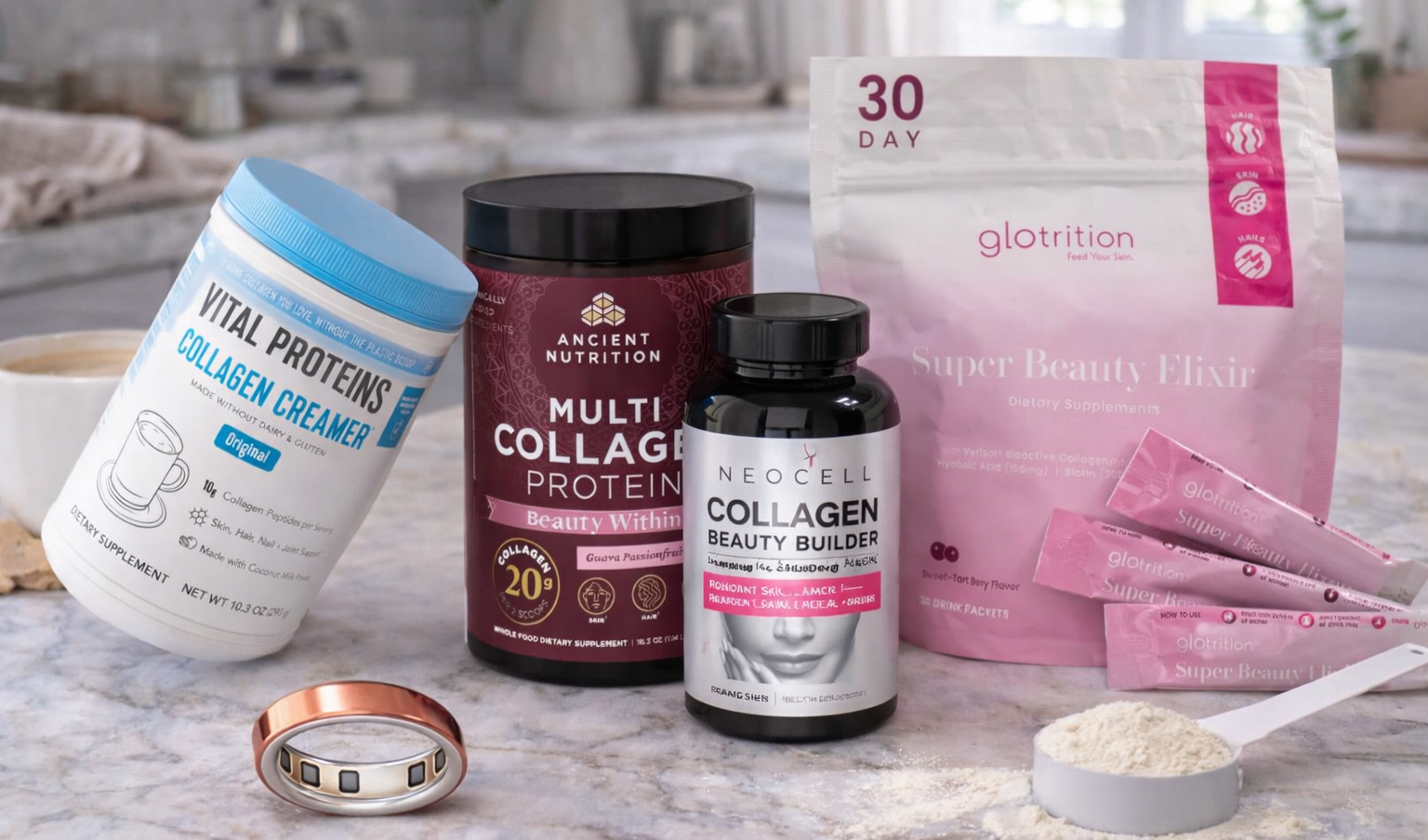
Standing in a supplement aisle surrounded by magnesium bottles and collagen tubs is a common experience. With joint discomfort, poor sleep, and visible changes in skin, it’s natural to question whether taking multiple supplements is genuinely beneficial or simply another example of wellness industry hype.
Magnesium and collagen are often discussed together, and this pairing has gained attention for good reason. When used correctly, the combination can create a meaningful synergistic effect that supports joint health, sleep quality, muscle recovery, and connective tissue integrity. However, these benefits depend heavily on choosing the right forms and understanding how each supplement functions in the body.
A major reason people fail to see results is poor product selection. Low-absorption forms of magnesium, such as magnesium oxide, and low-quality collagen sources are widely available because they are inexpensive to produce. When these inferior options are used, it’s easy to conclude that supplements don’t work.
The supplement industry is undeniably crowded with confusing claims and aggressive marketing, which fuels skepticism. However, beneath the noise, there is solid scientific evidence supporting specific, well-chosen supplement combinations. Magnesium and collagen, when properly sourced and dosed, represent one of those combinations—capable of addressing multiple physiological systems at once rather than acting in isolation.
Everlywell Food Sensitivity Test – At-Home Screening
Experiencing bloating, headaches, fatigue, joint pain, or skin flare-ups after eating? This at-home food sensitivity test helps identify foods that may be contributing to chronic, hard-to-pinpoint symptoms.
- ✔ Screens sensitivity responses to common foods
- ✔ CLIA-certified lab analysis
- ✔ Physician-reviewed, easy-to-read results
- ✔ Simple finger-prick blood sample from home
FSA/HSA eligible • Test from home • Personalized food insights
Understanding the Synergistic Foundation
When I first started researching this combo, I assumed magnesium and collagen were just two separate supplements that happened to be good for you. Take them together, get twice the benefits, right?
Not quite.
What’s actually happening is far more interesting.
Magnesium is involved in over 300 biochemical reactions in your body. This mineral is absolutely basic to how your cells function, how your muscles contract and relax, how your nerves fire, and how your body synthesizes proteins.
Collagen, meanwhile, is the most abundant protein in your entire body, making up the structural framework for your skin, joints, bones, tendons, ligaments, and even your gut lining.
Here’s where it gets fascinating. Magnesium actually plays a critical role in collagen synthesis itself.
Your body needs adequate magnesium to properly manufacture and use collagen.
When you take collagen supplements without sufficient magnesium levels, you’re essentially providing building materials without the construction crew needed to use them effectively. The magnesium acts as a catalyst that helps your body actually incorporate the collagen peptides you’re consuming into new tissue.
But there’s another layer to this. The best form of magnesium for this purpose, magnesium glycinate, binds magnesium to the amino acid glycine.
And glycine happens to be one of the primary building blocks of collagen itself.
You’re getting this dual-action effect where the glycine component is simultaneously improving magnesium absorption and providing raw materials for collagen production. This creates a self-reinforcing loop instead of just two independent supplements sitting next to each other in your stomach.
This is why I really started paying attention to which forms of each supplement I was using. The combination only works if you’re strategic about it.
Choosing the Right Magnesium Form
I wasted probably six months taking magnesium oxide because it was what my local drugstore carried and I didn’t know any better. I’d take it at night, hoping for better sleep, and instead I’d wake up at 3 AM needing to sprint to the bathroom.
Not exactly the restful night I was aiming for.
Magnesium oxide is terribly absorbed by your body, with bioavailability rates around 4%. That means for every 400mg you take, you’re actually absorbing maybe 16mg, and the rest is sitting in your intestines drawing water in and causing digestive chaos.
Doctors literally use it as a laxative in medical settings, which should tell you something about taking it as a daily supplement.
Magnesium Glycinate
This is the gold standard for pairing with collagen, and for good reason. The magnesium is chelated, meaning it’s bonded to glycine, which creates this really stable compound that your body can absorb efficiently.
The absorption rate is significantly higher than oxide, you’re actually getting the magnesium into your bloodstream instead of flushing it down the toilet.
What I noticed within about two weeks of switching to glycinate was that my sleep genuinely improved. Not in a dramatic, knock-you-out kind of way, but in a subtle deepening of sleep quality. I was waking up feeling more restored. The glycine component has this calming effect on your nervous system by supporting GABA receptors, which helps quiet that mental chatter that keeps you awake at night.
For the collagen combination specifically, glycinate is perfect because you’re getting that double dose of glycine, both for magnesium absorption and as a collagen building block. The stuff is also incredibly gentle on your stomach, which matters when you’re taking it daily long-term.
Magnesium Citrate
This is my second choice, and some premium combination products actually include both glycinate and citrate together. Magnesium citrate is bonded to citric acid, which gives it really good absorption rates, though it can still cause loose stools at higher doses.
I use citrate specifically post-workout sometimes because it seems to help with muscle recovery and that citric acid component plays a role in energy production pathways. When combined with collagen after training, I’ve noticed better joint recovery and less stiffness the next day.
This might be personal response, but it’s been consistent enough that I keep it in my rotation.
Magnesium Bisglycinate
This is essentially a more concentrated version of glycinate, with two glycine molecules attached to each magnesium atom instead of one. It offers the same benefits as glycinate but with even better absorption and an extra dose of glycine, which again feeds into that collagen synthesis pathway.
The reality is that any of these chelated forms work well with collagen supplementation. What you want to absolutely avoid is oxide, and probably carbonate as well, which has similarly poor absorption and digestive effects.
Decoding Collagen Sources and Quality
I genuinely thought all collagen was basically the same until I started experiencing wildly different results from different products. I’d buy whatever was on sale, dump a scoop in my coffee, and wonder why my skin and joints weren’t transforming like the Instagram ads promised.
The type of collagen, its source, and how it’s processed matter tremendously for both effectiveness and value.
Marine Collagen from Fish Scales
This was a total revelation for me. Most marine collagen comes from fish skin, which is fine, but there’s this emerging research showing that collagen sourced specifically from wild-caught fish scales has superior bioavailability.
The peptide structure is smaller and more easily absorbed than collagen from fish skin or bovine sources.
What’s really interesting is that fish scales are typically discarded as waste in fish processing, so using them for collagen is actually an environmental win while producing a superior product. I switched to a premium fish scale collagen about a year ago, and the dosage difference is notable.
With my previous bovine collagen, I was taking 15-20 grams daily to see any effect.
With the marine fish scale version, I get better results from just 5 grams.
This creates this counterintuitive pricing situation where premium marine collagen appears more expensive per container, but when you factor in that you need half or even a quarter of the dosage, it actually ends up being more cost-effective. I was spending more money on cheap collagen because I had to use so much of it.
Hydrolyzed Collagen Peptides
Whatever source you choose, it absolutely must be hydrolyzed. This means the collagen has been broken down into smaller peptides through enzymatic processing. Non-hydrolyzed collagen, regular gelatin basically, has much larger molecular structures that your body struggles to absorb effectively.
Hydrolyzed collagen dissolves completely in both hot and cold liquids without that gross, gritty texture. If your collagen is clumping up or leaving residue in your drink, it’s probably not properly hydrolyzed, and you’re not absorbing it well.
Collagen Types
There are actually 28 different types of collagen in the human body, but Types I and III are what you want for skin, hair, nails, bones, and connective tissue support. Type II is more specific to cartilage and joint health.
Most marine collagen naturally contains Types I and III, which is another reason I prefer it. If you’re buying bovine collagen, make sure the label specifies which types are included. Vague labeling that just says “collagen protein” without specifying types is a red flag that you’re dealing with a lower-quality product.
Optimal Dosing Strategy
The dosing question is where things get really individual, but I can share what the research suggests and what I’ve found works practically.
For magnesium, the safe supplemental range is generally up to 350mg daily from supplements, though you can consume unlimited amounts from food sources without concern. Most effective doses for the magnesium-collagen combination fall between 250-400mg of elemental magnesium daily.
Here’s a crucial detail that trips people up: you need to look at elemental magnesium content, not the total compound weight. A supplement might say “Magnesium Glycinate 2000mg” but only contain 200mg of elemental magnesium, with the rest being the glycine component.
Always check the supplement facts panel for the actual magnesium content.
I personally take 300mg of elemental magnesium from glycinate, split between morning and evening doses. Some people do better with the full dose at night for sleep support, others prefer splitting it to maintain steady levels throughout the day.
You’ll need to experiment to find what works for your body.
For collagen, the standard recommendation is 10 grams daily, but this is where product quality becomes absolutely critical. With premium hydrolyzed marine collagen from fish scales, 5 grams daily has been clinically shown to produce measurable results.
With lower-quality bovine collagen or poorly processed marine collagen, you might need 15-20 grams to see similar effects.
I started with 10 grams of my current marine collagen and actually scaled back to 5 grams after about three months when I realized I wasn’t seeing extra benefits from the higher dose. That container now lasts me twice as long, which makes the premium price much more reasonable.
One thing that’s really important: you need adequate vitamin C intake for collagen to work effectively. Vitamin C is required for your body to incorporate collagen amino acids into new tissue.
I make sure to get at least 500mg of vitamin C daily, either from food sources or a supplement, taken at the same time as my collagen.
Powder vs Tablet Format
I spent my first few months taking magnesium tablets because they seemed more convenient than mixing powders. I was so wrong about this, and it actually cost me a lot of wasted time and money.
Magnesium in tablet form, even the good chelated versions, absorbs significantly less effectively than liquid or powder forms. The tablet has to break down in your digestive system, then the magnesium needs to be released and absorbed. With powder dissolved in liquid, you’re starting with the magnesium already in solution, which means your body can absorb it much more readily.
I switched to powder formats for both magnesium and collagen about two years ago, and the difference in effectiveness was noticeable within a week. My sleep improved more, my joint response was better, and I actually started seeing the skin benefits that had been totally absent with tablets.
The practical advantage is also bigger than I expected. I make this ritual every evening where I mix my magnesium and collagen powder into hot water with a bit of chamomile tea. This has become a really pleasant wind-down routine that signals to my body that it’s time to start relaxing.
You can’t really create that kind of ritual with tablets, you’re just popping pills and moving on.
For collagen specifically, powder let’s you add it to coffee, smoothies, soups, or basically any liquid. I throw a scoop in my morning coffee and don’t taste it at all.
The versatility makes it much easier to stay consistent, which is really the key to seeing results with any supplement regimen.
Strategic Timing for Maximum Benefit
When you take these supplements matters almost as much as which ones you take. I learned this the hard way after taking magnesium in the morning and wondering why I felt slightly foggy and tired all day.
Evening Protocol for Sleep and Recovery
Taking your magnesium-collagen combination in the evening leverages magnesium’s calming, sleep-promoting effects while providing collagen amino acids during the body’s natural repair cycle during sleep. This is what I do most days, and it’s transformed my sleep quality.
The glycine in magnesium glycinate supports serotonin production, which then converts to melatonin. This differs from taking melatonin directly, which can knock you out but might disrupt your natural production over time. Instead, you’re supporting your body’s natural sleep chemistry.
Collagen taken before bed provides amino acids that your body uses during deep sleep stages for tissue repair. Your body is doing the majority of its healing and rebuilding while you sleep, so giving it the raw materials it needs during that window makes biological sense.
I take mine about 60-90 minutes before bed, mixed into warm water or herbal tea. The warmth itself is calming, and that timing gives the supplements time to start absorbing before I’m asleep.
Morning or Post-Workout Protocol
If your primary goal is joint support and athletic recovery instead of sleep, taking the combination in the morning or after training might work better for you. Some people feel energized by magnesium instead of relaxed, which is a real personal variation in response.
If you’re one of those people, evening dosing will obviously backfire.
Morning intake supports muscle function throughout the day and provides collagen for active recovery. Post-workout timing specifically helps with the muscle and connective tissue repair process initiated by training.
I’ll sometimes take a second smaller dose of collagen after hard training sessions, in addition to my evening magnesium-collagen protocol, especially if I’m in a heavy training block.
Specific Health Outcomes and Applications
Joint and Connective Tissue Support
This was my original reason for trying the combination, and it’s delivered the most consistent results for me. I’ve dealt with chronic tendonitis in my elbows from years of climbing and lifting, and the magnesium-collagen combo has been more effective than anything else I’ve tried, including prescription anti-inflammatories.
The collagen provides structural support for cartilage, tendons, and ligaments, while magnesium supports proper muscle function so you’re not creating compensatory tension patterns that stress joints further. I notice the difference within about two weeks if I stop taking it, my joints start feeling creakier and less resilient.
For anyone dealing with osteoarthritis or general joint wear and tear, this combination addresses the problem from many angles simultaneously. You’re providing building materials for tissue repair while supporting the biochemical processes that allow that repair to happen.
Skin, Hair, and Nail Quality
The vanity benefits are real, though they take longer to manifest than joint effects. I didn’t notice significant skin changes until about three months of consistent use, but when they appeared, they were genuinely noticeable.
My skin texture became smoother, fine lines around my eyes softened slightly, and my skin just looked more hydrated from within. Not like Botox-level transformation, but enough that people commented that I looked well-rested even when I wasn’t.
Hair and nail effects showed up around the same timeframe. My nails stopped peeling and breaking constantly, and my hair seemed to grow faster and feel thicker.
These might sound like minor cosmetic things, but they’re actually markers of improved structural protein synthesis throughout your body.
Sleep Quality and Stress Resilience
The sleep improvements were the quickest benefit I noticed, showing up within about 10 days. Not dramatic knockout sleep, but a subtle deepening of sleep quality and a reduction in middle-of-the-night waking.
The stress resilience piece is harder to quantify but genuinely impactful. I find I’m less reactive to stressors and recover from stress more quickly.
This is likely the combination of magnesium’s effects on the nervous system and the gut-healing benefits of collagen’s glycine content, since gut health and anxiety are deeply connected.
Athletic Recovery
For anyone training hard, this combination supports recovery in many ways. The magnesium helps with muscle function and reduces cramping.
The collagen supports connective tissue repair from the repetitive stress of training.
And the overall anti-inflammatory effects help manage training-induced inflammation.
I’ve found that my recovery between hard sessions is noticeably better, and I seem to be more resistant to overuse injuries when I’m consistent with the magnesium-collagen protocol.
Frequently Asked Questions
Can magnesium help collagen absorption?
Yes, magnesium plays a crucial role in collagen synthesis and helps your body actually use the collagen you consume. Without adequate magnesium, your body struggles to incorporate collagen peptides into new tissue effectively.
What is the best form of magnesium to take with collagen?
Magnesium glycinate is the best form to pair with collagen because it contains glycine, which is a primary building block of collagen itself. This creates a synergistic effect where you’re getting better magnesium absorption and extra collagen-building materials simultaneously.
How much collagen should I take daily?
With high-quality hydrolyzed marine collagen from fish scales, 5 grams daily is typically effective. Lower-quality bovine collagen may need 10-20 grams daily to see similar results.
The quality of your collagen source matters more than the quantity.
Should I take collagen in the morning or at night?
Evening dosing works well for sleep support and overnight tissue repair, while morning or post-workout timing better supports athletic recovery and daytime muscle function. Choose based on your primary goals.
Does marine collagen work better than bovine collagen?
Marine collagen, especially from fish scales, generally has superior bioavailability compared to bovine collagen. The peptide structures are smaller and more easily absorbed, which means you need lower doses to see results.
Can magnesium glycinate improve sleep?
Yes, magnesium glycinate supports better sleep quality by promoting GABA receptor function and supporting serotonin production, which converts to melatonin. The effects are typically subtle but consistent, deepening sleep quality as opposed to causing sedation.
How long does it take to see results from collagen supplements?
Joint benefits often appear within 2-3 weeks, while skin, hair, and nail improvements typically take 8-12 weeks of consistent use. Athletic recovery benefits can be noticeable within the first week.
Is powder or capsule form better for magnesium and collagen?
Powder forms of both magnesium and collagen absorb significantly better than tablets or capsules because they’re already in solution when you consume them, allowing for more effective absorption.
Key Takeaways
Magnesium and collagen work synergistically because magnesium supports collagen synthesis while collagen provides structural benefits that magnesium alone can’t deliver. Choosing magnesium glycinate or bisglycinate paired with hydrolyzed marine collagen from fish scales offers superior bioavailability compared to cheaper choices like magnesium oxide and bovine collagen.
Powder formats absorb significantly better than tablets for both supplements.
Effective dosing typically ranges from 250-400mg elemental magnesium and 5-10 grams hydrolyzed collagen daily, with premium sources requiring lower collagen doses. Evening timing leverages sleep and recovery benefits, though morning or post-workout timing suits athletic applications.
The combination addresses joint health, skin quality, sleep improvement, and stress resilience most effectively, with results typically appearing within 2-12 weeks depending on the outcome.
Quality markers include third-party testing, transparent sourcing, specific form labeling, and minimal additives.
Everlywell Food Sensitivity Test – At-Home Screening
Experiencing bloating, headaches, fatigue, joint pain, or skin flare-ups after eating? This at-home food sensitivity test helps identify foods that may be contributing to chronic, hard-to-pinpoint symptoms.
- ✔ Screens sensitivity responses to common foods
- ✔ CLIA-certified lab analysis
- ✔ Physician-reviewed, easy-to-read results
- ✔ Simple finger-prick blood sample from home
FSA/HSA eligible • Test from home • Personalized food insights
Find out our Recommended Magnesium and Collagen; visit: https://www.vitalwomenwellness.com/why-you-should-consider-magnesium-and-collagen/
Disclaimer
The information contained in this post is for general information purposes only. The information is provided by Best Magnesium and Collagen Combos for You and while we endeavor to keep the information up to date and correct, we make no representations or warranties of any kind, express or implied, about the completeness, accuracy, reliability, suitability or availability with respect to the website or the information, products, services, or related graphics contained on the post for any purpose.