
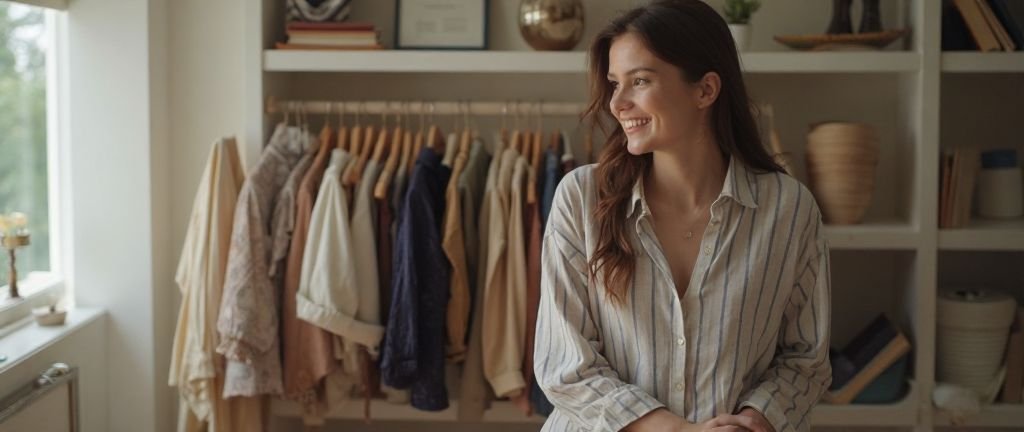
Many people stand in front of overflowing closets and still feel like they have nothing to wear. Clothes purchased with excitement end up unworn, some still with tags attached, others fading into the background. What appears to be a wardrobe issue is often something else entirely: a consumption problem.
Building a sustainable wardrobe has surprisingly little to do with shopping. This runs counter to the constant messaging around “eco-friendly” brands and ethical fashion drops, but the reality is simple: the most sustainable wardrobe is the one that already exists. Everything else is layered on top by an industry designed to encourage continuous buying, even under the banner of sustainability.
This does not mean never purchasing clothing again. That expectation is unrealistic and misses the point. Sustainability is not about deprivation ~ it’s about intention. It’s about changing the relationship with clothing so that each piece has a role, is worn regularly, repaired when possible, and kept in circulation until it truly reaches the end of its life.
When clothing is treated as disposable, even “sustainable” purchases can contribute to the same environmental harm as fast fashion. But when consumption slows and ownership becomes more deliberate, wardrobes become smaller, more functional, and far less damaging to the planet.
A sustainable wardrobe is not built through constant upgrades. It’s built through use, care, and restraint.
Everlywell Food Sensitivity Test – At-Home Screening
Experiencing bloating, headaches, fatigue, joint pain, or skin flare-ups after eating? This at-home food sensitivity test helps identify foods that may be contributing to chronic, hard-to-pinpoint symptoms.
- ✔ Screens sensitivity responses to common foods
- ✔ CLIA-certified lab analysis
- ✔ Physician-reviewed, easy-to-read results
- ✔ Simple finger-prick blood sample from home
FSA/HSA eligible • Test from home • Personalized food insights
Understanding What Sustainable Actually Means
Before we dive into the practical stuff, let’s get clear on what we’re actually talking about here. Sustainable fashion means understanding the entire lifecycle of your clothing, from the raw materials used to create the fabric, through the manufacturing process, the way you care for and wear the garment, and eventually what happens when you’re done with it.
Here’s what really opened my eyes: clothing production accounts for roughly 10% of all global carbon emissions. That’s more than international flights and maritime shipping combined. The fashion industry is responsible for massive water consumption, chemical pollution from textile dyeing, and the exploitation of workers in developing countries.
But here’s the thing that nobody talks about enough: the way you use and care for your clothes represents about 30% of that garment’s total carbon footprint. That means the choices you make after you buy something matter almost as much as what you buy in the first place.
Washing your clothes less often, air drying instead of using a dryer, and actually wearing pieces more than a handful of times before tossing them can have a bigger impact than you’d think. Research shows that increasing the number of times you wear a garment from 109 wears to 400 wears reduces its environmental impact by 60%.
Most fast fashion pieces don’t even make it to 109 wears.
The durability factor changes everything. A cheap polyester blouse that falls apart after six months needs you to buy a replacement, doubling the environmental impact.
A well-made natural fiber shirt that lasts five years spreads that impact across hundreds of wears.
The math is straightforward once you start thinking in terms of garment lifecycles rather than upfront costs.
Starting With What You Already Have
The very first step in building a sustainable wardrobe has nothing to do with shopping. You need to do a proper wardrobe audit, and I mean really dig in there.
Pull everything out.
Every single piece. Lay it all out where you can see it.
This process is honestly pretty uncomfortable for most people. You’re going to find clothes you forgot you owned, things with tags still on them, and pieces that made perfect sense in the store but have never once been worn in real life.
That discomfort is actually valuable information about your shopping habits and patterns.
Sort everything into three piles: what you wear regularly, what you haven’t worn in over a year, and what needs repair. Be brutally honest with yourself here.
If you’re holding onto something because you might wear it someday, or because it was expensive, or because it technically still fits even though you hate how it looks on you, that needs to go in the “haven’t worn” pile.
The items you wear regularly are your foundation. These pieces already prove they work for your lifestyle, your body, and your personal style.
Everything else is just clutter that’s preventing you from seeing what you actually need.
For the things you haven’t worn, you’ve got options: donate them to thrift stores, sell them online through platforms like Depop or Poshmark, organize a clothing swap with friends, or if they’re in really poor condition, look into textile recycling programs in your area.
The repair pile is where things get interesting. A missing button or a small tear shouldn’t be a death sentence for a garment.
Learning basic sewing skills, or finding a good local tailor, can extend the life of your clothes by years.
I started keeping a small sewing kit in my closet, and it’s genuinely changed how I think about clothing longevity.
You’d be surprised how many garments just need minor adjustments. A hem that came loose takes five minutes to fix.
Replacing a button costs nothing if you’ve saved the extras that came with the garment.
Even larger repairs like patching a hole or replacing a zipper are usually cheaper than buying a replacement, and they teach you skills that make all your future clothes last longer.
Defining Your Actual Style
Here’s something nobody wants to admit: most of us don’t actually know what our personal style is. We know what looks good on Instagram influencers.
We know what magazines tell us is trendy.
We know what our friends are wearing. But our own style?
That’s murkier.
Building a sustainable wardrobe absolutely needs you to get crystal clear on this. Otherwise, you’re just going to keep buying random pieces that don’t work together, which leads to more shopping to fill the gaps, which creates more waste.
I spent a solid month just observing what I naturally reached for when getting dressed. Not what I thought I should wear, or what I wished looked good on me, but what I actually felt comfortable and confident in. I took photos of outfits I loved wearing and looked for patterns.
Turns out, I’m drawn to structured silhouettes, neutral colors with occasional pops of deep red, and natural fabrics that feel good against my skin. That information became the foundation for every future purchase.
Think about your lifestyle too. If you work from home most days, a closet full of business formal wear doesn’t make sense no matter how stylish it is.
If you live somewhere with extreme seasonal changes, you need a wardrobe that adapts.
If you’re really active, prioritizing comfortable, durable pieces over delicate ones just makes practical sense.
Understanding your color palette matters more than you’d think. Certain colors make you look washed out or tired, while others brighten your complexion.
When most of your wardrobe sits within a cohesive color story, pieces naturally coordinate better, which means you need fewer items overall to create diverse outfits.
The Psychology Behind Overconsumption
Let’s talk about why we buy so much stuff in the first place. The fashion industry has spent decades training us to feel inadequate with what we have.
Every season brings new “must-have” items.
Every trend cycle tells us last year’s purchases are now outdated. Social media amplifies this pressure exponentially.
I used to think buying from sustainable brands would solve my overconsumption problem. Spoiler alert: it didn’t.
I just ended up buying expensive organic cotton t-shirts instead of cheap polyester ones, but I was still buying constantly.
The real shift came when I realized that consumption itself was the problem, not just where I was consuming from.
There’s this concept called the “rebound effect” in sustainable consumption. Basically, when people switch to eco-friendly products, they often end up consuming more because they feel less guilty about it.
Buying from an ethical brand gives you moral permission to purchase more often.
But even the most sustainably produced garment still has an environmental footprint. The only truly zero-impact choice is not buying at all.
Before any purchase now, I ask myself a series of questions that have become automatic: Do I actually need this, or do I just want it? Will I wear this at least 100 times?
Does it fill a genuine gap in my wardrobe, or am I just excited by something new?
Can I get this secondhand instead? Is this impulse driven by boredom, stress, or some other emotion I should address differently?
These questions feel annoying at first because they interrupt the dopamine hit of shopping. But they’ve saved me from countless purchases I would have regretted. The waiting period is especially powerful.
Put something on a wishlist and come back to it in 30 days.
Usually by then, the urgency has completely faded and you realize you don’t actually need it.
Materials Matter More Than You Think
If you’re going to buy something new, the fabric composition decides how sustainable that garment actually is. This is where the fashion industry has gotten really good at greenwashing.
They’ll slap “eco” labels on items that contain mostly synthetic materials, or they’ll highlight one sustainable component while ignoring the rest of the supply chain.
Natural fibers are generally your best bet. Wool is incredibly durable, biodegradable, and doesn’t shed microplastics into the ocean when you wash it.
Good quality wool garments can literally last decades if you care for them properly.
I have a wool sweater from my grandmother that’s older than I am and still in excellent condition.
Organic cotton avoids the pesticides and chemicals used in conventional cotton farming, though it still needs significant water to produce. Hemp is ridiculously durable and sustainable to grow.
Linen gets softer with age and rarely wears out.
Tencel, which is made from beechwood fibers, uses 10 to 20 times less water than cotton and is produced in a closed-loop system that recycles the processing chemicals.
What you want to avoid are polyester, acrylic, nylon, and other synthetic fibers derived from fossil fuels. These materials shed microplastics every time you wash them, contributing to ocean pollution.
They also increase the greenhouse gas impact of a garment by more than 100 times compared to durable natural choices.
Plus, synthetic fibers don’t breathe well, they hold onto odors, and they generally just don’t feel as good against your skin.
The real problem comes with blended fabrics. A shirt that’s 60% cotton and 40% polyester might seem like a decent compromise, but blends are nearly impossible to recycle.
The fibers can’t be separated, so the entire garment ends up in a landfill eventually.
If you’re going to invest in something, make sure it’s 100% natural fiber whenever possible.
I’ve also learned to be really skeptical of labels. I picked up a sweater once that was marketed as wool, and when I actually read the care tag, it was 55% polyester.
That’s not a wool sweater.
That’s greenwashing. Always, always check the actual fiber content before buying anything.
How You Care for Clothes Changes Everything
This is the part that really shifted my understanding of sustainable fashion. The way you wash, dry, and store your clothes has a massive environmental impact that most people completely overlook.
Washing clothes less is probably the single biggest thing you can do. I know that sounds gross, but hear me out.
Most items don’t need to be washed after every wear unless you’ve been sweating heavily or they’re actually dirty.
Jeans can go weeks between washes. Sweaters worn over shirts rarely need washing at all.
Even t-shirts can be worn a couple times if you’re not doing intense physical activity.
When I started hanging clothes outside for 30 minutes instead of washing them, I was amazed at how much that freshened them up. Just getting them into fresh air and sunshine removes odors and makes them feel clean again. For specific areas like underarms, spot treating with a damp cloth works better than throwing the entire garment in the wash.
When you do wash clothes, use cold water and eco-friendly detergent. Hot water uses significantly more energy and isn’t necessary for most loads.
Skip the dryer whenever possible and air dry instead.
Dryers are energy hogs and they’re really hard on fabric, breaking down fibers and causing clothes to wear out faster. I installed a simple drying rack that folds flat when not in use, and it’s been one of my best sustainability investments.
For synthetic fabrics you already own, consider using a Guppyfriend bag or similar product that captures microfiber particles before they enter waterways. It doesn’t solve the basic problem of synthetics, but it reduces the damage while you’re transitioning your wardrobe to natural fibers.
Proper storage matters too. Wool needs to breathe and should be folded rather than hung to prevent stretching.
Delicate items benefit from garment bags.
Moths are attracted to dirty clothes, so making sure things are clean before storing them seasonally prevents damage.
Navigating the Secondhand Market
Buying secondhand is hands down the most sustainable way to add to your wardrobe. The garment already exists, so you’re not contributing to new production.
You’re extending the life of something that might otherwise end up in a landfill.
Plus, you can often find higher quality pieces than you could afford new.
Thrifting has gotten more popular in recent years, which is great for the environment but has created some challenges. In many cities, thrift stores have been picked over by resellers who flip items online.
Prices have increased as vintage clothing has become trendy.
There’s even concern about “thrift store gentrification,” where people who have other shopping options buy up affordable clothes that low-income guys rely on.
I try to be mindful about this. If I’m specifically looking for designer pieces or vintage items to build my wardrobe, I shop at higher-end consignment stores or online platforms where prices reflect that.
For basic items, I check my local thrift stores but I’m not buying up many pieces that someone else might need more than I do.
Online secondhand shopping has exploded. Poshmark, Depop, ThredUp, and dozens of other platforms make it easy to find specific items. The downside is you can’t try things on, and the shipping emissions add up.
I try to batch my online secondhand purchases and avoid buying from platforms that don’t have reasonable return policies.
Vintage boutiques are another great option if you’re looking for unique pieces with character. The curation means you’re not sorting through racks of dated office wear, and the staff usually have good knowledge about fabric quality and era-specific details.
They’re more expensive than thrift stores, but still cheaper than buying equivalent quality new.
Clothing swaps have become popular in my community. A group of us gets together every few months, brings items we no longer wear, and everyone shops from the collective pile.
It’s free, social, and I’ve found some of my favorite pieces this way.
The key is making sure people bring quality items, not just using it as a way to dump garbage they should have thrown away.
When You Do Buy New
Sometimes you genuinely need to buy something new. Your work boots finally gave out after years of wear.
You moved to a different climate and need suitable outerwear.
Your body changed and your old clothes don’t fit anymore. That’s fine.
The goal is being thoughtful.
When buying new, prioritize brands with transparent supply chains and genuine sustainability commitments. Look for certifications like Fair Trade, GOTS for organic cotton, or B Corp status.
Read about their labor practices and environmental policies.
If a brand isn’t willing to share where and how they make their products, that’s a red flag.
Be prepared to pay more. A sustainably and ethically produced t-shirt is going to cost two to five times what you’d pay at a fast fashion retailer.
That price reflects fair wages for workers, better materials, and slower production methods.
The sticker shock is real, but when you calculate how much you’re actually saving by not shopping constantly for cheap items that fall apart, the math works out.
Quality construction matters as much as materials. Look for strong stitching, reinforced stress points, and attention to detail like properly aligned patterns and secure buttons.
These indicators suggest a garment was made to last rather than just look good on a hanger.
The 100-wears test is something I use for every potential purchase now. Before buying anything, I ask myself if I’ll genuinely wear it at least 100 times.
That sounds like a lot, but for a truly versatile piece, it’s not.
A pair of jeans you wear weekly will hit 100 wears in less than two years. A coat you reach for regularly throughout winter will get there in a few seasons.
If you can’t imagine wearing something that many times, it probably doesn’t deserve a place in your wardrobe.
People Also Asked
How often should I wash my clothes?
Most clothes don’t need washing after every wear. Jeans can go 5 to 10 wears between washes unless they’re visibly dirty or smell.
Sweaters and outerwear like blazers rarely need washing unless they’re stained. Even t-shirts can be worn twice if you’re not sweating heavily.
Overwashing breaks down fabric fibers and wastes water and energy.
What percentage of clothing ends up in landfills?
About 85% of textiles end up in landfills each year, totaling roughly 92 million tons globally. The average American throws away about 81 pounds of clothing annually.
Most of these discarded clothes could have been donated, recycled, or repaired instead of being thrown out.
Does organic cotton really make a difference?
Organic cotton uses 91% less water than conventional cotton and avoids harmful pesticides that damage soil and waterways. However, organic cotton still needs significant resources to produce compared to other natural fibers like hemp or linen.
The biggest difference comes from keeping toxic chemicals out of the production process.
How long should quality clothes last?
Well-made natural fiber clothing should last 5 to 10 years with proper care. Wool sweaters and coats can last decades.
Quality denim lasts 3 to 5 years of regular wear.
Fast fashion items typically fall apart after less than a year. Durability depends heavily on fabric quality, construction, and how you care for the garment.
What are the worst fabrics for the environment?
Polyester is the worst common fabric, derived from petroleum and shedding microplastics with every wash. Acrylic and nylon have similar problems.
Conventional cotton ranks poorly because of pesticide use and water consumption.
Rayon and viscose often involve harmful chemical processing. Blended fabrics mix these problems and can’t be recycled.
Is thrifting really better than buying sustainable brands?
Yes, buying secondhand is almost always more sustainable than buying new, even from ethical brands. The environmental cost has already been paid, and you’re preventing textile waste.
The only exception is if you need something specific that needs durability and longevity that used items can’t provide.
Key Takeaways
The most sustainable wardrobe starts with maximizing what you already own before buying anything new, which means doing a thorough audit and being honest about what you actually wear versus what just takes up space.
Understanding your personal style and actual lifestyle needs prevents wasteful purchases that don’t get worn, and building this clarity takes time through observation rather than impulse shopping.
Natural fibers like wool, organic cotton, hemp, and linen are significantly more sustainable than synthetic materials and blends, plus they last longer and feel better against your skin.
How you care for your clothes matters almost as much as what you buy, with washing less often, air drying, and making basic repairs extending garment life dramatically while reducing your carbon footprint.
Secondhand shopping remains the most sustainable way to add to your wardrobe since the environmental cost has already been paid and you’re preventing textile waste.
Building a truly sustainable wardrobe takes years and needs resisting cultural pressure to constantly update your clothes, but the investment in quality pieces provides better value over time.
Quality pieces with higher upfront costs actually save money when measured in cost per wear across years rather than months, especially compared to fast fashion that falls apart quickly.
The goal is thoughtful consumption that aligns your wardrobe with your values and reduces environmental harm, not perfection or never buying anything again.
Everlywell Food Sensitivity Test – At-Home Screening
Experiencing bloating, headaches, fatigue, joint pain, or skin flare-ups after eating? This at-home food sensitivity test helps identify foods that may be contributing to chronic, hard-to-pinpoint symptoms.
- ✔ Screens sensitivity responses to common foods
- ✔ CLIA-certified lab analysis
- ✔ Physician-reviewed, easy-to-read results
- ✔ Simple finger-prick blood sample from home
FSA/HSA eligible • Test from home • Personalized food insights
Disclaimer
The information contained in this post is for general information purposes only. The information is provided by How to Build a Sustainable Wardrobe and while we endeavor to keep the information up to date and correct, we make no representations or warranties of any kind, express or implied, about the completeness, accuracy, reliability, suitability or availability with respect to the website or the information, products, services, or related graphics contained on the post for any purpose.