

Many people struggle with persistent symptoms like bloating after meals, afternoon energy crashes, or ongoing skin issues, without ever getting clear answers about what’s causing them. These kinds of problems often lead to experimenting with restrictive diets, cutting out gluten, dairy, or entire food groups without a reliable way to identify which foods are actually contributing to the issue.
In recent years, at-home food sensitivity tests have become a popular option for people searching for more clarity. These tests claim to identify potential “trigger foods” through a simple finger-prick blood sample collected at home, offering personalized data without the need for doctor visits or lengthy elimination diets.
One of the most well-known options in this category is the Everlywell Food Sensitivity Test. It’s marketed as a convenient, accessible way to get insight into how your body may be responding to certain foods by measuring IgG antibody levels and categorizing foods by reactivity.
At first glance, the process sounds straightforward and appealing: order online, collect a sample at home, mail it in, and receive results digitally. However, once you start looking more closely at what the test actually measures and how those results should be interpreted the picture becomes far more nuanced than the marketing suggests.
What Food Sensitivity Testing Actually Measures
Before we get into the specifics of the Everlywell test, you need to understand what you’re actually testing when you send in that blood sample. The Everlywell Food Sensitivity Test measures something called Immunoglobulin G, or IgG antibodies, to 96 different foods.
These antibodies are proteins your immune system produces in response to foreign substances entering your body.
Your body naturally produces IgG antibodies when you eat food, pretty much any food. This is actually a normal part of digestion and doesn’t necessarily show a problem.
Think of IgG antibodies as your immune system’s way of recognizing and remembering foods you’ve eaten before. When you regularly consume eggs, almonds, or tomatoes, your body develops IgG antibodies to those foods as part of the normal digestive process.
The theory behind IgG food sensitivity testing is that elevated levels of these antibodies might show that certain foods are triggering inflammation or immune responses that contribute to symptoms like bloating, headaches, fatigue, or skin issues. The test results come back showing foods categorized as having high, moderate, or normal reactivity based on your IgG levels.
Foods with high reactivity are the ones the test suggests you consider eliminating from your diet.
The practical appeal is obvious. Instead of randomly cutting out foods or doing lengthy elimination diets where you systematically remove and reintroduce foods one at a time, you get a personalized list of potential problem foods based on biological markers from your own body.
It feels scientific and tailored specifically to you.
The Scientific Controversy You Need to Know About
I need to be really honest with you about something that genuinely surprised me when I researched this topic thoroughly. The medical and scientific community has significant concerns about IgG-based food sensitivity testing, and these concerns raise basic questions about whether these tests provide meaningful information at all.
Major allergy and immunology organizations, including the American Academy of Allergy, Asthma, and Immunology, have explicitly stated that IgG testing is not recommended for diagnosing food allergies or sensitivities. Their position is that IgG antibodies show exposure to foods, not intolerance or sensitivity.
In other words, having elevated IgG levels to a particular food might simply mean you eat that food often, not that it’s causing your symptoms.
The Canadian Society of Allergy and Clinical Immunology goes even further, stating that there’s no credible evidence supporting the use of IgG testing for identifying food sensitivities. They’ve expressed concern that these tests can actually cause harm by leading people to unnecessarily eliminate nutritious foods from their diets based on results that don’t have scientific validation.
I found this disconnect really fascinating and honestly somewhat frustrating. On one hand, you have companies marketing these tests directly to consumers with the promise of identifying problem foods.
On the other hand, you have medical experts saying the underlying science doesn’t support the claims being made.
This creates a genuinely confusing situation for people like you and me who are just trying to feel better and are willing to try different approaches to get there.
Understanding the Difference Between Allergies, Sensitivities, and Intolerances
Part of the confusion around food sensitivity testing stems from the fact that we use terms like allergy, sensitivity, and intolerance somewhat interchangeably in everyday conversation, but they actually describe very different biological processes.
A true food allergy involves IgE antibodies, a different type of immune protein than the IgG measured by sensitivity tests. Food allergies trigger immediate, sometimes severe reactions like hives, swelling, difficulty breathing, or anaphylaxis.
When someone with a peanut allergy accidentally eats peanuts, the reaction happens within minutes to hours.
Medical professionals use well-understood, measurable immune response tests with established protocols to diagnose these allergies.
Food intolerances, on the other hand, aren’t immune-mediated at all. The classic example is lactose intolerance, where your body lacks the enzyme needed to properly digest lactose, the sugar in dairy products.
This causes digestive symptoms but doesn’t involve your immune system.
The symptoms can be uncomfortable, such as bloating, gas, diarrhea, but they’re fundamentally different from an allergic reaction.
Food sensitivities occupy this murky middle ground. The term doesn’t have a precise medical definition, which is part of why testing for sensitivities is so controversial.
Many people experience genuine symptoms after eating certain foods, symptoms that aren’t explained by traditional allergies or known intolerances.
These might include headaches, joint pain, brain fog, skin problems, or digestive issues that appear hours or even days after eating the trigger food. These delayed reactions make it incredibly difficult to identify the culprit foods without some kind of systematic approach.
The Everlywell test attempts to address this grey area by suggesting that elevated IgG levels might correlate with these delayed, hard-to-identify reactions. The problem is that the scientific research hasn’t established this correlation reliably.
Multiple studies have found that IgG levels don’t consistently forecast which foods will cause symptoms in person people.
What the Testing Process Actually Involves
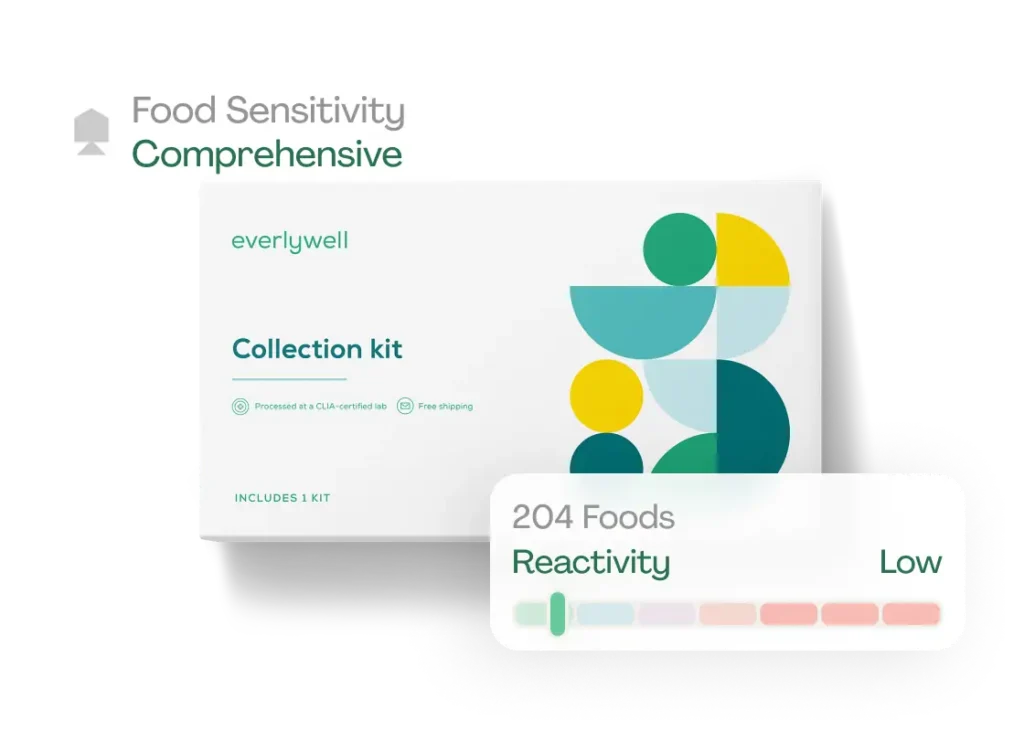
If you decide to try the Everlywell Food Sensitivity Test despite these concerns, here’s what you’re actually committing to. The kit arrives in a fairly compact box with everything you need included: a finger prick lancet, collection card, bandage, alcohol wipe, and a prepaid return envelope.
The collection process itself is straightforward, but needs getting a decent blood sample from a finger prick, which some people find more challenging than others. You’ll want to do it first thing in the morning when your blood flows more easily, and it helps to warm your hands under hot water beforehand.
You prick your finger, squeeze out drops of blood onto specific circles on the collection card, let it dry, seal it in a protective sleeve, and mail it back in the provided envelope.
The actual lab processing takes about five to ten business days from when the lab receives your sample. You’ll get an email when your results are ready, and you can access them through your Everlywell account online.
The results display your reactivity levels to 96 different foods, color-coded to show high, moderate, and normal reactivity.
Foods are grouped into categories like dairy, grains, fruits, vegetables, proteins, and nuts.
The results also come with general guidance about elimination diets. The recommendation is typically to remove high-reactivity foods completely for at least six weeks while continuing to eat everything else normally.
After the elimination period, you’re supposed to reintroduce foods one at a time to see if symptoms return, which theoretically helps you identify which foods are actually problematic for you.
Recommended Product:
The Real Customer Experience and Results
What I found really interesting when looking at actual customer reviews and testimonials is that people’s experiences with the test fall into pretty distinct categories. There’s a significant group of people who found the test genuinely helpful and feel that eliminating their high-reactivity foods led to noticeable improvements in their symptoms.
They describe reduced bloating, better energy, clearer skin, fewer headaches, and an overall sense of feeling better.
These positive experiences seem most common among people who had been struggling with vague, persistent symptoms that hadn’t been resolved through other approaches. For them, the test provided a framework for trying an elimination diet that felt less overwhelming than removing broad food categories randomly.
Even if the IgG results weren’t scientifically predictive, having a specific list of foods to eliminate apparently made the process more manageable and gave people a place to start.
However, there’s also a substantial group of customers who found the results confusing or unhelpful. Some people got results showing high reactivity to foods they ate regularly with no obvious problems.
Others eliminated their reactive foods as directed but saw no improvement in symptoms.
A few people reported that the test identified virtually all their staple foods as problematic, which would have required eliminating so much from their diet that it didn’t seem practical or healthy to follow the recommendations.
One pattern I noticed repeatedly in reviews is that people who worked with nutritionists or dietitians to interpret their results and apply changes seemed to have better experiences than those who tried to navigate everything on their own. This makes sense because dietary changes are complicated, and having professional guidance helps confirm you’re still getting adequate nutrition while eliminating foods.
When This Approach Might Actually Be Worth Considering
Despite the scientific controversy, I can see specific scenarios where trying a test like this might make sense as part of a broader strategy, with your eyes wide open about its limitations.
If you’ve been experiencing persistent unexplained symptoms like chronic digestive issues, recurring headaches, or skin problems that haven’t responded to other interventions, and your doctor has ruled out other medical conditions, the test could potentially serve as a starting framework for an elimination diet. You’re using it as a tool to guide experimentation with your diet, not as a definitive diagnostic result.
The value in this approach comes from having a concrete list of foods to test that gives you a systematic way to explore how different foods affect your body. Instead of feeling overwhelmed about where to start, you have specific foods to eliminate and reintroduce while carefully tracking your symptoms.
This works best if you’re genuinely committed to the full elimination and reintroduction process. Simply looking at your results, avoiding your reactive foods for a week or two, and expecting dramatic changes probably won’t get you anywhere useful.
You need to give your body time to clear the potentially problematic foods, carefully track your symptoms, and then systematically reintroduce foods one at a time while monitoring for reactions.
Consider this approach if you’re the type of person who needs data to feel motivated to make dietary changes. Some people respond well to seeing concrete numbers and charts, and having that physical test result showing reactivity levels can provide the psychological motivation to actually stick with eliminating certain foods long enough to see if it makes a difference.
Potential Problems and What to Watch Out For
The biggest risk with food sensitivity testing is developing an unnecessarily restrictive diet based on results that may not reflect actual food sensitivities. This is particularly concerning if you eliminate many nutritious foods like eggs, nuts, whole grains, or vegetables based solely on test results without any improvement in symptoms.
Overly restrictive diets can lead to nutritional deficiencies, an unhealthy relationship with food, and significantly reduced quality of life. Food is social, food is pleasure, and food is culture.
When you start eliminating lots of foods based on questionable test results, you’re potentially giving up important aspects of life without clear benefit.
There’s also a psychological component to consider. For some people, especially those already anxious about food and health, getting a long list of “reactive” foods can increase food-related anxiety rather than providing helpful clarity.
This can spiral into obsessive restriction, fear of eating, and increased stress, which, ironically, often makes digestive and inflammatory symptoms worse.
Another practical problem is the expense. The Everlywell Food Sensitivity Test costs around two hundred dollars, which isn’t insignificant.
If the results don’t lead to helpful changes, that’s money that could have been spent on other approaches like working directly with a functional medicine doctor or registered dietitian who can help you apply a systematic elimination diet based on your actual symptoms rather than antibody levels.
False reassurance is another potential issue. If your test shows normal reactivity to a food that’s actually problematic for you, you might continue eating it, assuming it’s fine because the test said so.
The test measures only one biological marker, and food reactions are complex and multifaceted. A negative result doesn’t necessarily mean a food isn’t causing problems.
Alternative Approaches That Complement or Replace Testing
The gold standard for identifying food triggers remains the elimination diet conducted with proper medical or nutritional supervision. This involves removing the most common problem foods, typically dairy, gluten, eggs, soy, corn, and sometimes nightshades or FODMAPs, for several weeks, then systematically reintroducing them one at a time while carefully tracking symptoms.
This approach takes longer and needs more discipline than getting a test result, but it’s based on your actual symptom response rather than a biomarker that may or may not correlate with how you feel. You’re essentially conducting a controlled experiment using your own body as the laboratory.
Keeping a detailed food and symptom journal is incredibly valuable, whether or not you do any testing. Track what you eat, when you eat it, and any symptoms that develop over the next 72 hours.
After several weeks, patterns often emerge that help you identify potential problem foods.
This is tedious, and I’ll be honest that most people don’t stick with it, but it provides real-world data about how your body responds to actual foods in actual quantities.
Working with a functional medicine practitioner or registered dietitian who specializes in food sensitivities can provide a more comprehensive approach. They can assess your overall digestive health, look for underlying issues like small intestinal bacterial overgrowth or increased intestinal permeability, and guide you through suitable testing and dietary interventions based on your specific situation.
Some people find that addressing underlying gut health issues, like optimizing their microbiome through probiotics, prebiotics, and gut-healing foods, reduces food reactivity overall. When your digestive system is functioning well, you’re often able to tolerate a wider range of foods without symptoms.
Building Toward Food Freedom Rather Than Permanent Restriction
If you do try food sensitivity testing or any kind of elimination diet, the goal should be working toward the widest possible variety of foods you can enjoy without symptoms. The elimination phase is about gathering information, which foods seem to trigger symptoms and which don’t.
The reintroduction phase is equally important because it helps you understand which foods actually need to be limited and which you eliminated unnecessarily.
Many people find that after a period of elimination and gut healing, they can eventually tolerate foods that before caused symptoms. Your gut health isn’t static.
As your microbiome improves, inflammation decreases, and digestive function improves, your food tolerance often expands.
This progression toward being able to eat a wide variety of foods rather than maintaining permanent restrictions is genuinely important for long-term health and quality of life. Having the widest possible variety of nutritious foods you can enjoy without symptoms beats having the most restricted diet you can tolerate.
Portion size and preparation method also matter significantly. Some people can handle small amounts of a trigger food but react to larger quantities.
Others find that certain preparation methods, like soaking nuts, fermenting grains, or cooking vegetables, make foods they couldn’t tolerate raw much more digestible.
Context matters too. Stress levels, sleep quality, overall diet quality, and gut health all influence how your body responds to particular foods.
A food that causes symptoms when you’re stressed and sleep-deprived might be perfectly fine when you’re well-rested and relaxed.
Practical Implementation Strategy
If you decide to use the Everlywell test as a starting point, here’s how to approach it in the most productive way possible. Before you even order the test, start keeping a detailed food and symptom journal.
Track everything you eat and any symptoms you experience for at least two weeks.
This baseline information is valuable for comparison later.
When your test results arrive, don’t immediately eliminate everything that shows reactivity. Instead, look for overlap between foods that tested as high reactivity and foods you’ve noticed in your journal that seem associated with symptoms.
These overlapping foods are your best candidates for elimination because you have both biological data and symptom correlation suggesting they might be problematic.
Start by eliminating just these overlapping foods rather than everything the test flags. Give yourself a solid six to eight weeks with these foods completely removed from your diet while continuing to track your symptoms carefully.
This elimination period needs to be strict because even small amounts of the food can prevent you from getting clear information about whether it’s truly problematic.
After the elimination period, assess honestly whether your symptoms have improved. If they have, that’s valuable information. If they haven’t, eliminating those foods probably isn’t addressing the root cause of your symptoms, and you should consider other approaches.
The reintroduction phase is where you get the most valuable information. Reintroduce one eliminated food at a time, eating a normal portion of it two to three times over the course of one day, then wait three days while watching for symptoms before introducing the next food.
This systematic approach helps you clearly identify which specific foods trigger symptoms and which don’t.
Keep in mind that you’re looking for clear, consistent reactions. If you’re not sure whether a food caused symptoms or not, it probably didn’t.
The foods that are genuinely problematic for you typically cause noticeable, consistent reactions when you eat them.
Adapting Your Approach Based on Results and Response
Your strategy should shift based on what you find out about through this process. If you find that eliminating certain foods led to significant improvement and reintroducing them clearly triggered symptom return, you’ve identified genuine trigger foods worth avoiding, at least temporarily.
For foods you eliminated that don’t cause obvious symptoms when reintroduced, bring them back into your regular diet. There’s no benefit to avoiding foods that don’t cause problems, and unnecessarily restricted diets can lead to nutritional gaps and reduce quality of life.
If you eliminated many foods but only some caused reactions upon reintroduction, focus your ongoing restrictions on just those problematic foods. Your diet should be as varied and unrestricted as possible while still avoiding the specific foods that genuinely cause problems.
For people who find that the test results didn’t correlate well with their actual symptom triggers, the test still provided value by prompting you to pay closer attention to the food-symptom connection. The information you gained through careful tracking and systematic elimination is valuable even if the IgG results weren’t predictive.
Some people find out through this process that their symptoms aren’t primarily driven by specific food sensitivities but by other factors like overall gut health, stress, sleep, or underlying medical conditions. This is actually useful information because it redirects your efforts toward interventions that might be more effective.
People Also Asked
Does the Everlywell food sensitivity test work?
The Everlywell Food Sensitivity Test measures IgG antibodies to foods, but major medical organizations state that elevated IgG levels show food exposure rather than sensitivity. The test may provide a framework for elimination diets, but the IgG measurements themselves haven’t been scientifically validated as predictors of food sensitivities.
What is the difference between food allergies and food sensitivities?
Food allergies involve IgE antibodies and cause immediate, sometimes severe reactions like hives or anaphylaxis. Food sensitivities are delayed reactions that may cause symptoms like bloating, headaches, or fatigue hours or days after eating.
Food intolerances like lactose intolerance involve digestive enzyme deficiencies rather than immune responses.
How accurate are at-home food sensitivity tests?
At-home food sensitivity tests that measure IgG antibodies lack scientific validation according to major allergy and immunology organizations. The tests measure a normal immune response to food exposure rather than true sensitivities, which can lead to false positive results and unnecessary dietary restrictions.
Can food sensitivities cause chronic fatigue?
Some people experience fatigue related to eating certain foods, though the mechanism isn’t fully understood. If you suspect food-related fatigue, keeping a detailed food and symptom journal and working with a healthcare provider to apply a proper elimination diet provides more reliable information than IgG testing.
How long does it take to see results from eliminating food sensitivities?
Most elimination diets require six to eight weeks before you can assess whether removing certain foods has improved your symptoms. This gives your body time to clear the potentially problematic foods and allows inflammation to settle before you assess the results.
What foods are most commonly linked to food sensitivities?
The most common trigger foods include dairy, gluten, eggs, soy, corn, and sometimes nightshade vegetables or high-FODMAP foods. However, trigger foods vary significantly between individuals, which is why systematic elimination and reintroduction based on your actual symptoms provides better information than generalized lists.
Should I eliminate foods based on IgG test results?
Major medical organizations recommend against eliminating foods based solely on IgG test results. If you choose to use test results as a starting framework, look for overlap between high-reactivity foods and foods you’ve noticed correlate with symptoms in a food journal, then carefully track whether elimination actually improves your symptoms.
Key Takeaways
The Everlywell Food Sensitivity Test measures IgG antibodies to 96 foods, but elevated IgG levels show exposure to foods rather than confirmed sensitivities, according to major medical organizations.
The test lacks scientific validation, and medical experts express concern that it may lead to unnecessary dietary restrictions that could reduce nutrition quality and quality of life.
Despite scientific controversy, some people find the test helpful as a framework for implementing systematic elimination diets, particularly when they struggle with knowing where to start.
The actual value comes from the elimination and reintroduction process you conduct based on results, not from the IgG measurements themselves.
Careful symptom tracking before, during, and after elimination provides more reliable information about your personal food triggers than test results alone.
Reintroduction is just as important as elimination because it helps you distinguish between foods you actually react to and foods you eliminated unnecessarily.
Working toward the widest possible food variety that doesn’t trigger symptoms beats maintaining the most restricted diet you can tolerate.
Alternative approaches like medically supervised elimination diets and comprehensive gut health assessment address food reactivity through evidence-based methods without relying on controversial testing.
Recommended Product:
Disclaimer
The information contained in this post is for general information purposes only. The information is provided by Everlywell Food Sensitivity Test: What You Need to Know Before Ordering and while we endeavor to keep the information up to date and correct, we make no representations or warranties of any kind, express or implied, about the completeness, accuracy, reliability, suitability or availability with respect to the website or the information, products, services, or related graphics contained on the post for any purpose.