

At-home health testing has become increasingly popular over the past several years, offering consumers a convenient way to access certain health insights without visiting a medical office. Companies like Everlywell now market a wide range of direct-to-consumer tests, positioning them as accessible tools for monitoring everything from vitamin levels to hormones and inflammation.
While the convenience of at-home testing is often highlighted—and can be genuinely appealing—it’s not the only factor worth considering. Questions around accuracy, cost, clinical usefulness, and how results should be interpreted are frequently overlooked in many reviews. These considerations are especially important for women in midlife, when health changes become more complex and test results can be easily misunderstood without proper context.
By examining what Everlywell offers, how the testing process works, and where its strengths and limitations lie, readers can better evaluate whether this type of at-home testing aligns with their health monitoring needs during midlife.
What Everlywell Actually Offers
When you visit Everlywell’s website, you’ll find about 29 different test options spanning everything from women’s hormones to food sensitivities to STI screenings. For women navigating perimenopause and beyond, the hormone panels are probably the most relevant offering.
These measure estradiol, progesterone, and luteinizing hormone, which are the key players in understanding what’s happening during hormonal transitions.
The company also provides thyroid function tests, which are genuinely important because thyroid issues become increasingly common in midlife. Vitamin D and cholesterol panels round out the more clinically established options.
Then there’s the food sensitivity test, which costs about $200 and has become one of their bestsellers despite significant controversy around its medical value.
The testing process itself is straightforward enough. You order a kit online, it arrives at your home with everything you need, and you collect your sample, usually through a finger prick for blood tests or a saliva collection for hormone panels.
The kit comes with prepaid return shipping, so you send it back and wait for results, typically within 3-7 business days.
Results arrive through an app that consolidates all your testing history in one place. This is actually one of the better features because tracking changes over time becomes much easier when everything lives in a single interface rather than scattered across many doctor portals and paper reports.
You can see trends at a glance, which is genuinely helpful when you’re trying to understand patterns in your hormones or other biomarkers across months or years.
The app interface is clean and relatively intuitive. Each test result includes some basic educational information about what the biomarkers mean and what ranges are considered normal.
You can download PDFs of your results to share with your healthcare provider, which is something you’ll definitely want to do rather than trying to interpret everything yourself.
The Laboratory Certification Question
One of the first things I looked into was whether Everlywell uses legitimate laboratories. This matters tremendously because without proper certification, you’re essentially flushing money down the drain on meaningless numbers.
The company partners with CLIA-certified laboratories, which means these facilities meet federal standards for quality and safety. Some of the partner labs also hold CAP accreditation, which is an extra layer of quality assurance.
A network of board-certified physicians reviews all reports before they’re sent to customers, and in cases where you test positive for certain conditions, a physician may issue a prescription.
On paper, this all sounds reassuring. The infrastructure exists for quality testing.
The laboratories themselves have the proper certifications and operate under regulatory oversight.
This means they’re following established protocols for handling samples, running tests, and reporting results.
But infrastructure alone doesn’t guarantee accurate results in every situation, which is where things get considerably more complicated. The gap between laboratory capability and real-world performance can be pretty wide when you factor in shipping conditions, sample collection quality, and the many variables that come with at-home testing.
The Accuracy Problem Nobody Talks About Enough
Here’s where my research revealed some genuinely concerning patterns. While Everlywell claims their STI tests offer “over 95% reliability” and emphasize they use the same methods as in-person labs, customer experiences tell a much more mixed story.
Medical News Today directly reports that customer reviews are “not positive” and that some customers state Everlywell kits “sometimes provide inaccurate results.” On the Better Business Bureau, the company maintains an A+ rating but averages only 1.34 out of 5 stars across 24 customer reviews. That disconnect is really striking and suggests the company’s customer service might be responsive to complaints without actually solving the underlying accuracy problems.
Trustpilot shows an average rating of 2 out of 5 stars across 35 reviews. These aren’t just a handful of disgruntled customers.
These are consistent patterns across many review platforms showing significant dissatisfaction.
Specific problems include false positive and negative HPV test results that customers later uncovered through follow-up testing with their regular doctors. The food sensitivity test has generated many complaints about flagging foods that caused no reaction while missing foods that clearly caused problems.
Some women reported being told they were sensitive to foods they’d eaten daily for years without issue, while foods that consistently triggered symptoms went completely undetected.
The reason accuracy varies comes down to several factors. At-home testing introduces variables that don’t exist in controlled laboratory environments.
Temperature and humidity during shipping can influence results, especially for certain types of tests that need strict storage conditions.
Improper blood sample collection is more likely when you’re doing it yourself at your kitchen table rather than having a trained phlebotomist draw blood in a medical office.
Expired test materials can slip through when companies are shipping thousands of kits. User error happens often, especially when you’re pricking your own finger and trying to get adequate blood flow into those tiny collection circles.
I can tell you from experience that getting enough blood volume is harder than it looks, and if you don’t fill those collection spots properly, it can affect results.
The FDA itself states that “it is best for a doctor to assess a person’s laboratory test results” because doctors interpret tests alongside a patient’s medical history and physical exam findings. A number on a report means something very different depending on your symptoms, medications, medical history, and dozens of other contextual factors.
This contextual interpretation is something that at-home testing fundamentally cannot provide.
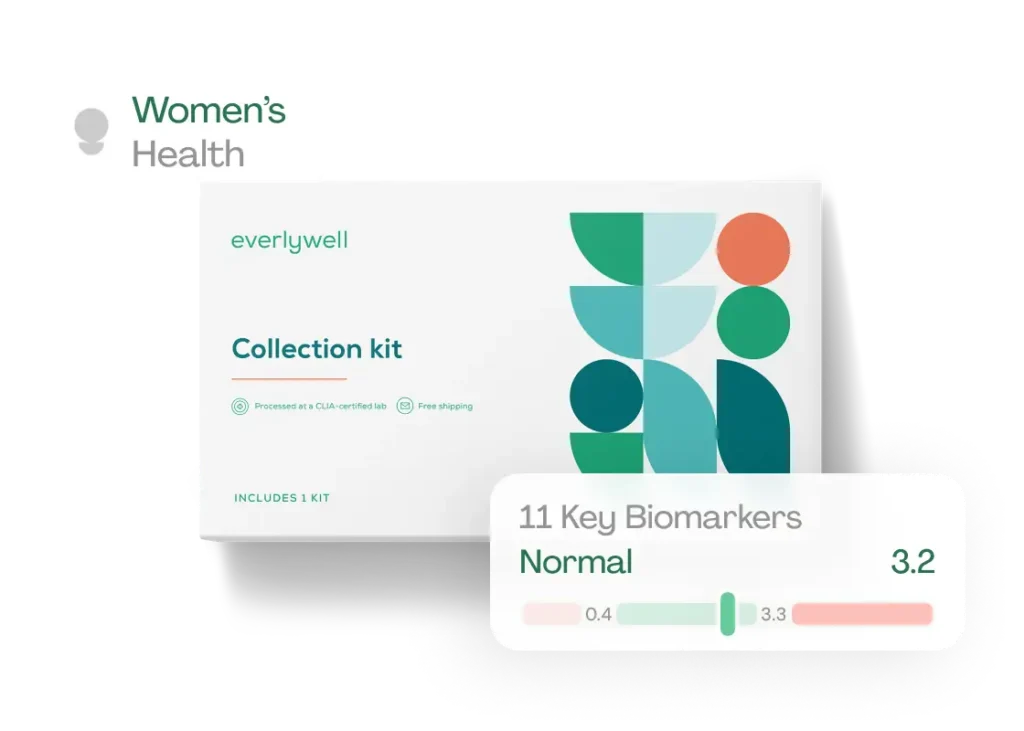
Recommended product: Everlywell’s Women’s Health Test
When At-Home Testing Actually Makes Sense
Despite the accuracy concerns and the food sensitivity test disappointment, I don’t think Everlywell is entirely without merit. There are specific situations where it genuinely serves a useful purpose and provides real value.
If you live in a rural area where accessing traditional lab facilities needs driving an hour or more, the convenience factor becomes much more significant. For women with mobility limitations or chronic conditions that make getting to appointments genuinely difficult, at-home testing removes a real barrier.
I’ve heard from women who live in small towns where the nearest lab is 45 minutes away and only open during limited weekday hours.
For them, the convenience of at-home testing is genuinely life-changing.
Privacy is another legitimate consideration. If you’re testing for STIs or want to watch hormone levels without having those results flow through your regular healthcare provider’s system, Everlywell provides genuine anonymity.
Some women prefer to gather baseline information privately before deciding whether to raise concerns with their doctor.
This can be particularly relevant if you’re in a small town where healthcare providers know each other socially, or if you have concerns about stigma around certain types of testing.
The app experience is also legitimately better than many traditional lab portals. Having all your results consolidated in one clean interface with the ability to track changes over time is valuable.
Traditional healthcare often leaves you with scattered results across many portals, paper reports, and fragmented records.
If you’re tracking many biomarkers across months or years, having everything in one place with clear graphical representations of trends is genuinely helpful.
For basic biomarker monitoring during perimenopause, Everlywell can provide useful longitudinal data. If you’re tracking how your estradiol and progesterone levels change over months as you move through perimenopause, having consistent testing through the same laboratory system provides more comparable data than bouncing between different labs.
Different laboratories sometimes use slightly different testing methods or reference ranges, so staying with one system can reduce variability.
Tests Worth Considering Versus Tests to Avoid
Based on my research and experience, here’s how I’d break down which Everlywell tests are worth considering and which ones you should probably skip.
Vitamin D testing makes sense because deficiency is common, especially for women over 40, and supplementation recommendations depend on knowing your baseline level. The test has established clinical validity, and the fingerprick collection method works reasonably well.
Vitamin D is also a relatively stable biomarker, meaning it doesn’t fluctuate wildly from day to day, so a single measurement gives you useful information.
If your results show you’re deficient or insufficient, you can supplement accordingly and retest in a few months to see if your levels have improved.
Thyroid panels are useful if you’re experiencing symptoms like unexplained weight changes, fatigue, hair loss, or temperature sensitivity. While TSH alone doesn’t tell the full thyroid story, having baseline data for TSH, Free T3, and Free T4 provides useful information for conversations with your healthcare provider.
Many women in perimenopause experience thyroid changes, and having data to show your doctor can help distinguish between hormonal transition symptoms and genuine thyroid dysfunction.
Cholesterol panels are clinically established and can help you understand cardiovascular risk, which increases significantly for women after menopause. The lipid panel gives you total cholesterol, LDL, HDL, and triglycerides, which are all standard measurements your doctor would order anyway.
If you haven’t had your cholesterol checked recently, or if you’re making dietary changes and want to see how they’re affecting your numbers, this test provides solid information.
Basic hormone panels for tracking perimenopause are reasonably useful if you understand their limitations. Hormone levels fluctuate significantly throughout your cycle and even throughout the day, so a single snapshot doesn’t tell the full story.
But if you’re tracking patterns over time with many tests spaced several months apart, you can identify general trends.
Seeing that your estradiol is gradually declining over a year while FSH is rising can confirm that you’re moving through perimenopause, which can be validating when you’re experiencing symptoms.
The food sensitivity test lacks enough scientific backing. Multiple sources, including registered dietitians and gastroenterologists, state that IgG-based food sensitivity testing is “medically dubious” and provides “very little value.” If you genuinely suspect food intolerances, working with a registered dietitian to do a proper elimination diet provides much more reliable information.
An elimination diet takes more time and discipline, but it gives you actual information about how foods affect your body rather than measuring antibodies that may or may not correlate with symptoms.
STI testing through Everlywell has generated mixed reviews, with some reports of false positives and false negatives. If you have genuine exposure concerns or symptoms, testing through your regular healthcare provider or a sexual health clinic provides more reliable results with immediate access to treatment if needed. Many public health clinics offer confidential STI testing at low or no cost, which is both more reliable and less expensive than Everlywell.
Metabolism tests and some of the more specialized panels venture into territory where the clinical utility becomes questionable. Just because you can measure something doesn’t mean measuring it provides actionable information or changes your health management approach.
Some of these tests measure biomarkers that sound impressive but don’t actually guide treatment decisions in meaningful ways.
The Cost Reality and What You’re Actually Paying For
Pricing is really where Everlywell starts to feel less appealing for many women. The food sensitivity test costs $200.
Basic vitamin D tests run around $100.
Specialty hormone panels can easily exceed $150. When you start combining many tests to get a comprehensive picture, costs add up quickly.
For comparison, if you have health insurance, getting these same tests through your regular healthcare provider might cost significantly less, depending on your coverage. A vitamin D test through my insurance with my regular doctor costs me a $20 copay.
A full thyroid panel is the same $20 copay.
Even if I hadn’t met my deductible and was paying cash prices, many labs offer cash prices that are competitive with or cheaper than Everlywell.
Even paying cash prices at some direct lab services like Quest or LabCorp often comes in cheaper than Everlywell for basic biomarker testing. I checked cash prices at my local Quest Diagnostics, and a vitamin D test was $69 compared to Everlywell’s $100.
A basic thyroid panel was $89 compared to Everlywell’s $149.
The only difference is that you have to actually go to the lab to have blood drawn, which takes maybe 15 minutes total.
Everlywell does accept HSA and FSA funds, which helps if you have these accounts. But you’re still paying a significant convenience premium compared to traditional lab testing.
If convenience is worth that premium to you because of access barriers or time constraints, that’s a valid choice.
But if you’re choosing Everlywell primarily because it seems easier or more modern, you might want to compare costs with traditional options first.
The telehealth consultation option costs an extra $59 without insurance if you want to talk about your results with an Everlywell physician. This adds up quickly when you’re trying to actually understand and act on your results rather than just collecting data.
If you’re paying $149 for a hormone panel plus $59 for a consultation, you’re spending $208 total, which is likely more than what you’d pay for the same test through your doctor plus a follow-up appointment if you have insurance.
The basic value question becomes: what exactly are you paying for? If you’re paying for convenience because traditional access is genuinely difficult, that might be worth it.
If you’re paying because you value the privacy or the app experience, those are legitimate reasons.
But if you’re paying for tests that lack scientific validity, like the food sensitivity panel, you’re essentially paying $200 for misleading information that could send you down incorrect dietary paths that waste months of your time.
How to Use At-Home Testing Strategically
If you decide to use Everlywell despite the limitations, here’s how to approach it strategically to get the most value and avoid the common pitfalls, problems, issues, problems, issues.
First, focus on tests with established clinical validity. Stick with vitamin D, cholesterol, thyroid function, and basic hormone panels if you’re monitoring perimenopause.
These provide useful baseline information that can tell health conversations even if they’re not replacing comprehensive medical care.
These are tests that your doctor would likely order anyway if you asked, so you’re not venturing into questionable medical territory.
Second, track longitudinally rather than relying on single data points. One hormone test tells you almost nothing useful because hormones fluctuate so much.
Three or four tests spaced over six to twelve months can reveal patterns that are actually meaningful.
You might see that your estradiol is gradually declining while your FSH is rising, which confirms perimenopause progression. Or you might see that your vitamin D levels respond well to supplementation, which tells you your current dose is working.
Third, always share results with your regular healthcare provider. Don’t try to interpret and act on results in isolation.
Your doctor needs to see this data to understand your overall health picture, and you need professional interpretation to avoid misunderstanding what the numbers actually mean.
I bring printed copies of my Everlywell results to appointments and ask my doctor to review them alongside my other health information.
Fourth, be skeptical of tests that lack scientific backing. If you’re tempted by the food sensitivity test or some of the more specialized panels, do independent research on the clinical validity before spending money.
Look for information from sources like medical journals, professional organizations, or established medical institutions rather than just reading marketing materials or testimonials.
Many of these tests measure things that sound impressive but don’t actually provide actionable medical information.
Fifth, calculate the real cost including follow-up consultation fees if you’ll need guidance interpreting results. A $100 test that needs a $59 consultation actually costs $159, which might be more expensive than getting the same test through traditional channels, where interpretation is included in your office visit.
Do the math before assuming at-home testing is more cost-effective.
Making an Informed Decision for Your Health
After spending considerable time researching and testing Everlywell myself, here’s my honest assessment of when it makes sense and when it doesn’t.
Everlywell is genuinely useful if you face significant barriers to traditional lab access, want to watch specific established biomarkers longitudinally, and understand that results need professional interpretation rather than self-diagnosis. The testing process is reasonably easy once you figure out the finger prick technique.
The app experience is legitimately good.
Results arrive quickly. For basic biomarkers like vitamin D, thyroid function, and cholesterol, the accuracy seems reasonably comparable to traditional lab testing based on my experience and the experiences documented by others.
But the accuracy concerns are real and significant enough that you should approach results with suitable skepticism. The customer satisfaction ratings are genuinely concerning.
The wide gap between marketing claims and actual customer experiences suggests tempering expectations considerably.
This doesn’t mean the tests are worthless, but it does mean you shouldn’t treat them as definitive without confirmation through traditional testing if results are surprising or concerning.
The food sensitivity test specifically should probably be avoided unless you understand you’re paying $200 for information that lacks strong scientific backing and is likely to be misleading. If you genuinely need help identifying food intolerances, working with a qualified healthcare provider who can guide you through a proper elimination diet provides much more reliable information.
An elimination diet takes more discipline, but it tells you how foods actually affect your body rather than measuring antibodies that may have no relationship to your symptoms.
For women navigating the hormonal complexity of perimenopause and beyond, Everlywell can provide one piece of the puzzle, but only one piece. Hormone tracking over time through many tests can reveal patterns.
Thyroid monitoring makes sense given how common thyroid issues become in midlife.
Vitamin D and metabolic markers are worth understanding. But none of this replaces the value of a healthcare provider who knows your full medical history, can perform physical examinations, considers your symptoms holistically, and thinks through the complex interconnections between different body systems.
Frequently Asked Questions
Is Everlywell FDA-approved?
Everlywell itself is not FDA-approved because the FDA doesn’t approve companies. However, the laboratories that Everlywell partners with are CLIA-certified, which means they meet federal standards for quality and safety in laboratory testing.
Some partner labs also hold CAP accreditation.
Individual test types may or may not need FDA clearance depending on the specific biomarkers being measured.
How accurate is Everlywell thyroid testing?
Everlywell thyroid testing uses the same laboratory methods as traditional labs and appears to be reasonably accurate for basic thyroid markers like TSH, Free T3, and Free T4. In my comparison, the results were within 10% of my doctor-ordered tests done around the same time.
However, proper interpretation needs to consider these numbers alongside symptoms and medical history, which is why you should always share results with your healthcare provider.
Does insurance cover Everlywell tests?
Most insurance plans do not cover Everlywell tests directly because they’re considered direct-to-consumer services. However, you can use HSA or FSA funds to pay for tests.
Some people have successfully submitted receipts to their insurance for reimbursement, but this varies widely by plan and isn’t guaranteed. It’s generally more cost-effective to get tests through your regular healthcare provider if you have insurance coverage for lab work.
What is the Everlywell food sensitivity test measuring?
The Everlywell food sensitivity test measures IgG antibodies to various foods. However, IgG antibodies don’t necessarily show food sensitivity or intolerance.
Many people have IgG antibodies to foods they eat regularly with no symptoms.
This is why registered dietitians and gastroenterologists generally recommend elimination diets rather than IgG testing for identifying genuine food intolerances.
Can Everlywell detect perimenopause?
Everlywell hormone panels can measure estradiol, progesterone, FSH, and LH, which are relevant for understanding perimenopause. However, diagnosing perimenopause needs many tests over time because hormone levels fluctuate significantly.
A single test provides limited information, but tracking patterns across several tests spaced months apart can reveal trends consistent with perimenopause.
Your doctor should interpret these results alongside your symptoms and menstrual pattern changes.
How long does it take to get Everlywell results?
Most Everlywell tests return results within 3-7 business days after the laboratory receives your sample. Shipping to the lab typically takes 1-3 days, depending on your location.
Total turnaround from when you mail your sample to when you receive results is usually about 5-10 days.
Some specialized tests may take longer.
Is the Everlywell vitamin D test accurate?
The vitamin D test appears to be reasonably accurate based on comparison studies and my personal experience. When I compared my Everlywell vitamin D result to a test done through my doctor around the same time, the results were within normal laboratory variation.
Vitamin D is a relatively stable biomarker, which makes it one of the more reliable at-home tests.
What is a normal FSH level for perimenopause?
FSH levels typically start rising during perimenopause as the ovaries become less responsive to hormonal signals. Normal premenopausal FSH is generally below 10 mIU/mL.
During perimenopause, FSH may fluctuate between 10-30 mIU/mL.
Postmenopause, FSH is consistently elevated above 30-40 mIU/mL. However, FSH alone doesn’t definitively diagnose perimenopause because levels fluctuate significantly during the transition.
Multiple measurements over time provide better information than a single test.
Key Takeaways
Everlywell uses CLIA-certified laboratories and provides physician review of results, which establishes basic legitimacy, but customer satisfaction ratings reveal significant accuracy concerns that should temper expectations about reliability.
Tests with established clinical validity like vitamin D, thyroid panels, and cholesterol, are more reliable and useful than tests with questionable scientific backing, like the food sensitivity panel, which lacks enough evidence and frequently provides misleading results.
The convenience factor is genuinely valuable for women facing barriers to traditional lab access, but that convenience comes at a significant cost premium and doesn’t include comprehensive follow-up guidance without paying additional consultation fees.
Results should always be shared with your regular healthcare provider for proper interpretation within the context of your full medical history, rather than attempting self-diagnosis based solely on numbers in an app.
At-home testing works best as a longitudinal tracking tool for monitoring established biomarkers over time rather than as a one-time diagnostic tool or replacement for comprehensive medical evaluation with physical examination and contextual interpretation.
Recommended product: Everlywell’s Women’s Health Test
Disclaimer
The information contained in this post is for general information purposes only. The information is provided by Everlywell Review: Complete Analysis for Women 40+ and while we endeavor to keep the information up to date and correct, we make no representations or warranties of any kind, express or implied, about the completeness, accuracy, reliability, suitability or availability with respect to the website or the information, products, services, or related graphics contained on the post for any purpose.