

Most people think checking vitamin D levels needs calling your doctor, waiting three weeks for an appointment, sitting in a waiting room flipping through magazines from 2019, getting blood drawn while making awkward small talk with the phlebotomist, and then playing phone tag for another week before someone finally tells you numbers you don’t understand.
That’s the old way. The entire landscape of health testing has shifted over the past five years, and at-home testing has moved from gimmicky novelty to an actual diagnostic tool that physicians recognize.
The problem is that quality varies wildly across different companies and different tests.
When you’re navigating menopause and trying to understand what’s happening in your body, you need accurate information, not expensive reassurance that means nothing.
Everlywell’s Vitamin D and Inflammation Test bundles two specific biomarkers together. The pairing tells you something important about how this company approaches women’s health during midlife transitions, because these two markers connect in ways that matter specifically when estrogen starts declining.
Why Testing These Two Markers Together Actually Makes Sense
Vitamin D and inflammation aren’t random health metrics bundled together for marketing convenience. They work together in your body through pathways that become particularly important as estrogen levels drop during perimenopause and menopause.
When you enter this transition, declining estrogen creates cascading changes that affect how you produce, absorb, and use vitamin D. Your body becomes less effective at converting sunlight into usable vitamin D.
Your gut absorbs it less effectively from food.
The receptors throughout your body that respond to vitamin D become less sensitive. At the same time, declining estrogen correlates with increased inflammatory markers throughout your entire system.
This creates double vulnerability. You’re less equipped to maintain adequate vitamin D levels while simultaneously becoming more susceptible to chronic inflammation.
That combination affects your bones, your heart, your immune system, your brain, and your metabolism.
Testing both markers gives you a snapshot of two interconnected systems that influence many aspects of your health. Vitamin D functions less like a simple nutrient and more like a hormone precursor that regulates over 200 genes in your body.
It also has direct anti-inflammatory effects that matter when you’re dealing with elevated inflammation.
Research shows that when postmenopausal women took 40,000 IU of vitamin D weekly, their high-sensitivity C-reactive protein levels dropped significantly. High-sensitivity CRP is exactly what this test measures.
The connection between adequate vitamin D and reduced inflammation demonstrates that these biomarkers exist in a dynamic relationship where improving one can meaningfully impact the other.
How Accurate Home Testing Actually Gets
I’m skeptical of health products promising laboratory-quality results from your kitchen table, so I looked carefully at the laboratory certification and testing methodology behind what Everlywell does.
The company uses CLIA-certified laboratories. CLIA stands for Clinical Laboratory Improvement Amendments, which are federal regulatory requirements set by the Centers for Medicare and Medicaid Services.
These aren’t suggested guidelines that companies can choose to follow.
They’re mandatory standards that demand specific quality controls, personnel qualifications, regular inspections, and documented procedures. The same laboratories processing blood work your doctor orders operate under these exact certifications.
The test measures 25-hydroxyvitamin D total, which includes both D2 and D3 forms, plus high-sensitivity C-reactive protein. Both are established biomarkers with well-documented reference ranges used in clinical practice. The finger-prick collection method relies on dried blood spot technology, which has been validated in many studies as comparable to venous blood draws for these specific measurements.
The weak point in home testing typically doesn’t come from the laboratory analysis. The lab equipment and technicians are legitimate.
The weakness comes from collection.
If you don’t collect enough blood, if you contaminate the sample, or if it degrades during shipping, you get inaccurate results. This risk doesn’t exist when a trained phlebotomist draws your blood in a controlled environment.
Everlywell addresses collection concerns through detailed instructions with photos and prepaid overnight shipping that minimizes degradation time. User error remains possible, but the company has worked to minimize it as much as reasonably possible for a self-collection system.
What Your Money Actually Buys
The test costs roughly $99, which sits between cheap vitamin D strips that only tell you if you’re above or below a basic threshold and comprehensive metabolic panels that cost several hundred dollars.
That price covers CLIA-certified laboratory processing, which involves sophisticated equipment and trained laboratory technicians analyzing your sample. You get physician review, meaning a board-certified doctor examines your results before they’re released to you.
You access a secure digital platform that stores your results permanently and allows you to track changes if you retest months or years later.
What you don’t get is an extensive personalized medical consultation. The platform provides lifestyle recommendations based on your results, but the guidance follows standardized templates.
If your vitamin D comes back at 18 ng/mL, indicating deficiency, you’ll receive suggestions about supplementation doses and sun exposure, but you won’t get a detailed conversation with a physician about your specific medical history, current medications, or potential interactions unless you separately contact their telehealth network.
For some women, that limitation matters. They want someone to walk them through exactly what their numbers mean and exactly what to do.
For others, the streamlined approach is actually preferable because they want information without being pressured into unnecessary follow-up appointments or prescription recommendations.
They’re comfortable doing their own research or bringing results to their existing healthcare provider.
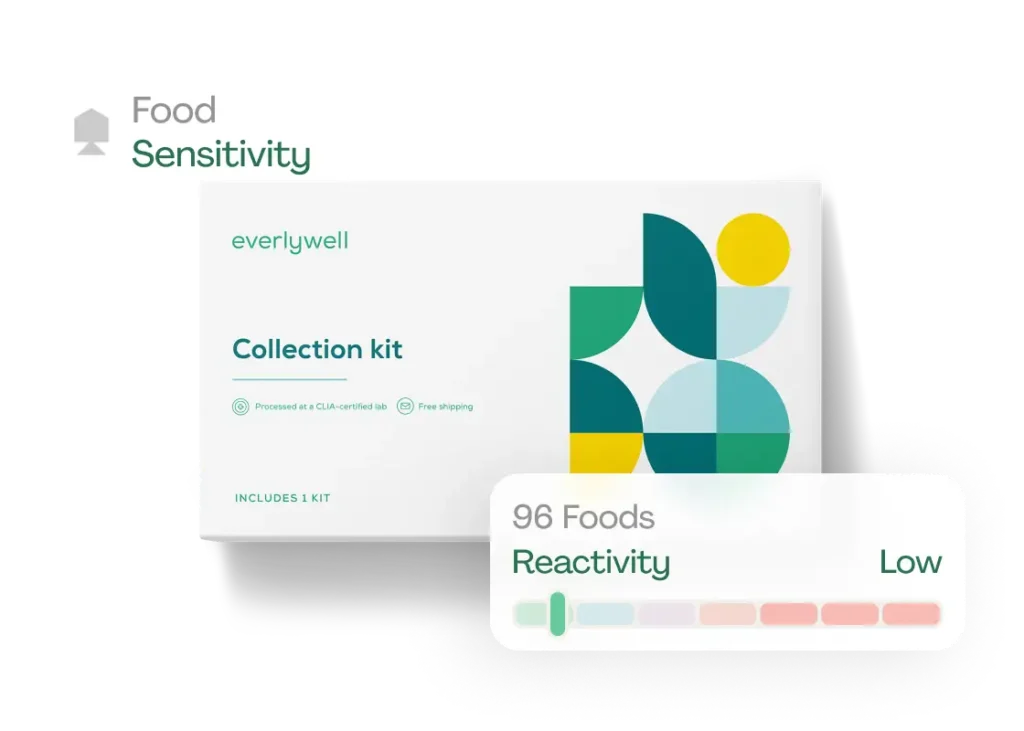
Recommended Product: Everlywell’s Food Sensitivity Comprehensive Test
**Recommended product includes testing Vitamin D and Inflammation**
The Menopause Connection: Most Doctors Don’t Explain
This test has specific biological relevance for women in their 40s and 50s that goes beyond general wellness monitoring.
Estrogen plays a significant role in vitamin D metabolism. It influences the expression of vitamin D receptors throughout your body and affects the activity of enzymes that convert vitamin D into its biologically active form.
When estrogen declines during menopause, your entire vitamin D system becomes less effective at doing its job.
During this same transition, you’re facing accelerated bone loss. Osteoporosis risk increases dramatically in the years immediately following menopause.
Your cardiovascular risk profile changes.
Your immune system shifts. Your mood regulation can become more unstable.
Vitamin D influences all of these systems directly.
The inflammation component carries equal relevance. Postmenopausal women show higher average C-reactive protein levels than premenopausal women, even when researchers control for factors like body weight, diet, and exercise.
This chronic low-grade inflammation contributes to cardiovascular disease risk, cognitive decline, and many age-related conditions that speed up after menopause.
What makes this test particularly valuable during menopause is that it gives you actionable information about two modifiable risk factors. You can’t change your age or your genetic predisposition to certain conditions, but you can influence vitamin D status and inflammation levels through supplementation, diet, exercise, stress management, and other lifestyle interventions.
Testing gives you a baseline so you know whether intervention is necessary and allows you to track whether your interventions are working.
How To Use This Test Strategically
The physical process of taking the test is straightforward. You prick your finger with the provided lancet and collect blood drops on a card.
The strategic value comes from timing and interpretation.
Consider when you test. Vitamin D levels fluctuate seasonally for most people.
They typically peak in late summer after months of sun exposure and reach their lowest point in late winter.
If you test in August and find you’re in the enough range, that doesn’t tell you whether you maintain adequate levels year-round. Testing in late winter or early spring gives you a more accurate picture of your baseline vitamin D status when it faces the greatest challenge.
For inflammation markers, timing matters differently. High-sensitivity CRP can be temporarily elevated by acute illness, injury, or even strenuous exercise.
If you test while you’re fighting a cold or three days after running a marathon, you might see elevated inflammation that doesn’t reflect your baseline status.
Test when you’re healthy and haven’t engaged in unusually intense physical activity in the preceding few days.
When you receive results, you’ll see reference ranges, but understanding the nuances matters for making informed decisions. For vitamin D, the “sufficient” range typically starts at 30 ng/mL, but many researchers and clinicians argue that optimal levels for disease prevention fall closer to 40-60 ng/mL.
If your result shows 32 ng/mL, you’re technically enough, but there’s a reasonable argument for supplementing to reach higher levels, especially during menopause when your needs may be greater.
For hs-CRP, ranges typically break down as follows: less than 1 mg/L shows low cardiovascular risk, 1-3 mg/L shows moderate risk, and above 3 mg/L shows high risk. Context matters significantly here.
If you have other cardiovascular risk factors like family history, high blood pressure, or unfavorable cholesterol ratios, even levels in the “moderate” range warrant attention and intervention.
What To Actually Do With Your Results
This is where most home testing reviews fail to provide useful guidance. Getting numbers is only the first step.
Knowing what to do with those numbers decides whether testing provides value.
Let’s say you test and find out that your vitamin D is at 22 ng/mL, which falls in the deficient range, and your hs-CRP is 2.4 mg/L, indicating moderate cardiovascular risk. The test report will provide general recommendations, but the real question becomes how aggressively to intervene and whether you need professional medical guidance to do it safely and effectively.
For vitamin D deficiency, supplementation is relatively straightforward and safe within reasonable ranges. Many clinicians recommend 2,000-4,000 IU daily for maintenance, with higher doses sometimes reaching 10,000 IU daily for a limited period when correcting a deficiency.
Vitamin D is fat-soluble, which means it accumulates in your body as opposed to being excreted like water-soluble vitamins.
Excessive supplementation can cause toxicity. It’s rare, but it happens, and it can damage your kidneys and create dangerous calcium imbalances.
If your vitamin D is slightly below optimal and you have no other health concerns, self-directed supplementation with moderate doses is probably reasonable. If you’re significantly deficient, or if you have conditions that affect vitamin D metabolism like kidney disease, malabsorption disorders, or obesity, you should involve your healthcare provider in creating a supplementation plan and potentially retest after a few months to ensure you’re reaching target levels without overshooting into toxicity range.
For elevated inflammation markers, the path forward is less straightforward. High-sensitivity CRP tells you that inflammation exists in your body, but it doesn’t tell you why.
Chronic infections, autoimmune conditions, poor diet, obesity, chronic stress, inadequate sleep, and many other factors can all elevate inflammation markers.
This reveals the test’s limitation. It identifies a problem but doesn’t necessarily give you a clear roadmap for solving it.
You know inflammation is present, but you don’t know the source or sources contributing to it.
That said, lifestyle interventions that reduce inflammation are generally beneficial regardless of the specific cause. An anti-inflammatory diet emphasizing whole foods, omega-3 fatty acids from fish or algae, colorful vegetables loaded with antioxidants, and limiting processed foods and added sugars will reduce inflammatory markers for most people.
Regular moderate exercise, stress reduction through meditation or other practices, adequate sleep, and maintaining a healthy weight all demonstrably reduce inflammatory markers in clinical studies.
If your hs-CRP is significantly elevated or if lifestyle interventions don’t bring it down after a few months, that’s when you need a medical evaluation to look for underlying conditions that might be driving chronic inflammation.
What Real Users Actually Experience
I read through dozens of user reviews to identify patterns that reveal both strengths and limitations of this testing approach.
Multiple users praised the speed of results. Receiving physician-reviewed findings within a week felt remarkably fast compared to traditional laboratory experiences, where results can take two weeks or longer to make their way from the lab to your doctor and then to you.
That speed matters when you’re trying to make decisions about supplementation or lifestyle changes.
The collection process received consistently positive feedback. Users described the instructions as clear and the finger-prick method as manageable, even for people who were initially anxious about collecting their own blood sample.
Several mentioned that it was less painful than they expected. The fact that users successfully completed collection without significant difficulty is significant because user error in sample collection is one of the primary concerns with home testing.
Where satisfaction diverged was in the follow-up guidance. Users who simply wanted to know their numbers and felt comfortable researching or consulting with their own healthcare providers were generally satisfied with what they received. Users who expected more personalized medical guidance or detailed action plans felt the recommendations were too generic and wished they had received more specific direction.
One review noted that the test “gave me all the information I needed to make an informed decision” and expressed appreciation for checking inflammation status as a bonus beyond the vitamin D measurement they primarily wanted. That phrasing reveals the user viewed vitamin D as the primary value and inflammation testing as an added benefit, which actually represents a missed opportunity to understand how interconnected these markers are and how much the inflammation measurement adds to the clinical picture.
How This Compares To Your Other Options
To assess whether this test represents good value, you need to understand choice approaches and their tradeoffs.
Going through your regular healthcare provider for the same tests would likely be covered by insurance, depending on your plan and whether your doctor considers them medically necessary enough to order. The process involves scheduling an appointment, which might take weeks depending on your provider’s availability, getting a prescription for the lab work, traveling to a lab facility during their business hours, and waiting for results to be communicated through your doctor’s office.
That process typically takes two to three weeks at least and needs significantly more time investment, many trips, and coordination.
Other at-home testing companies offer vitamin D testing, sometimes at lower price points. CVS Health offers a vitamin D test for around $25-30, which is considerably cheaper than Everlywell’s offering.
Most cheaper choices test only vitamin D without the inflammation component, use less comprehensive reporting, and may not include physician review.
You get a number, but less context about what it means or what to do about it.
You could also order specific tests through services like Quest Direct or LabCorp OnDemand, which allow you to purchase lab tests directly without a doctor’s order. These typically cost $40-70 per test, so getting both vitamin D and hs-CRP would be roughly comparable in price to Everlywell, but you’d need to go to a patient service center for a blood draw as opposed to testing at home.
You’d receive standard lab results, which are accurate but not formatted with the same consumer-friendly explanations that Everlywell provides.
The value proposition of Everlywell is the combination of home collection convenience, bundled testing of two complementary markers, physician review, and user-friendly digital results presentation. Whether that combination justifies the price depends entirely on how much you value convenience and integrated reporting versus cost savings.
Who Should Actually Consider This Test
Not everyone needs to test their vitamin D and inflammation levels, and not everyone who would benefit from testing should necessarily use this particular product.
This test makes particular sense if you’re experiencing symptoms that could relate to vitamin D deficiency. These include persistent fatigue that doesn’t improve with rest, mood changes or depression, bone pain or joint discomfort, frequent infections, or muscle weakness.
It’s also relevant if you have concerns about inflammation, including a family history of cardiovascular disease, other inflammatory conditions like rheumatoid arthritis, metabolic syndrome, or symptoms suggesting chronic inflammation like persistent joint pain or unexplained weight gain.
The test is especially relevant for women in perimenopause or menopause, given the specific physiological changes that affect both vitamin D metabolism and inflammation during this life stage. If you’re in your 40s or 50s and experiencing the hormonal transition, these biomarkers provide valuable information about your health status during a vulnerable period.
The at-home convenience factor matters most if you have difficulty accessing healthcare. Maybe you live in a rural area where the nearest lab is an hour away.
Maybe you have mobility limitations that make getting to appointments challenging.
Maybe you have a demanding work schedule that makes appointments during business hours difficult. Maybe you have significant anxiety about medical settings.
Or maybe you simply have a strong preference for managing your own health information directly as opposed to waiting for provider communication.
This test is probably not the best choice in certain situations. If you need extensive medical consultation to interpret results and develop an intervention plan, the standardized guidance may leave you frustrated. If you have complex medical conditions that need physician oversight of supplementation, you need more support than this platform provides.
If you’re on a tight budget and primarily just want to know your vitamin D status without the inflammation component, cheaper choices exist.
If your insurance fully covers these tests through traditional laboratory channels with minimal inconvenience, you might as well use that option and save your money.
The Bigger Context About Direct-To-Consumer Health Testing
Taking a step back from this specific product, home health testing represents a shift in how we approach preventive health and patient autonomy. For decades, the model has been that you experience symptoms, you see a doctor, the doctor orders tests, you receive results through the doctor, and the doctor recommends interventions.
That gatekeeping model has advantages. It confirms that professional medical judgment is applied to test interpretation and treatment decisions.
It prevents people from misinterpreting results or pursuing unnecessary interventions based on misunderstanding.
But it also creates barriers to preventive testing, places the physician as opposed to the patient at the center of health information ownership, and can result in significant delays in identifying and addressing health issues. Many people find the process frustrating, especially when they want to proactively watch their health as opposed to waiting until symptoms become concerning enough to justify a doctor’s visit.
Home testing flips that model. It allows you to proactively assess health markers before symptoms develop.
It puts you in direct possession of your health data.
It enables faster response times. The tradeoff is that you bear more responsibility for understanding what the numbers mean and making suitable decisions about next steps.
You need to be comfortable with that responsibility and capable of seeking professional guidance when your results warrant it.
For women navigating menopause, a life transition that’s often under-supported by conventional healthcare systems, this shift toward patient-directed testing can be genuinely empowering. You’re not waiting for a doctor to confirm that your symptoms deserve investigation.
You’re gathering objective data about your physiology and using it to advocate for your own health needs or to guide your own intervention strategies.
People Also Asked
What is a normal vitamin D level for a woman?
For most women, vitamin D levels between 30-50 ng/mL are considered normal and enough. However, many researchers suggest that optimal levels for disease prevention and overall health may be closer to 40-60 ng/mL, especially for postmenopausal women who face increased risk of bone loss and other conditions that vitamin D influences.
Does low vitamin D cause inflammation?
Low vitamin D levels are associated with increased inflammation in the body. Vitamin D has anti-inflammatory properties and helps regulate immune function.
When levels are deficient, inflammatory markers like C-reactive protein tend to be higher.
Correcting vitamin D deficiency through supplementation has been shown to reduce inflammation markers in many studies.
Can you check vitamin D levels at home?
Yes, several companies now offer at-home vitamin D testing using finger-prick blood collection. The sample is collected on a card and sent to a CLIA-certified laboratory for analysis.
Studies show that dried blood spot testing for vitamin D is comparable in accuracy to traditional venous blood draws when done correctly.
What causes high CRP levels in females?
High C-reactive protein levels in women can result from many factors, including obesity, poor diet, chronic stress, inadequate sleep, smoking, chronic infections, autoimmune conditions, and hormonal changes during menopause. CRP is a general inflammation marker, so elevated levels indicate that inflammation is present but don’t specify the exact cause.
Does menopause cause vitamin D deficiency?
Menopause doesn’t directly cause vitamin D deficiency, but declining estrogen levels affect how your body produces, absorbs, and uses vitamin D. Estrogen influences vitamin D receptor expression and the enzymes that convert vitamin D to its active form.
This makes postmenopausal women more vulnerable to deficiency and means they may need higher intake to maintain optimal levels.
How long does it take to raise vitamin D levels?
With daily supplementation of 2,000-4,000 IU, most people see significant improvement in vitamin D levels within 6-8 weeks. More aggressive supplementation with higher doses under medical supervision can raise levels faster.
The exact timeline depends on your starting level, dosage, body weight, and personal factors affecting vitamin D metabolism.
What level of CRP shows heart disease?
For cardiovascular risk assessment, hs-CRP levels are typically interpreted as follows: less than 1 mg/L shows low risk, 1-3 mg/L shows moderate risk, and above 3 mg/L shows high risk. Consistently elevated hs-CRP, especially above 3 mg/L, correlates with increased risk of heart attack and stroke, independent of other risk factors like cholesterol.
Is Everlywell FDA-approved?
Everlywell tests are not FDA-approved because the FDA doesn’t approve laboratory tests in the same way it approves drugs or medical devices. However, Everlywell uses CLIA-certified laboratories, which are regulated by the Centers for Medicare and Medicaid Services and must meet federal quality standards.
The tests are also reviewed by board-certified physicians.
Key Takeaways
The Everlywell Vitamin D and Inflammation Test delivers legitimate laboratory-quality analysis in a convenient home testing format. The results are scientifically comparable to traditional lab work because the same CLIA-certified laboratories process both.
The strategic pairing of vitamin D and hs-CRP provides particularly relevant information for women during menopause, when both markers become more important and more challenging to maintain in optimal ranges.
The test excels in convenience, speed of results, user-friendly reporting, and credibility from CLIA-certified laboratory processing with physician review. It falls short in providing personalized medical guidance beyond general recommendations, doesn’t accept standard insurance coverage, and costs significantly more than vitamin D-only choices.
For women who value health autonomy, want to proactively watch biomarkers relevant to menopause health, and feel comfortable either researching next steps independently or consulting with their own healthcare providers, this test represents genuine value. For those who need extensive guidance through interpretation and intervention, or who have easy access to affordable traditional lab testing, the premium price may not be justified.
The inflammation component provides meaningful additional context for understanding cardiovascular risk and identifying chronic low-grade inflammation that vitamin D supplementation might help address. Testing both markers together gives you more strategic information than vitamin D testing alone.
This test works best as one tool within a broader approach to managing your health during menopause, providing objective data that informs your decisions and empowers you to advocate for your needs with healthcare providers when necessary.
Recommended Product: Everlywell’s Food Sensitivity Comprehensive Test
**Recommended product includes testing Vitamin D and Inflammation**
Disclaimer
The information contained in this post is for general information purposes only. The information is provided by Everlywell Vitamin D and Inflammation Test Review: Complete Analysis for Women in Menopause and while we endeavor to keep the information up to date and correct, we make no representations or warranties of any kind, express or implied, about the completeness, accuracy, reliability, suitability or availability with respect to the website or the information, products, services, or related graphics contained on the post for any purpose.