

You might think checking your hormone levels means sitting in a waiting room for forty-five minutes past your appointment time, getting your arm tied with a rubber tourniquet, and watching a phlebotomist hunt for a viable vein. It doesn’t have to work that way anymore.
The fertility testing landscape has completely shifted away from the traditional healthcare gatekeeping model. A decade ago, if you wanted to know your FSH or estradiol levels, you needed a doctor’s order, an insurance pre-authorization, and probably three phone calls to schedule the blood draw.
Today, you can order a clinically valid hormone panel online, prick your finger at home, and receive physician-reviewed results without ever putting on real pants.
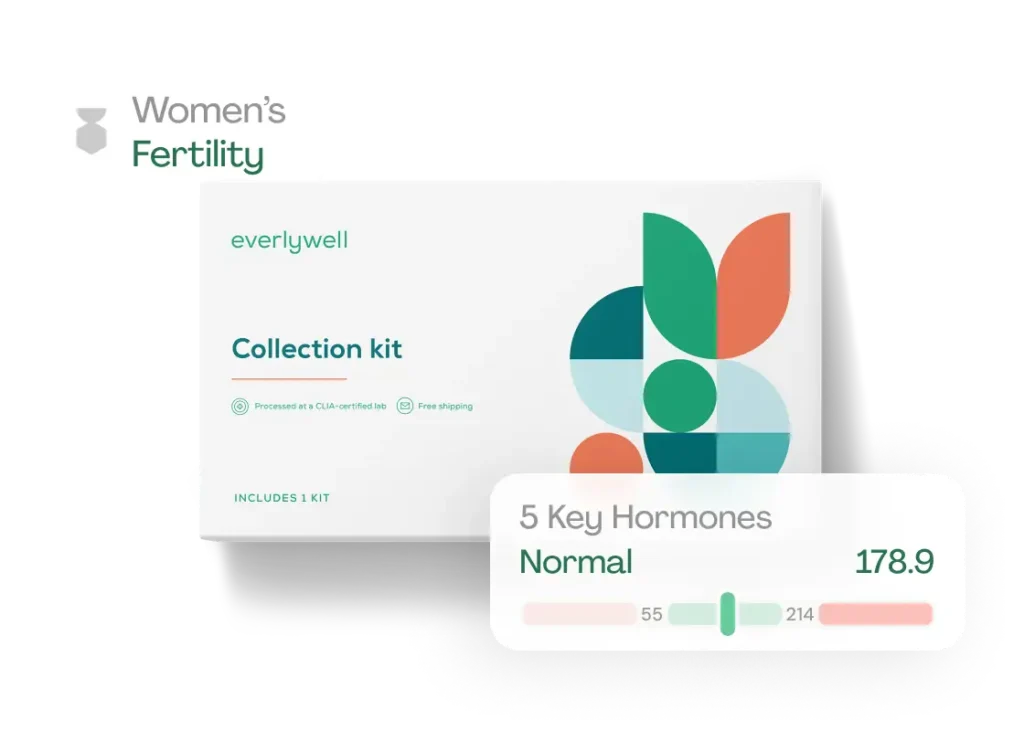
The Everlywell Women’s Fertility Test sits right in the middle of this transformation, and honestly, it represents both the promise and the limitations of at-home diagnostics.
What You’re Actually Measuring
The five-hormone panel included in this test wasn’t randomly selected. These specific markers, estradiol, LH, FSH, TSH, and total testosterone, form the foundation of clinical fertility assessment because they reveal how your reproductive system functions at a cellular level.
Estradiol essentially runs the show for female reproductive function. Your ovaries produce this primary estrogen, and its levels fluctuate dramatically throughout your cycle.
High estradiol in the follicular phase signals healthy follicle development and adequate ovarian reserve.
Low levels might indicate diminished ovarian function, though context matters enormously. What’s normal for a 42-year-old looks very different from what’s expected at 28.
FSH works in partnership with estradiol through a feedback loop that’s surprisingly elegant. When your ovarian reserve declines or follicles become less responsive, your pituitary gland pumps out more FSH, trying to stimulate follicle growth.
This explains why elevated FSH often signals approaching menopause, though that relationship isn’t as straightforward as it seems on paper.
Some women show elevated FSH years before menopause actually begins, while others maintain relatively normal levels until they’re quite close to their final period.
LH surges trigger ovulation, making it the hormone that decides when you’re actually fertile each month. Testing LH at two points in your cycle helps identify whether you’re ovulating regularly and whether the timing aligns with what’s expected. However, here’s something that really surprised me when I started researching this: LH levels alone can’t confirm ovulation happened. You’d need progesterone testing in the luteal phase for that confirmation, which this particular test doesn’t include.
TSH reveals thyroid function, and the inclusion here makes total sense because thyroid disorders mess with fertility in significant ways. Hypothyroidism can prevent ovulation entirely or cause irregular cycles, while hyperthyroidism might lead to shorter cycles or lighter periods.
What’s particularly valuable is that subclinical thyroid dysfunction, levels that aren’t quite abnormal enough to trigger symptoms, can still impact fertility, and many women don’t realize they have thyroid issues until they try to conceive.
Total testosterone in women affects more than most people realize. Beyond the obvious impacts on libido and sexual function, testosterone influences muscle mass, bone density, energy levels, and even cognitive function.
Low testosterone can contribute to fatigue and reduced motivation, while elevated levels might signal PCOS or other hormonal imbalances that affect fertility.
Recommended Product: Everlywell’s Women’s Fertility Test
The Two-Collection Protocol
The dual-timepoint collection requirement separates this test from simpler choices, and it’s both the test’s greatest strength and its most significant practical challenge. You collect your first sample on day three of your menstrual cycle, then collect the second sample seventeen days later.
This timing isn’t arbitrary. Day three captures your baseline hormone levels during the early follicular phase, when estradiol should be relatively low, and FSH provides the clearest window into ovarian reserve.
The second collection occurs during what should be your mid-luteal phase, when hormone patterns reveal whether ovulation likely occurred and how your body transitions after the LH surge.
The problem is that this protocol assumes a relatively regular 28-30 day cycle. If your cycles are irregular, longer, or shorter, the seventeen-day spacing might completely miss your luteal phase or catch you at a hormonally misleading moment.
The test instructions don’t really address this variability, which means women with PCOS, perimenopause, or naturally irregular cycles might get results that are technically accurate but contextually meaningless.
I found the collection process itself to be genuinely well-designed from a usability perspective. The lancets are spring-loaded and relatively painless, though one tester I spoke with mentioned unexpected soreness lasting several days.
The collection card shows exactly where to place blood drops, and the visual guides eliminate most guesswork.
That said, getting enough blood volume can be genuinely tricky. You need to collect many large drops, and if your hands are cold or you’re not squeezing your finger aggressively enough, you’ll end up with not enough sample.
The prepaid shipping label and protective packaging make returns straightforward, though you do need to remember to actually mail the kit back relatively quickly.
Blood samples degrade over time, and while the collection cards stabilize the sample, you don’t want your kit sitting on your counter for weeks.
Laboratory Standards and Physician Review
Every Everlywell sample gets processed at CLIA-certified laboratories, which means the facilities meet federal Clinical Laboratory Improvement Amendments standards. These aren’t casual regulations; CLIA certification needs regular inspections, proficiency testing, quality control protocols, and documented training for all personnel handling samples.
The laboratory analysis itself uses the same equipment and methodologies that hospital labs employ. Your blood undergoes immunoassay testing, which measures hormone concentrations through antibody reactions.
The accuracy matches what you’d get from Quest Diagnostics or LabCorp, assuming the sample collection was done correctly.
Before you receive results, a board-certified physician in your state reviews the findings. This physician review adds legitimacy and introduces a subtle limitation I don’t see discussed much.
The reviewing physician hasn’t taken your medical history, doesn’t know your symptoms, and isn’t providing personalized interpretation.
They’re essentially verifying that the lab processed your sample correctly and flagging results that fall outside standard reference ranges.
This distinction matters significantly. When your own doctor orders hormone testing, they interpret results in the context of your specific situation, your age, symptoms, medical history, medications, and health goals.
The Everlywell physician review confirms technical accuracy but doesn’t provide that contextual interpretation.
Reference Ranges and What They Actually Mean
Your results come back with numbers and reference ranges, and honestly, this is where things get complicated. Reference ranges represent the middle 95% of values from a population of healthy people, but they don’t account for person variation, age-specific expectations, or symptom correlation.
For example, FSH reference ranges are typically quite wide, something like 2.5 to 10.2 mIU/mL during the follicular phase. A 38-year-old with an FSH of 9.8 might technically fall within the normal range, but that level could still indicate declining ovarian reserve for her age.
Similarly, total testosterone reference ranges for women are often based on outdated assays and don’t reflect the significant variability across age groups.
Estradiol adds another layer of complexity because levels change dramatically throughout your cycle. A day-three estradiol of 80 pg/mL might be perfect for some women but could indicate a cyst or premature follicle development in others.
Without a clinical context, these numbers are just data points rather than actionable insights.
The test results include educational content explaining what each hormone does and what high or low levels might show. This information is genuinely helpful for basic understanding, but it’s necessarily generic.
You’ll read that low testosterone might affect libido or energy, which is true, but you won’t get guidance on whether your specific level explains your specific symptoms or what to do about it.
The Perimenopause Prediction Problem
Many women in their late thirties and early forties purchase this test hoping to forecast when perimenopause will begin or where they are in the menopause transition. This is probably the test’s most significant value mismatch: what women hope to learn versus what the test can actually reveal.
Perimenopause is fundamentally a clinical diagnosis based on symptom patterns, not laboratory values. Hormone levels during perimenopause fluctuate wildly from cycle to cycle.
You might show elevated FSH one month and completely normal levels the next.
Estradiol can swing from menopausal levels to higher than you’ve ever experienced within a single cycle.
A single two-point hormone snapshot cannot forecast your menopause timeline because the transition doesn’t follow a predictable linear path. Some women show elevated FSH for five years before their final period, while others maintain relatively normal hormone levels until they’re very close to menopause.
Estradiol doesn’t steadily decline; it bounces around erratically, sometimes spiking to levels that cause extremely heavy periods or severe PMS symptoms.
What the test can do is provide a data point showing where your hormones stand at this particular moment. If you’re experiencing symptoms like irregular periods, hot flashes, or mood changes, seeing elevated FSH and changing estradiol patterns confirms that hormonal shifts are occurring.
But it can’t tell you whether you’re two years or ten years from menopause, and it can’t definitively diagnose perimenopause if you’re not experiencing symptoms.
Cost Comparison and Healthcare Economics
At $149, this test costs substantially less than traditional fertility assessment through a reproductive endocrinologist. A comprehensive fertility workup at a clinic typically includes initial consultation ($250-400), blood work ($200-500 depending on insurance), and often an ultrasound ($150-300).
You’re looking at $600-1200 for comparable information through traditional channels.
However, that cost comparison assumes the at-home test provides equivalent value, which isn’t quite accurate. The clinic visit includes interpretation, follow-up recommendations, and treatment planning.
You’re not just getting numbers, you’re getting answers and next steps.
The at-home test gives you numbers and general education, then leaves you to figure out what to do with that information. If your results show concerning patterns, you’ll likely end up scheduling a doctor’s appointment anyway, adding $150-300 to your total cost.
At that point, you’re approaching traditional testing costs without the integrated care experience.
The sweet spot for value happens when you use this test for general awareness or baseline establishment rather than problem-solving. If you’re simply curious about your hormone levels before trying to conceive, want to track changes over time, or need data to bring to a doctor’s appointment, the $149 investment delivers solid value.
You’re essentially purchasing information and convenience rather than medical care.
HSA and FSA eligibility improves the value proposition since you’re using pre-tax dollars. For someone in a 25% tax bracket, the effective cost drops to around $112, which starts to look quite reasonable for a five-hormone analysis.
Integration with Healthcare Providers
The test results arrive in a downloadable PDF format that you can share with your doctor, and this is honestly where the test provides its greatest value. Walking into an appointment with recent hormone data speeds up the diagnostic process and focuses the conversation on interpretation rather than whether testing is needed.
Many primary care physicians and gynecologists are increasingly comfortable with patients bringing at-home test results, particularly from CLIA-certified labs with physician review. The legitimacy of Everlywell’s laboratory partnerships means your doctor can trust the accuracy, even if they didn’t order the test themselves.
However, some physicians remain skeptical of direct-to-consumer testing, viewing it as incomplete or potentially misleading. A doctor might question the two-point collection timing, want to see cycle-specific context you don’t have, or prefer their own laboratory for consistency with previous results.
The results also don’t combine into your electronic medical record automatically. You’re responsible for sharing the PDF, ensuring it gets uploaded to your chart, and making sure it’s available for future reference.
This administrative friction isn’t huge, but it’s worth considering if you’re someone who values seamless healthcare coordination.
Sample Collection Reality
The marketing makes collection look easy, and for many users, it genuinely is straightforward. You lance your finger, squeeze out blood drops, let them fall onto the collection card, and you’re done in five minutes.
The reality can be messier.
Cold hands reduce blood flow dramatically, so if you’re testing in winter or have naturally cold extremities, you might struggle to get enough sample volume. The instructions suggest warming your hands under hot water, massaging your fingers, and keeping your hand below heart level while collecting.
These techniques help, but some people still find themselves re-lancing many fingers trying to get enough blood.
The lancet depth is standardized, which works fine for most people but might be too shallow for those who have thicker skin or calluses. You can’t adjust the depth, so if the standard penetration doesn’t work for you, you’re somewhat stuck.
One workaround I’ve seen suggested is using the side of your fingertip rather than the pad, where skin tends to be thinner and capillary beds are closer to the surface.
Blood drops need to be large enough to soak through the collection card; small drops that sit on the surface won’t work. You’re aiming for drops that immediately saturate the paper and show through to the other side.
This needs more blood volume than you might expect, and getting that much can be uncomfortable.
The seventeen-day gap between collections means you need to remember your second collection date, store the partially completed kit safely, and maintain motivation through two separate collection events. Life intervenes, you travel for work, get sick, forget until day eighteen, and suddenly you’ve missed your window.
The kit doesn’t offer solutions for irregular cycles or missed collection dates, leaving you to either proceed with mistimed collection or abandon the test entirely.
Results Interface and Data Presentation
The Everlywell app and website provide clean, modern interfaces for accessing results. You receive a notification when your kit arrives at the lab and again when the results are ready.
The results page displays each hormone with your measured value, reference range, and indication of whether you fall within normal limits.
This presentation works well for straightforward interpretation, but becomes less helpful when results fall near range boundaries or when you’re trying to understand relationships between hormones. The interface doesn’t show trend lines if you’ve tested before, doesn’t graph hormone ratios that might be clinically relevant, and doesn’t provide age-adjusted reference ranges that account for expected changes across the reproductive lifespan.
The educational content linked from results includes articles and videos explaining each hormone’s function and what abnormal levels might show. This information is genuinely useful for basic understanding, but it’s the same generic content every user sees regardless of their specific results or situation.
One feature I particularly appreciate is the ability to download results as a PDF that’s formatted for sharing with healthcare providers. The document looks professional and includes all necessary information, test date, methodology, reference ranges, and the reviewing physician’s credentials.
This makes integration into traditional healthcare conversations much smoother.
Longitudinal Tracking and Trend Identification
Single-point hormone testing provides a snapshot, but hormone patterns matter more than personal values for many reproductive health concerns. Tracking changes over many cycles or months reveals trends that isolated measurements miss.
Everlywell offers subscription options for repeated testing, and this is honestly where the platform’s value increases substantially. If you test quarterly for a year, you build a personal baseline showing how your hormones fluctuate with your cycle, respond to lifestyle changes, and shift over time.
This longitudinal data becomes far more valuable than any single test result.
The app stores historical results and lets you compare across testing dates, though the visualization could be more sophisticated. You can see that your FSH was 6.2 in January and 8.4 in April, but you won’t get an automated analysis explaining whether that change is significant or what it might indicate about your fertility trajectory.
For women approaching perimenopause or managing PCOS, repeated testing establishes patterns that guide treatment decisions. You might learn that your testosterone drops during periods of high stress, that your FSH elevates predictably before irregular cycles, or that thyroid function responds to dietary changes.
This self-knowledge enables more targeted intervention and better communication with healthcare providers.
Limitations for Complex Reproductive Issues
The test measures important fertility hormones but omits markers that matter for specific conditions. If you’re investigating PCOS, you’d ideally want DHEA-S, sex hormone binding globulin, and the free testosterone calculation rather than just total testosterone.
For thyroid concerns, you’d benefit from free T3, free T4, and thyroid antibodies beyond TSH alone.
Progesterone testing in the luteal phase would confirm ovulation actually occurred, but the test doesn’t include this marker. AMH (anti-Müllerian hormone) provides valuable ovarian reserve information that FSH alone doesn’t capture, particularly for younger women considering egg freezing or IVF timing.
These omissions mean the test works better for general fertility awareness than for diagnosing specific reproductive disorders. It answers the question “Are my reproductive hormones in the normal range?” reasonably well, but it struggles with “Why am I not getting pregnant?” or “Do I have PCOS?” or “Should I freeze my eggs now?”
Frequently Asked Questions
What hormones does the Everlywell Women’s Fertility Test measure?
The test measures five hormones: estradiol, FSH (follicle-stimulating hormone), LH (luteinizing hormone), TSH (thyroid-stimulating hormone), and total testosterone. These markers provide insight into ovarian function, ovulation patterns, thyroid health, and overall reproductive hormone balance.
Can I use this test if I have irregular periods?
You can use the test with irregular periods, but the results may be harder to interpret. The two-collection protocol assumes a relatively regular 28-30 day cycle, with the first sample on day three and the second seventeen days later.
If your cycles are significantly longer, shorter, or unpredictable, the timing might not capture the right hormonal phases, potentially making results less meaningful.
Does this test tell me if I’m in perimenopause?
The test provides hormone measurements that can indicate hormonal changes, but it cannot definitively diagnose perimenopause or forecast when menopause will occur. Perimenopause diagnosis is based primarily on symptom patterns and clinical evaluation rather than single-point hormone measurements, since hormone levels fluctuate dramatically during this transition.
How accurate is finger-prick blood testing compared to venous blood draws?
The laboratory analysis uses the same methodology and equipment as traditional labs, so accuracy is comparable when the sample is collected correctly. The main difference is the sample collection method rather than the analysis quality.
The challenge with finger-prick testing is ensuring you collect adequate blood volume, which can be difficult for some people.
What should I do if my results show abnormal hormone levels?
If your results fall outside reference ranges or if you have concerns about your hormone levels, schedule an appointment with your healthcare provider to talk about the findings. The physician review included with Everlywell tests verifies technical accuracy but doesn’t provide personalized treatment recommendations.
Your doctor can interpret results in the context of your symptoms, medical history, and health goals.
Does this test measure progesterone?
No, the Everlywell Women’s Fertility Test doesn’t include progesterone testing. This is a significant limitation because progesterone measured in the luteal phase confirms whether ovulation actually occurred. The test measures LH, which surges before ovulation, but elevated LH doesn’t guarantee that ovulation happened.
Can I use HSA or FSA funds to purchase this test?
Yes, the Everlywell Women’s Fertility Test is eligible for HSA (Health Savings Account) and FSA (Flexible Spending Account) reimbursement. Using pre-tax dollars effectively reduces the out-of-pocket cost, making the $149 price more affordable.
How long does it take to get results?
After the lab receives your sample, results typically become available within 5-7 business days. You’ll receive an email notification when results are ready to view in your Everlywell account.
The processing time includes both laboratory analysis and physician review.
Key Takeaways
The Everlywell Women’s Fertility Test delivers legitimate hormone data at a fraction of traditional testing costs, making reproductive health information accessible to women who might otherwise skip testing because of cost, insurance hassles, or time constraints. The CLIA-certified laboratory analysis and physician review confirm medical credibility, and the convenience of at-home collection removes significant friction from the testing process.
The test works best as an informational tool rather than a diagnostic solution, providing data that tells healthcare conversations rather than replacing them. Women using results as a starting point for dialogue with their doctors will find real value, while those expecting definitive answers or treatment plans will likely feel disappointed by the generic follow-up resources.
The two-point collection protocol captures more finish cycle information than single-measurement choices, but it also demands careful timing, remembering collection dates, and maintaining motivation across seventeen days. Women with irregular cycles may find the standardized timing produces misleading results that don’t reflect their personal hormone patterns.
At $149, the value proposition works for baseline establishment, general curiosity, and supplementing traditional healthcare, but it becomes questionable if you need the test plus a doctor’s appointment to interpret confusing results. The lack of personalized guidance, treatment recommendations, or clinical consultation means you’re purchasing data rather than answers.
The test cannot forecast perimenopause timing or diagnose menopause transition based on two-point hormone measurements, despite many women purchasing it specifically for that purpose. Hormone fluctuations during perimenopause vary too dramatically for snapshot testing to provide reliable predictions about the future timeline or current transition stage.
Recommended Product: Everlywell’s Women’s Fertility Test
Disclaimer
The information contained in this post is for general information purposes only. The information is provided by Everlywell Women’s Fertility Test Review: Complete Analysis and while we endeavor to keep the information up to date and correct, we make no representations or warranties of any kind, express or implied, about the completeness, accuracy, reliability, suitability or availability with respect to the website or the information, products, services, or related graphics contained on the post for any purpose.