

At-home health testing has rapidly moved from a niche convenience to a mainstream healthcare option. For many women, these services promise easier access to health data without the logistical barriers of scheduling appointments, traveling to laboratories, or navigating long wait times.
At the same time, skepticism is warranted. Collecting biological samples at home raises reasonable questions about accuracy, reliability, and clinical usefulness. Can a finger-prick blood sample or mailed-in kit truly provide meaningful insight into health status?
The answer is not simple. At-home testing exists in a gray area between expanding healthcare access and oversimplifying complex medical evaluation. The laboratory science behind many tests is sound, but limitations emerge in how samples are collected, interpreted, and applied to real-world health decisions.
For women in midlife—particularly those navigating hormonal transitions, metabolic changes, and evolving risk factors—understanding what at-home tests can and cannot provide is essential. Used appropriately, they can offer valuable information. Used incorrectly or overinterpreted, they can create confusion, false reassurance, or unnecessary alarm.
At-Home Health Testing: What’s Helpful — and What Isn’t
Click through the sections below to understand where at-home testing can support your health — and where traditional care still matters.
- Establish baseline health markers (vitamin D, cholesterol, thyroid)
- Reduce barriers to initial screening
- Identify obvious abnormalities worth medical follow-up
- Provide data that supports more productive doctor visits
These tests are most valuable as starting points, not final answers.
- They cannot diagnose perimenopause or menopause definitively
- They do not replace clinical evaluation or symptom assessment
- They can miss context like medications, cycle timing, or comorbidities
Snapshot lab values without medical context often create more questions than clarity.
Blood-based testing provides the most reliable measurements for hormones such as estradiol, FSH, LH, and testosterone.
- Blood reflects systemic hormone levels
- Saliva levels fluctuate widely and are easily skewed
- Clinical decisions rely on blood values
Hormone levels fluctuate dramatically during perimenopause. A single test shows one moment — not a trend.
- Cycle day affects hormone interpretation
- Irregular cycles reduce snapshot usefulness
- Symptoms often matter more than numbers
The Scientific Foundation of At-Home Testing
When you send a blood sample through the mail, you participate in a system that’s actually more regulated than most people realize. CLIA certification needs laboratories to undergo routine inspections, maintain strict quality control protocols, and follow the same federal standards that hospital labs follow.
The science behind the testing itself is solid.
The difference comes from everything else surrounding the actual laboratory analysis.
Traditional lab testing involves a phlebotomist drawing blood in a controlled environment, ensuring adequate sample volume and proper handling. Your doctor orders specific tests based on your symptoms, medical history, and physical examination findings.
When results arrive, they interpret them within the context of everything they know about you.
At-home testing removes several of these safeguards. You become the phlebotomist, collector, and initial interpreter.
The laboratory still performs the same quality analysis, but they work with whatever sample you managed to collect.
Unless you specifically schedule follow-up consultations, those numbers arrive without the clinical context that makes them meaningful.
This matters tremendously for accuracy. A perfectly calibrated machine analyzing an inadequate sample will produce unreliable results.
Similarly, accurate measurements of the wrong biomarkers at the wrong time won’t answer your actual questions.
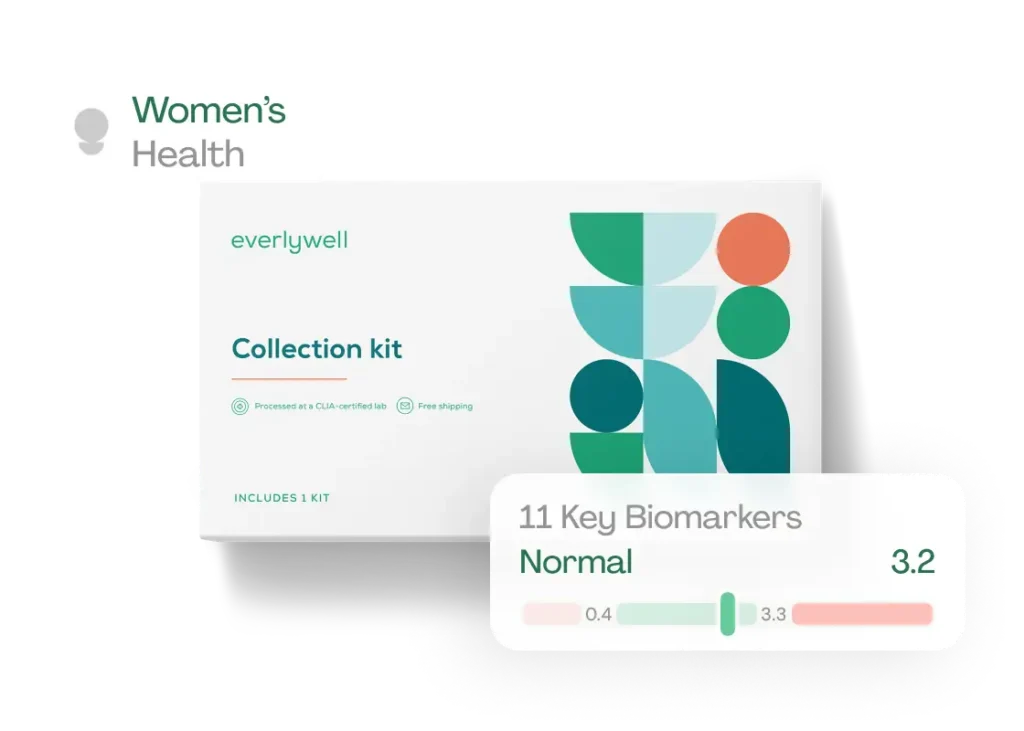
Check out this product: Everlywell’s Women’s Health Test
When Blood Beats Saliva
Something that genuinely surprised me during my research was learning that not all testing methods measure equally well, even when looking at the same hormones.
Blood testing provides the most reliable measurement for hormones like estradiol, FSH, LH, and testosterone. The concentrations in blood reflect what’s actually circulating through your body and affecting your tissues.
Saliva testing, which some competitors use, measures free hormone levels. These fluctuate significantly throughout the day and can be influenced by factors like hydration status and contamination from food or drink.
Medical professionals consistently emphasize this distinction. When accuracy matters for clinical decision-making, blood wins.
One OB-GYN put it plainly: blood test results will be more accurate because they measure systemic hormone levels as opposed to localized or variable concentrations.
This becomes especially relevant for perimenopause tracking. If you’re spending money to understand your hormonal status, you want measurements that actually reflect what’s happening systemically, not just what’s present in your saliva at that particular moment.
The Perimenopause Testing Paradox
This is where things get really interesting, and honestly, where many marketing claims fall apart under scrutiny.
Perimenopause is a transition, not a destination. Your hormones during this phase don’t follow predictable patterns.
They fluctuate wildly.
FSH might be elevated one month and normal the next. Estradiol can swing dramatically within weeks.
This inherent variability creates a basic problem with snapshot testing. A single measurement tells you where your hormones were on that specific day, during that specific week of your cycle, under those specific circumstances.
It cannot forecast when perimenopause will end.
It cannot confirm definitively that you’re in perimenopause unless values are extremely elevated. And it absolutely cannot tell you what symptoms you’ll experience or when.
Medical practitioners diagnose perimenopause clinically, meaning they listen to your symptoms: irregular periods, hot flashes, sleep disruptions, mood changes, vaginal dryness. These lived experiences provide far more diagnostic value than a single FSH measurement.
Does this mean hormone testing is worthless? Not exactly.
The value lies elsewhere.
What Home Testing Actually Reveals
When you adjust expectations appropriately, at-home testing offers specific, limited value that can genuinely help with health management.
First, it establishes baseline data. Knowing your vitamin D level, thyroid function, or cholesterol profile when you feel relatively well creates reference points for future comparison.
If you develop symptoms later, you and your doctor can see how markers have changed.
Second, it identifies obvious abnormalities that warrant professional evaluation. Severely elevated blood sugar, dramatically low thyroid hormones, or concerning cholesterol patterns become visible.
You can bring these results to appointments, accelerating the diagnostic process.
Third, it removes barriers to initial screening. For women without regular healthcare access, who’ve recently moved to new areas, or who face mobility challenges, home testing opens doors that might otherwise stay closed. This beats no screening at all, even if it’s not ideal healthcare delivery.
Fourth, it provides tangible data that can motivate behavior change or confirm symptoms you’ve been experiencing. Seeing elevated inflammatory markers might push you to finally prioritize sleep.
Confirming low vitamin D explains persistent fatigue and justifies supplementation.
The test doesn’t replace a medical evaluation. This distinction matters enormously.
The Timing Problem Nobody Talks About
Here’s a practical challenge that trips up many users: timing requirements for accurate hormone testing.
If you’re still menstruating, even irregularly, hormone levels vary dramatically throughout your cycle. FSH and LH surge mid-cycle during ovulation.
Estradiol peaks just before ovulation and rises again during the luteal phase.
Progesterone is only measurable after ovulation.
Testing on the wrong day produces results that are technically accurate but clinically meaningless. Your FSH might appear elevated simply because you unknowingly tested during your natural mid-cycle surge, not because you’re approaching menopause.
Most fertility and perimenopause tests recommend specific testing windows: day 3 for baseline FSH and estradiol, day 21 for progesterone. But if your cycles have become irregular, identifying “day 3” becomes guesswork.
You might be on day 3 of what will become a 45-day cycle, or day 3 of a 21-day cycle.
Your hormonal landscape differs dramatically in these scenarios.
Understanding your cycle patterns, tracking carefully, and potentially testing many times across different cycles provides more useful information than a single snapshot. This needs knowledge that many marketing materials gloss over.
Self-Collection Challenges
Let’s talk about the physical reality of finger-prick blood collection, because this proved surprisingly challenging for many testers I spoke with.
The lancets provided pierce deep enough to draw blood, but some people produce barely enough to fill the collection card circles. Others experience significant pain that lingers for days.
A few have vasovagal responses, feeling dizzy or faint from the finger prick.
Temperature matters more than you’d expect. Cold hands produce less blood flow.
Hydration status affects blood viscosity.
These factors, completely unrelated to your actual health markers, can decide whether you collect adequate samples.
The companies provide detailed instructions, including videos demonstrating proper technique. Running warm water over your hands, allowing your arm to hang down to increase blood flow to the fingertips, and squeezing from the palm toward the fingertips all help.
But even with perfect technique, some people simply struggle with self-collection.
This creates a real access problem. If you can’t successfully collect samples, the convenience advantage disappears.
You’ve paid for testing you cannot finish, or you need to request replacement kits and try again, adding time and frustration.
Understanding What Results Actually Mean
I’ve reviewed dozens of sample reports from various at-home testing companies, and one pattern emerges consistently: results come with reference ranges and color-coded indicators (green for normal, yellow for borderline, red for abnormal), but minimal interpretation guidance.
You might see that your vitamin D is 22 ng/mL, marked yellow for “borderline low.” But what does this mean functionally? Should you supplement?
At what dose?
For how long? When should you retest?
These questions need answers that extend beyond the laboratory data.
Similarly, seeing that your FSH is 15 mIU/mL might be marked as “elevated,” but this number exists on a continuum. Is it high enough to show approaching menopause?
Is it within normal range for your age?
Does it explain your symptoms? The number alone doesn’t answer these questions.
Some companies provide recorded educational content or written materials explaining biomarkers generally. These resources help with health literacy but don’t replace personalized medical interpretation.
They tell you what FSH measures, but not what your specific FSH level means for your specific situation.
The Insurance and Cost Reality
Here’s the economic calculation that matters: a comprehensive metabolic panel through traditional healthcare might cost you a $20-$50 copay if you have insurance. The same panel through at-home testing costs $150-$200 out of pocket.
For women with decent insurance coverage and reasonable access to healthcare facilities, traditional testing makes more financial sense. You’ll likely get more comprehensive panels (doctors can order dozens of markers simultaneously), professional interpretation included, and insurance covers most costs.
At-home testing works better economically when you lack insurance, have high deductibles that make traditional lab work expensive anyway, or want to test markers your insurance won’t cover without documented symptoms (like comprehensive hormone panels or food sensitivity testing).
HSA and FSA eligibility helps, but doesn’t fully bridge the cost gap. You’re still paying significantly more than insured traditional testing would cost.
The convenience premium is real. You’re paying extra to avoid scheduling, traveling, and waiting.
Whether that premium is worth it depends entirely on your personal circumstances, financial situation, and what you value.
When Home Testing Makes Sense
After reviewing extensive research and user experiences, I’ve identified specific scenarios where at-home testing genuinely adds value.
You live in a rural area with limited access to laboratories or specialists. The nearest lab needs hours of travel.
Home testing makes screening possible that otherwise wouldn’t happen.
You’re establishing health baselines in your 40s before symptoms emerge. You want to know your normal cholesterol, thyroid function, vitamin D, and inflammatory markers while healthy, creating reference points for future comparison.
You’re monitoring known conditions between doctor appointments. You have hypothyroidism and want to check TSH levels three months after a dosage adjustment, before your next scheduled appointment.
You want concrete data before scheduling appointments with new healthcare providers. You’ve moved to a new city and need to establish care, but you want your current health information when meeting new doctors.
You’re pursuing elimination diets and want to track inflammatory markers or food sensitivities as you remove and reintroduce foods. Longitudinal testing helps you assess whether dietary changes affect biomarkers.
You face mobility challenges that make traveling to labs difficult. Home testing removes transportation barriers.
When to Choose Traditional Testing Instead
Conversely, traditional testing makes more sense in other scenarios.
You have symptoms requiring diagnosis. Unexplained weight changes, severe fatigue, concerning pain, or new symptoms warrant a comprehensive evaluation, not home testing.
Doctors can order extensive panels and interpret results within your full clinical picture.
You need a definitive diagnosis for treatment decisions. Confirming diabetes, diagnosing thyroid disorders, or evaluating concerning cholesterol patterns before starting medications needs professional oversight and often many markers beyond what home tests measure.
You have insurance covering laboratory services. The financial advantage of home testing evaporates when insurance makes traditional testing cheaper.
You’re testing markers that need precise timing or special handling. Some hormones need serum separation within specific timeframes.
Some markers degrade during shipping.
Some need fasting or medication adjustments before collection.
You want comprehensive panels. Doctors can order 30+ markers simultaneously.
Home testing typically focuses on narrow panels, potentially missing important correlations between different systems.
Building Health Literacy Through Testing
Here’s an unexpected benefit I’ve observed: at-home testing often increases health literacy in ways that transform how people engage with healthcare.
When you’re actively involved in sample collection, result interpretation, and tracking changes over time, you develop a deeper understanding of how biomarkers relate to health. You learn what FSH measures and why it matters.
You understand the difference between TSH and free T4.
You recognize that cholesterol involves many components with different implications.
This knowledge changes doctor appointments. Instead of passively receiving information, you ask informed questions.
You understand why doctors recommend certain tests.
You recognize connections between different symptoms and lab findings.
The process of researching what your results mean, even when that research reveals limitations of home testing, builds critical thinking about health information. You become more discerning about health claims, more aware of what forms reliable evidence, and better equipped to assess wellness products and services.
This literacy compounds over time. Each test teaches you more about your body.
Each result gives you reference points for comparison.
Each interaction with healthcare providers based on test data strengthens your ability to advocate effectively for your health needs.
Addressing the Interpretation Gap
The single biggest challenge with at-home testing lies in the gap between receiving results and understanding their implications.
Some people bridge this gap effectively, researching markers, consulting healthcare providers, and integrating results into broader health management. Others struggle, feeling confused by numbers, uncertain about next steps, and frustrated by limited guidance.
The companies themselves vary dramatically in support quality. Some provide extensive educational resources, recorded consultations, and accessible customer service.
Others offer minimal interpretation help beyond reference ranges and basic definitions.
Your ability to interpret results depends partly on existing health literacy. If you already understand basic physiology and biomarker significance, you’ll navigate results more effectively.
If this is your first exposure to laboratory values, the learning curve is steeper.
This creates an unfortunate irony: at-home testing is marketed as making healthcare more accessible, but successful use needs substantial health literacy that not everyone possesses. People most likely to benefit from easier testing access may be least equipped to interpret results meaningfully.
The solution comes from recognizing this gap and planning specifically to address it. Schedule consultations before testing so you know you’ll have interpretation help.
Research markers before testing, so results make sense when they arrive.
Treat the first test as a learning experience as opposed to expecting immediate actionability.
Frequently Asked Questions
Is finger-prick testing as accurate as regular blood draws?
The laboratory analysis is equally accurate when samples are collected properly. The challenge comes from the collection process itself.
Finger-prick samples can be affected by poor technique, inadequate blood volume, or improper handling during shipping.
Professional phlebotomy draws eliminate many of these variables, which is why traditional testing often produces more consistent results.
What hormone tests should I take in perimenopause?
FSH and estradiol measured on day 3 of your cycle provide the most useful baseline information. However, single measurements have limited diagnostic value because hormone levels fluctuate wildly during perimenopause.
Clinical symptoms like irregular periods, hot flashes, and sleep changes actually diagnose perimenopause more reliably than laboratory values.
Can I use HSA or FSA funds for at-home health tests?
Many at-home health tests qualify for HSA and FSA reimbursement, but not all. Check with your specific test provider and review your plan’s eligible expenses list.
Even when eligible, you’re still paying significantly more out-of-pocket than you would for insurance-covered traditional lab work.
How do I know if my vitamin D level is too low?
Vitamin D levels below 20 ng/mL show deficiency requiring supplementation. Levels between 20 and 30 ng/mL are considered not enough.
Most healthcare providers recommend maintaining levels above 30 ng/mL.
However, the suitable supplementation dose depends on your current level, absorption capability, and personal factors that need professional evaluation.
What TSH level shows hypothyroidism?
TSH above 4.5-5.0 mIU/L typically shows hypothyroidism, though some labs use slightly different reference ranges. However, TSH alone doesn’t provide a complete picture.
Free T4 and sometimes free T3 measurements add essential context.
Symptoms matter as much as numbers when diagnosing and treating thyroid conditions.
Are food sensitivity tests worth the money?
Most at-home food sensitivity tests measure IgG antibodies, which show exposure to foods as opposed to true allergic reactions or intolerances. These tests often produce false positives and lead people to unnecessarily eliminate nutritious foods.
Elimination diets guided by symptom tracking provide more reliable information about food intolerances at a lower cost.
Can thyroid testing replace a doctor’s visit?
No. Thyroid testing reveals current hormone levels but doesn’t explain why they’re abnormal, what treatment you need, or how to monitor therapy. Thyroid conditions need comprehensive evaluation, including physical examination, symptom assessment, and often additional testing beyond basic TSH and free T4 measurements.
How often should I retest my hormone levels?
The testing frequency depends on what you’re monitoring. Stable conditions like well-controlled hypothyroidism might need checking every 6-12 months.
Perimenopause hormones change too rapidly for regular testing to provide useful tracking.
Vitamin D can be rechecked 2-3 months after starting supplementation, then annually once levels stabilize.
Key Takeaways
At-home testing provides legitimate convenience but needs realistic expectations about what snapshot biomarker measurements can reveal. Blood-based testing offers superior accuracy compared to saliva choices for hormone measurement.
Perimenopause remains a clinical diagnosis based on symptoms as opposed to single lab values.
Self-collection success varies significantly based on personal physiology and technique. Cost comparisons favor traditional testing when insurance coverage is available.
Interpretation quality gaps mean results work best as conversation starters with healthcare providers as opposed to standalone diagnostic tools.
A strategic combination of home and traditional testing maximizes benefits while minimizing limitations. Health literacy decides how effectively you can translate test results into meaningful health actions.
Check out this product: Everlywell’s Women’s Health Test
Disclaimer
The information contained in this post is for general information purposes only. The information is provided by Understanding At-Home Health Testing: What Women Really Need to Know and while we endeavor to keep the information up to date and correct, we make no representations or warranties of any kind, express or implied, about the completeness, accuracy, reliability, suitability or availability with respect to the website or the information, products, services, or related graphics contained on the post for any purpose.