

Why do some people walk into a gym with a plan and emerge four weeks later visibly transformed, while others drift from machine to machine for months without seeing real change? Why do certain workout programs stick with you while others feel impossible to maintain past the first week?
The difference comes down to progressive structure. The specific order in which you stress your muscles, and the way you manipulate variables like volume, load, and tempo, determines whether you build a body that’s stronger, leaner, and more capable.
Training location doesn’t matter much, whether you’re in a commercial gym or your living room. Progressive structure matters everything in resistance training, so you need to choose your progression carefully.
As strength coach Dan John said, “The goal is to keep the goal the goal.” For the next four weeks, your goal is deliberate, measurable transformation through intelligently programmed dumbbell work.
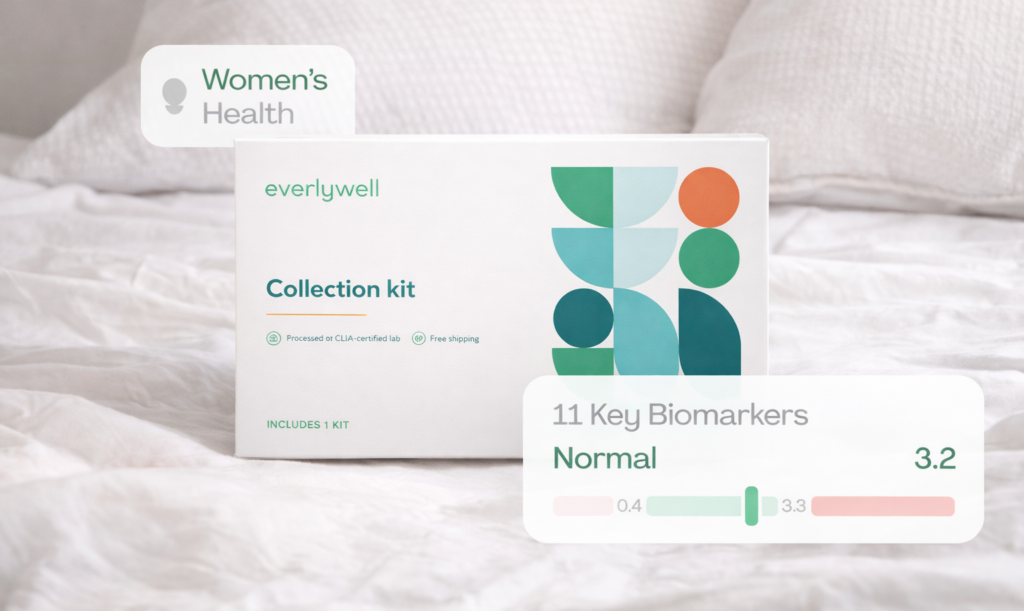
Everlywell Women’s Hormone Test – At-Home Screening
Curious about your hormone balance during perimenopause, menstrual changes, or overall wellness? This at-home hormone panel gives insight into key markers that affect mood, cycles, metabolism, and more.
- ✔ Measures key hormones related to women’s health
- ✔ CLIA-certified lab analysis
- ✔ Physician-reviewed, easy-to-understand results
- ✔ Simple finger-prick blood sample from home
FSA/HSA eligible • Test from home • Personalized hormonal insights
Understanding the Four-Week Transformation Framework
Most people think four weeks isn’t enough time to see real change. They’re half right.
Four weeks won’t turn you into a bodybuilder or shred 30 pounds of fat. What it will do is far more valuable: it establishes neurological patterns, builds movement competency, and creates visible momentum that carries you into long-term training adherence.
The magic of a four-week block extends beyond physical adaptation. Psychological commitment matters just as much.
When you commit to a finite timeline with clear weekly progressions, your brain stops negotiating. You stop asking “should I work out today?” and start asking “which workout is today?” That shift in internal dialogue carries more weight than any single exercise selection.
Here’s what actually happens across these four weeks. Week one focuses on motor learning, where your nervous system figures out how to recruit muscle fibers efficiently.
You’re not really building muscle yet, you’re building the software that runs the muscle.
Week two increases volume, forcing your body to tolerate more total work. Week three adds mechanical load, creating the tension necessary for strength adaptation.
Week four manipulates tempo, extending time under tension without increasing weight, which produces a completely different adaptive signal.
This sequence applies different stressors systematically to prevent accommodation while building on previous adaptations. Your body can’t predict what’s coming next, which keeps the adaptive response active.
The Weekly Progression System
Let me walk you through exactly how each week builds on the last, because understanding the why behind each progression makes you far more likely to execute it properly.
Week One: Movement Pattern Mastery
Your first week uses moderate weight that allows you to finish every rep with controlled form. I’m talking about weight that feels manageable, even easy on the first set.
This is strategic neurological programming, not laziness.
When you perform a goblet squat for the first time, your body doesn’t know which muscles should fire first, how deep to descend, or how to balance the load. Your first week teaches these patterns without accumulating fatigue that would degrade form.
Choose weights that leave you with 2-3 reps in reserve at the end of each set. If the program calls for 10 reps, you should feel like you could honestly do 12-13 if someone offered you money.
This conservative approach builds confidence and establishes baseline performance metrics for the coming weeks.
Week Two: Volume Accumulation
Same weights as week one, but you’re adding 2-3 reps per set. If you did 10 reps last week, you’re doing 12-13 this week.
This simple change dramatically increases total training volume, the primary driver of muscle growth.
Your muscles now have to sustain contractions longer, tolerate more metabolic byproduct accumulation, and manage fatigue across extended sets.
This week typically feels harder than week three, which surprises people. You’re using lighter weight but experiencing more muscle burn, more cardiovascular demand, and often more next-day soreness.
That’s metabolic stress doing its job.
You’re building work capacity that will support heavier loads later.
Week Three: Mechanical Load Progression
Now you’re increasing weight by 2-5 pounds for upper body exercises and 5-10 pounds for lower body movements. Rep counts drop back to week one levels, but you’re lifting heavier absolute loads.
This is classic progressive overload, the basic principle that’s driven strength gains since humans started lifting heavy objects.
Your nervous system responds to this increased mechanical tension by recruiting higher-threshold motor units and improving force production. This is the week where you’ll actually feel stronger on specific lifts.
Your goblet squat that felt challenging at 35 pounds suddenly feels manageable.
Your shoulder press that maxed out at 20-pound dumbbells now handles 25s comfortably.
Week Four: Tempo Manipulation
Here’s where things get really interesting. You’re maintaining week three weights, but slowing down the eccentric (lowering) phase to three full seconds.
You pause for one second at the bottom, lift for one second, and hold for one second at the top.
This 3-1-1-1 tempo turns every rep into a six-second event.
The weight you confidently handled last week suddenly feels 30-40% heavier. Your muscles are under tension far longer, accumulating fatigue without the joint stress of heavier loads.
This extended time under tension triggers different adaptive pathways than pure strength work. You’re building muscular endurance, improving eccentric strength (which reduces injury risk), and developing better proprioceptive awareness of movement patterns.
The Four-Day Training Split Structure
I’m going to give you a realistic, sustainable four-day split that fits into actual human life. You’re not training seven days a week like a professional athlete.
You’re building a body that supports your life, not organizing your life around your body.
Day One: Full-Body Strength Emphasis
This session uses triset formats, where three exercises are performed in sequence with minimal rest between movements. You finish as many rounds as possible in a 10-minute block, then rest 2 minutes before starting the next triset block.
Start with compound movements: goblet squats, dumbbell bench presses, and bent-over rows. These exercises recruit many muscle groups simultaneously, creating significant metabolic demand while building functional strength patterns.
The AMRAP (as many rounds as possible) structure keeps you psychologically engaged. You’re not counting down reps, you’re seeing how much work you can accumulate.
Timed blocks naturally accommodate fatigue. As you tire, you take slightly longer rests between trisets, but you keep moving.
This self-regulating intensity prevents burnout while maintaining adequate training stimulus.
Day Two: Upper Body Circuit with Core Finisher
This session emphasizes pushing and pulling movements in circuit format with shorter rest periods, 45 to 60 seconds between exercises. You’re moving through shoulder presses, bent-over rows, chest flies, bicep curls, and tricep extensions in continuous rotation.
The reduced rest periods elevate your heart rate significantly, creating cardiovascular conditioning alongside muscular work. You’re burning more calories during the session and building the metabolic efficiency that supports body recomposition.
End with a dedicated core circuit: Russian twists, plank variations, and dead bugs. Your abs are already fatigued from stabilizing during compound lifts, so this finishing work pushes them into real hypertrophy stimulus territory.
Day Three: Active Recovery
This isn’t a couch day. You’re doing 20-30 minutes of low-intensity movement: walking, easy cycling, gentle yoga, or mobility drills.
Active recovery maintains blood flow to recovering muscles, promotes lymphatic drainage, and keeps your nervous system primed for the next training session.
I’ve watched too many people treat rest days as finish inactivity, then wonder why their next workout feels sluggish. Movement promotes recovery.
Sitting on the couch watching Netflix promotes stiffness.
Day Four: Lower Body and Conditioning
This session combines heavy lower body work with explosive movements and unilateral training. You’re doing Romanian deadlifts, walking lunges, goblet squats, and Bulgarian split squats in triset format with 90-second rest periods.
The unilateral work (single-leg movements) addresses person limb imbalances that bilateral exercises hide. Your dominant leg can’t compensate for your weaker leg during a Bulgarian split squat.
This forced symmetry builds balanced strength and reduces injury risk.
Add a metabolic finisher: dumbbell squat thrusters for 30 seconds on, 15 seconds off, repeated for 6-8 rounds. This HIIT component creates serious cardiovascular demand while maintaining the resistance stimulus.
Exercise Selection and Execution
Let me walk you through the movements that form the foundation of this program, because proper execution matters far more than exercise selection.
Goblet Squats
Hold a single dumbbell vertically at chest height, gripping the top weight plate with both hands. Your feet should be slightly wider than shoulder-width, toes pointed slightly outward.
Descend by pushing your hips back and bending your knees simultaneously, keeping your chest upright and elbows inside your knees.
The goblet position forces you to maintain an upright torso. If you lean forward excessively, the weight pulls you off balance.
This built-in feedback mechanism teaches proper squat mechanics better than any coaching cue.
Descend until your thighs are parallel to the floor or slightly below, then drive through your heels to stand. The entire movement should feel controlled, not rushed. You’re building strength through the full range of motion, not bouncing out of the bottom position.
Romanian Deadlifts
Stand with a dumbbell in each hand, arms hanging at your sides. Your feet should be hip-width apart, knees slightly bent.
This slight knee bend stays constant throughout the movement, this isn’t a squat.
Push your hips backward while maintaining a neutral spine. The dumbbells should travel straight down along your legs, staying very close to your body.
You should feel intense tension in your hamstrings and glutes as you hinge forward.
Lower until you feel a significant stretch in your hamstrings, typically when the weights reach mid-shin level. Then drive your hips forward to return to standing.
The entire movement is a hip hinge pattern where your shoulders and hips move together as a unit.
Single-Arm Dumbbell Rows
Place your left knee and left hand on a bench for support. Your right foot should be planted firmly on the ground, slightly behind you.
Hold a dumbbell in your right hand, arm hanging straight down.
Pull the dumbbell toward your hip by driving your elbow backward and upward. Your torso should stay stable, with no twisting or rotating.
Here’s where the real magic happens.
Your entire core has to fire to prevent rotation, building anti-rotation strength that transfers to every other movement pattern.
Lower the weight with control, feeling your shoulder blade spread across your back at the bottom position. This full range of motion builds both strength and mobility simultaneously.
Dumbbell Bench Press
Lie on a bench (or the floor if you’re training at home) with a dumbbell in each hand. Your feet should be flat on the floor, core braced. Press the dumbbells straight up from chest level, stopping just before your elbows fully lock out.
Dumbbell presses offer increased range of motion compared to barbell work. You can lower the weights below your chest level, creating a deeper stretch in your pecs.
You also have to stabilize each arm independently, recruiting more stabilizer muscles and preventing your stronger side from compensating for weakness.
The Tempo Training Secret
Week four introduces tempo manipulation that completely changes how the exercises feel, even though you’re using the same weight as week three. Let me explain why this works and how to apply it properly.
When you lower a weight for three full seconds instead of one or two, you’re keeping your muscles under continuous tension significantly longer. Standard tempo might give you 20-30 seconds of total time under tension per set.
Slow tempo extends this to 50-70 seconds per set.
This extended tension creates metabolic stress and mechanical tension simultaneously. Your muscle fibers can’t relax and recover mid-set.
Blood flow gets partially occluded, creating a hypoxic environment that triggers different growth signals than pure strength work.
Here’s how to count tempo properly: as you begin lowering the weight, count “one one-thousand, two one-thousand, three one-thousand.” Pause at the bottom for a full second. Then lift the weight in one second, not explosively, but with controlled speed. Hold at the top for one second before beginning the next rep.
This will feel brutally difficult at first. The weight that felt manageable last week suddenly feels like you’re lifting through honey.
Your muscles will burn intensely.
This is normal and productive. You’re creating a training stimulus your body hasn’t experienced before, which forces new adaptation.
The Warm-Up Protocol That Actually Matters
Dynamic warm-ups serve a real training purpose beyond injury prevention theater.
Spend 5-10 minutes before each session performing dynamic movements that mirror your upcoming workout. If it’s lower body day, do bodyweight squats, walking lunges, leg swings, and hip circles.
If it’s upper body day, do arm circles, scapular push-ups, band pull-aparts, and thoracic rotations.
These movements elevate your core temperature, increase synovial fluid production in your joints, and activate the exact movement patterns you’re about to load. Studies show that proper dynamic warm-ups improve first-set performance by 10-15%.
That’s the difference between struggling through your first working set and crushing it with proper form.
The warm-up also provides valuable biofeedback. If your shoulders feel stiff during arm circles, you know to be conservative with overhead pressing loads that day.
If your hips feel restricted during bodyweight squats, you might reduce depth slightly on your working sets.
This self-assessment prevents injury far more effectively than static stretching ever could.
Common Mistakes and How to Navigate Them
Let me walk you through the mistakes I see constantly with four-week programs, because knowing what not to do is just as valuable as knowing what to do.
Progressing Too Aggressively
The biggest mistake is adding too much weight too quickly. You feel great after week one, so you jump up 10-15 pounds across all exercises in week three.
Then you can’t finish your prescribed reps, your form degrades, and you either get injured or discouraged.
Stick to the 2-5 pound increases for upper body, 5-10 pounds for lower body. These seem conservative, but they’re sustainable.
You can always add more weight if the prescribed increase feels too easy, but you can’t un-injure a shoulder you strained by ego-lifting.
Skipping Active Recovery Days
People either turn rest days into finish inactivity or decide they feel great and add extra training sessions. Both approaches backfire.
Complete rest allows stiffness to set in. Extra training prevents adaptation and leads to overtraining symptoms.
Honor the program structure. Active recovery days serve a specific physiological purpose.
They maintain movement patterns while allowing structural recovery.
This balance is what makes four-day programs sustainable long-term.
Ignoring Tempo in Week Four
Tempo work feels awkward and difficult, so people unconsciously speed up. They think they’re doing 3-second eccentrics but they’re actually doing 1.5-2 seconds.
This defeats the entire purpose of the week.
Use your phone to record sets occasionally. Watch them back and count the actual tempo.
You’ll probably realize you’re moving faster than you think.
Slowing down deliberately takes conscious effort and practice.
Inadequate Nutrition
You can’t out-train a terrible diet, especially during a four-week body recomposition program. If you’re trying to build muscle while losing fat, you need adequate protein (0.8-1 gram per pound of body weight) and a modest calorie deficit (200-300 calories below maintenance).
Too large a deficit will prevent muscle growth. Too small a deficit won’t trigger fat loss.
The sweet spot needs honest tracking for at least a few weeks until you develop intuitive awareness of portion sizes and macronutrient content.
Adapting the Program to Your Situation
This program framework adapts to various circumstances and fitness levels. Let me show you how to change it intelligently.
For Complete Beginners
If you’ve never touched a dumbbell, extend week one to 10-14 days instead of 7. Give your nervous system extra time to learn movement patterns before progressing.
Use the lightest dumbbells available, even 5-10 pounds, for isolation movements like lateral raises and bicep curls.
Consider filming your sets and reviewing them for form issues. Common beginner mistakes include rounding the lower back during deadlifts, excessive forward lean during squats, and using momentum instead of muscle tension during curls.
Catching these early prevents ingrained poor movement patterns.
For Intermediate Lifters
If you have 6-12 months of consistent training experience, proceed through the program as written but challenge yourself to hit the upper end of prescribed rep ranges. If the program calls for 10-12 reps, aim for 12.
If it prescribes 8-10, target 10.
You might also reduce rest periods by 10-15 seconds if the prescribed intervals feel too generous. This increases workout density without changing the basic structure.
For Limited Equipment Situations
If you only have one pair of dumbbells, you’ll need to adjust exercise selection and rep ranges. Heavier fixed-weight dumbbells work great for lower body movements but might be excessive for isolation work like lateral raises.
Modify the program to emphasize compound movements with your available weight and use higher rep ranges (15-20 reps) for exercises that would normally need lighter loads. You’re still creating training stimulus, you’re just shifting the emphasis slightly toward muscular endurance.
For Older Adults
If you’re over 50, extend your warm-up to 10-15 minutes and include specific mobility work for commonly restricted areas like hips, shoulders, and thoracic spine. Progress weight more conservatively, 2-3 pounds instead of 5 pounds, even for lower body movements.
Pay extra attention to eccentric control. The lowering phase becomes increasingly important for injury prevention as we age.
That three-second eccentric in week four develops the strength to control loads safely, which translates directly to fall prevention and functional capacity.
Building Toward Long-Term Success
This four-week program establishes a foundation for continued progress.
The neurological adaptations you build in these four weeks create movement literacy that supports any future training. Whether you transition to barbell work, kettlebells, or bodyweight training, the motor patterns you’ve established transfer directly.
The progressive overload principles you’ve applied at the micro level (week to week) teach you how to think about training at the macro level (month to month, year to year). You now understand that progress needs systematic manipulation of training variables, not random variation.
After completing this four-week block, take a deload week. Use 50% of your week four weights and perform the same exercises for the same rep ranges.
This feels almost comically easy, which is exactly the point.
You’re allowing your connective tissues and nervous system to fully adapt to the stimulus you’ve accumulated.
Then you have several progression options. You could repeat the four-week cycle with heavier starting weights.
You could transition to a five-day split that allows greater volume per muscle group.
You could maintain the four-day structure but add more exercises per session. The specific choice matters less than maintaining progressive structure.
Your Practice Assignment
Here’s what I want you to do before starting this program: test your baseline performance on three movements: goblet squats, dumbbell bench presses, and bent-over rows.
Choose a moderate weight that you think you can lift for 10-12 reps with good form. Perform one set to near-failure and record exactly how many clean reps you finish.
Film this set from the side so you can review your form.
Write down these numbers and save the video. After completing the four-week program, repeat this exact test with the same weight.
You’ll be shocked at how many more reps you can finish with better form.
This tangible progress measurement provides motivation that’s far more valuable than scale weight or mirror observations.
During the program itself, keep a simple training log. Record the weight used, reps completed, and how each session felt on a 1-10 difficulty scale.
This data provides invaluable feedback for adjusting future programs and understanding your person recovery patterns.
Frequently Asked Questions
How many times per week should I do full body workouts with dumbbells?
Four times per week gives you the best balance between training frequency and recovery time. Training more than four days per week with full body workouts doesn’t allow adequate recovery for muscle growth and strength gains.
Three days works if you’re really pressed for time, but four days improves results.
Can I build muscle with just dumbbells at home?
Yes, dumbbells provide everything you need for muscle building. The key is progressive overload, consistently adding weight or reps over time.
As long as you can gradually increase the challenge to your muscles, you’ll build muscle whether you’re using dumbbells, barbells, or machines.
What weight dumbbells should a beginner start with?
Men typically start with 15-25 pound dumbbells for upper body exercises and can use 25-35 pounds for lower body movements. Women usually start with 8-15 pounds for upper body and 15-25 pounds for lower body.
Start conservatively and add weight each week.
How long should a full body dumbbell workout take?
Plan for 45-60 minutes including warm-up and cool-down. The actual working sets take 30-40 minutes.
If you’re finishing much faster, you’re probably rushing through exercises or not resting enough between sets.
If it’s taking 90 minutes, you’re resting too long.
Should I do cardio on rest days during this program?
Light cardio like walking, easy cycling, or swimming works great on active recovery days. Keep it low-intensity, you should be able to hold a conversation comfortably.
Avoid high-intensity cardio on rest days because it interferes with muscle recovery.
What should I eat to support muscle growth on this program?
Aim for 0.8-1 gram of protein per pound of body weight daily. Eat slightly above maintenance calories if building muscle is your primary goal, or 200-300 calories below maintenance if you want to lose fat while maintaining muscle.
Prioritize whole foods: lean meats, fish, eggs, vegetables, fruits, and whole grains.
How do I know if I’m using the right weight?
The right weight allows you to finish all prescribed reps with good form while feeling challenged on the last 2-3 reps. If you’re breezing through sets, increase the weight.
If your form breaks down before hitting the target reps, decrease the weight.
Can women follow this same program?
Absolutely. Women respond to strength training the same way men do.
The only difference might be starting weights, which vary based on person strength levels regardless of gender.
Progressive overload principles work identically for everyone.
Key Takeaways
Progressive structure determines your results more than exercise selection. The four-week framework systematically applies different stressors in a sequence that prevents accommodation while building on previous adaptations.
Week one establishes neurological efficiency through moderate loads and perfect form. Week two increases volume, forcing metabolic adaptation.
Week three adds mechanical tension through heavier loads.
Week four extends time under tension through tempo manipulation.
The four-day split balances training frequency with adequate recovery. Full-body strength emphasis, upper body circuits, active recovery, and lower body conditioning create comprehensive stimulus without overtraining.
Dynamic warm-ups improve performance by 10-15% and provide valuable biofeedback about daily readiness.
Common mistakes include progressing weight too aggressively, skipping active recovery, unconsciously speeding up tempo work, and neglecting nutrition. Avoiding these mistakes is as important as executing the program correctly.
The program adapts to various fitness levels and equipment situations through intelligent modification of loads, rep ranges, and exercise selection while maintaining the core progressive structure.
Four weeks builds foundation and momentum. The real value is establishing movement literacy, understanding progressive overload principles, and creating psychological commitment that supports long-term adherence.
Everlywell Women’s Hormone Test – At-Home Screening
Curious about your hormone balance during perimenopause, menstrual changes, or overall wellness? This at-home hormone panel gives insight into key markers that affect mood, cycles, metabolism, and more.
- ✔ Measures key hormones related to women’s health
- ✔ CLIA-certified lab analysis
- ✔ Physician-reviewed, easy-to-understand results
- ✔ Simple finger-prick blood sample from home
FSA/HSA eligible • Test from home • Personalized hormonal insights
Find out our Recommended Home Workout Essentials for Women; visit: https://www.vitalwomenwellness.com/womens-home-workout-essentials/
Disclaimer
The information contained in this post is for general information purposes only. The information is provided by Your Ultimate 4-Week Full Body Dumbbell Workout Plan and while we endeavor to keep the information up to date and correct, we make no representations or warranties of any kind, express or implied, about the completeness, accuracy, reliability, suitability or availability with respect to the website or the information, products, services, or related graphics contained on the post for any purpose.