
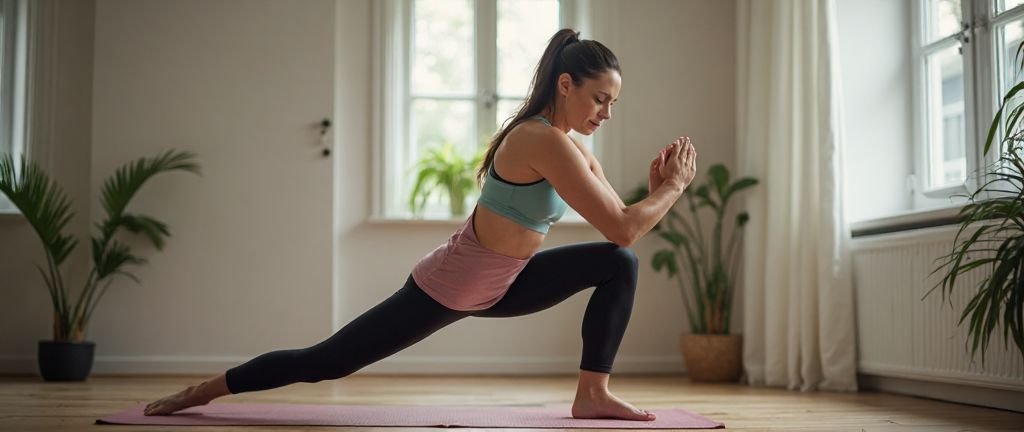
The rise of home workouts has fundamentally changed how people exercise, offering flexibility, convenience, and control over schedules. However, it has also introduced a new set of safety challenges that often go unnoticed until an injury occurs.
Many people begin home fitness routines with enthusiasm but sideline themselves within weeks by overlooking basic safety principles. Without the structure of a gym environment or professional supervision, it’s easy to push too hard, ignore form breakdown, or underestimate the impact of limited space and improper setup.
Research shows that approximately 70% of musculoskeletal injuries are caused by overuse, and a significant portion of these injuries occur during unsupervised exercise at home. The absence of external feedback can make it harder to recognize early warning signs such as joint discomfort, excessive fatigue, or compromised movement patterns.
Building a sustainable, injury-free home workout practice depends less on equipment or intensity and more on understanding foundational principles of safe training. Proper movement mechanics, gradual progression, adequate recovery, and environmental awareness are what allow strength, endurance, and fitness to improve over the long term ~ without unnecessary setbacks.
Setting Up Your Exercise Space the Right Way
The difference between a safe workout area and an accident waiting to happen often comes down to about fifteen minutes of preparation. I’m talking about really assessing your space with fresh eyes, not just shoving the couch back a few feet and calling it good.
Start by measuring your workout zone. You need enough clearance to extend your arms fully in all directions without hitting anything, plus extra space for movements that travel, like lunges, jumping jacks, or mountain climbers.
The absolute least is about six feet by six feet, but eight feet by eight feet gives you real freedom to move without constantly adjusting your position or worrying about clipping furniture.
Floor surface matters more than most people realize. Carpet might seem cushiony and safe, but it actually creates instability during many exercises and can torque your joints in unexpected ways.
If you’ve ever felt unusual soreness in your knees or ankles after carpet workouts, that’s your body telling you the surface doesn’t provide adequate support.
An exercise mat with nonslip padding on the bottom becomes essential here. You need this for comfort, but more importantly, it prevents the mat from sliding during landing impacts or quick directional changes.
The sliding mat problem is seriously underestimated. When you’re mid-jump and your landing surface shifts unexpectedly, your body makes rapid compensatory movements that can strain muscles or twist joints.
Those micro-adjustments add up over time, creating chronic issues that seem to appear out of nowhere.
Clear everything that could become a hazard. This means toys, pet beds, loose rugs, electrical cords, water bottles, phones, anything you could trip over, step on, or accidentally kick during a workout.
Pets need to be in another room with the door closed. I know your dog wants to join, but a well-meaning animal darting under your feet during a squat is a recipe for disaster.
Lighting deserves attention too. You need to see clearly to maintain proper form and avoid obstacles, but harsh overhead lighting can create glare if you’re using screens for workout videos.
Natural light works beautifully when available.
Otherwise position lamps to illuminate your space evenly without creating shadows that might hide potential hazards.
Choosing the Right Footwear and Clothing
The shoes you wear dramatically affect your stability, joint protection, and injury risk. Running shoes seem like the universal exercise choice, but they’re actually designed for forward motion with cushioned heels that can destabilize you during lateral movements or heavy lifting.
For high-intensity interval training or strength training, you need shoes with lateral support.
Cross-trainers or weightlifting shoes provide a stable base.
I’m not talking about spending hundreds of dollars on specialized equipment. Match your footwear to your activity.
The wrong shoes create compensation patterns throughout your kinetic chain. When your feet aren’t properly supported, your ankles adjust, which affects your knees, which impacts your hips, which alters your spine position.
Everything connects, and it all starts with what’s on your feet.
For yoga, bare feet give you the grip and sensory feedback you need. Your toes can spread and grip the mat, providing stability that socks would compromise. Pilates can work with bare feet too, though specialized pilates socks with grip pads offer advantages for certain exercises by preventing sliding while still allowing foot articulation.
Clothing choices affect your form more than you might think. Restrictive jeans or tight dress pants limit your range of motion, forcing you to change exercises in ways that reduce effectiveness and potentially increase injury risk.
Loose, comfortable clothing that moves with you allows full expression of each movement pattern.
You need to be able to raise your arms overhead completely, squat to full depth, and rotate your torso without fabric bunching or restricting you.
That said, excessively baggy clothing presents its own problems. It can get caught on equipment, obscure your view of your body position, or create tripping hazards.
The sweet spot is fitted enough to stay in place and let you see your alignment, but loose enough to allow finish freedom of movement.
Warming Up Properly Before Exercise
Your warm-up protocol should match your workout type and intensity. The goal is progressively increasing your heart rate, warming your muscles, lubricating your joints, and preparing your nervous system for the movement patterns ahead.
Skipping this phase doesn’t just increase injury risk, it actually reduces your performance during the workout itself.
For cardiovascular exercise, start with several minutes of brisk walking or marching in place with arm swings. Aim for about 40 seconds of marching, rest briefly, then repeat.
Gradually increase the intensity until you’re moving at about 50-60% of your planned workout intensity.
A useful indicator that you’re adequately warmed up is breaking a light sweat by the end of your warm-up period. That sweat signals that your core temperature has risen and your body has shifted into exercise mode.
Before calisthenics or weightlifting, dynamic movements work better than static stretching. Perform 10 repetitions each of modified pushups, high knee lifts, and bodyweight squats.
These movements mirror the patterns you’ll use in your workout while progressively loading your muscles and joints.
Add arm circles, leg swings, and torso rotations to mobilize all the joints you’ll be using.
The warm-up shouldn’t feel exhausting, but it shouldn’t be so easy that nothing changes physiologically. You’re essentially sending a message to your body that you’re about to work hard.
Your cardiovascular system responds by increasing blood flow to working muscles, your nervous system enhances muscle fiber recruitment, and your connective tissues become more pliable and resistant to injury.
Mastering Proper Form and Technique
Form breaks down when fatigue sets in, when you’re distracted, or when you don’t actually know what fix form looks like. Using a mirror to watch your alignment during exercises provides immediate feedback that helps you self-correct before poor patterns become ingrained. Position the mirror so you can see your full body from the side and front, depending on the exercise.
If you don’t have a suitable mirror setup, filming yourself works remarkably well. Set up your phone camera to capture your full body, record a few sets of each exercise, then review the footage.
You’ll spot issues you couldn’t feel in the moment.
Knees caving inward during squats, back rounding during deadlifts, shoulders hunching during presses, hips sagging during planks.
The challenge with learning form from videos is that you’re seeing someone else’s body performing the movement, then trying to copy it without external feedback about whether you’re succeeding. Rely on certified instructors, online classes from established fitness studios, or reputable health resources rather than random internet personalities.
Credentials matter because proper exercise mechanics are based on biomechanics and anatomy, not just what looks impressive.
Focus on executing exercises well rather than quickly or with high repetition counts. Practice slowly until you’re confident in your positioning.
Slow movement actually increases time under tension and requires more control, making it more challenging than fast reps while simultaneously reducing momentum-related injuries.
Common form mistakes in home workouts often stem from exercising in cramped spaces that restrict range of motion. If you can’t finish the full movement pattern properly, you’re creating improper motor patterns that your nervous system will memorize.
Modify the exercise to fit your space rather than performing a compromised version of the intended movement.
Another frequent issue is failing to maintain neutral spine position. Your spine should maintain its natural curves during most exercises, not excessively arched, not rounded. This neutral position distributes forces evenly across your vertebrae and engages your core stabilizers effectively.
When your spine position deviates significantly, injury risk increases and core engagement decreases.
Progressing Intensity at the Right Pace
Online workout programs are designed for the general population, which means they’re not designed for you specifically. Your fitness level, injury history, recovery capacity, and biomechanical factors are unique.
Customizing intensity to your actual capabilities is smart training.
Don’t push too hard, especially when starting out or returning after a break. The enthusiasm of a new routine can override your body’s very real limitations.
Your cardiovascular system adapts relatively quickly to training, but your connective tissues adapt much more slowly.
Tendons, ligaments, and cartilage need time. You might feel capable of intense daily workouts because your heart and lungs aren’t limiting you, but your joints and connective tissues need more recovery time.
If a published workout suggests certain rest periods or break frequencies, treat those as minimums. Take more breaks if needed or extend rest periods.
The workout will still be effective, possibly more so because you’ll maintain better form throughout instead of deteriorating into sloppy movement patterns as fatigue accumulates.
Avoid repeating identical routines or exercises on consecutive days. Your body adapts to training stress during recovery, not during the workout itself.
When you train the same muscles intensely without adequate recovery, you’re accumulating damage faster than your body can repair it.
Mix up your weekly schedule with different focuses. Upper body one day, lower body the next, cardiovascular work another day.
This approach allows specific muscle groups to recover while you continue training other systems.
Research consistently shows that 70% of musculoskeletal injuries result from overuse. That percentage should really make you pause and think.
The majority of training injuries aren’t from traumatic accidents.
They’re from doing too much, too often, without adequate recovery. Your body signals when you need to slow down through persistent soreness, decreased performance, mood changes, sleep disruption, and elevated resting heart rate.
Pay attention to these signals.
Cooling Down and Recovery Work
The cool-down phase facilitates your transition from high-intensity work back to resting state. Your heart rate needs to decrease gradually rather than abruptly.
Walk at a progressively slower pace until your heart rate returns close to normal.
You should be able to carry on a conversation comfortably without gasping for air.
After cardiovascular normalization, perform static stretches held for 20-30 seconds without bouncing. Static stretching during your warm-up can actually decrease power output and increase injury risk, but post-workout static stretching improves flexibility and helps reduce muscle tension.
Target all the major muscle groups you used during your workout, holding each stretch in a position of mild tension, never pain.
Don’t bounce during stretches. Ballistic stretching triggers the stretch reflex, causing the muscle to contract protectively rather than lengthen.
Smooth, sustained stretches allow the muscle spindles to adapt and the muscle fibers to elongate safely.
Breathe deeply during each stretch, consciously relaxing into the position rather than forcing it.
If you’re engaging in moderate to high-intensity exercise, take at least one or two finish rest days weekly. Rest days don’t mean lying on the couch all day.
Low-intensity activities like walking, gentle mobility work, stretching, and injury-prevention exercises are excellent for active recovery.
These activities promote blood flow and tissue healing without creating extra training stress.
Preventing Specific Lower Body Injuries
Research shows that incorporating targeted lower body injury prevention exercises significantly reduces injury risk. Studies of soccer players found that implementing strength and balance training exercises reduced ankle injury rates by more than one-third.
These exercises don’t need equipment or much time, but their impact on injury prevention is substantial.
Ankle Stability
Single leg balance exercises teach effective stabilization on one foot and can be incorporated into daily routines. Stand on one foot for 30-60 seconds, maintaining level hips and avoiding excessive wobbling.
Once that becomes easy, close your eyes to remove visual feedback, forcing your proprioceptive system to work harder.
Progress further by standing on an unstable surface like a pillow or balance pad. These variations progressively challenge the small stabilizing muscles around your ankle joint.
Your ankles absorb tremendous forces during jumping, running, and quick direction changes.
When ankle stabilizers are weak, your joint moves excessively, increasing ligament strain and setting you up for sprains. Strong ankle stabilizers also improve performance.
The more stable your base, the more effectively you can generate force through the ground.
Knee Health
The Journal of Orthopaedic & Sports Physical Therapy recommends dynamic flexibility training as the primary means of knee injury prevention. Leg swings improve quadriceps and hamstring flexibility while teaching your nervous system to control your leg through its full range of motion.
Stand next to a wall for balance, swing one leg forward and back in a controlled manner for 10-15 repetitions, then swing it side to side across your body.
Knee injuries often result from muscular imbalances or improper tracking of the kneecap during movement. When your quadriceps are tight or your hamstrings are weak, forces don’t distribute evenly across your knee joint.
Dynamic flexibility work addresses tightness while movement control exercises teach proper tracking patterns.
Hip and Core Strength
Clamshells target the glute medius, a critical hip stabilizer that prevents excessive inward rotation of your thigh. Lie on your side with knees bent, feet together, then lift your top knee while keeping your feet in contact.
This seemingly simple exercise activates muscles that are chronically weak in most people, particularly those who sit for extended periods.
Weak glute medius muscles are linked to low back pain, knee pain, and even ankle problems. When your hip doesn’t stabilize properly during single leg stance, which occurs with every step you take, forces transfer incorrectly through your kinetic chain, creating problems upstream and downstream from the hip.
Glute bridges train hip extension and core stability while potentially improving posture. Lie on your back with knees bent and feet flat, then lift your hips until your body forms a straight line from shoulders to knees.
Hold briefly at the top, squeezing your glutes, then lower with control.
This exercise counteracts the hip flexor tightness and glute inhibition that develops from prolonged sitting.
Recognizing and Responding to Pain Signals
Pay attention to pain signals because they’re your body’s communication system telling you something needs to change. Muscle tension and aches are normal responses to training stress.
That’s the discomfort of challenging your muscles beyond their current capacity.
Sharp pain or joint aches mean you should stop immediately. These pains signal tissue damage or joint dysfunction that will worsen if you continue.
Learning to distinguish between productive training discomfort and warning signs takes practice. Productive discomfort typically feels like burning or fatigue in the muscle belly, improves within 48 hours, and doesn’t inhibit your normal movement patterns.
Warning pain tends to be sharp or stabbing, locates in joints rather than muscles, persists beyond 48 hours, or changes how you move even when you’re not exercising.
If you’re experiencing unusual soreness or discomfort, pause and assess before continuing. Ask yourself whether this is in a muscle or a joint.
Did it come on gradually or suddenly?
Does it limit your range of motion? Is it sharp or dull?
Your answers guide your response.
Muscle soreness might just need lighter activity and more recovery, while joint pain requires stopping the aggravating activity and possibly seeking professional assessment.
Stay present and focused during your workout to maintain proper form and avoid distraction-related injuries. When your mind wanders, your form deteriorates.
You might unconsciously shift your weight improperly, fail to engage stabilizing muscles, or lose balance in ways that strain tissues unnecessarily.
Treating exercise as a mindfulness practice, fully attending to the sensations and positions of your body, improves both safety and effectiveness.
Equipment Safety and Maintenance
If you’re using exercise equipment like resistance bands, dumbbells, or machines, confirm everything is in good working condition. Resistance bands develop small tears over time that can cause catastrophic failure mid-exercise.
Inspect bands before each use, checking for any signs of wear, discoloration, or brittleness.
Replace bands at the first sign of degradation.
Dumbbells need secure collars if they use removable weight plates. A plate sliding off mid-rep throws off your balance dramatically and can cause the weight to drop on your foot or other body part.
Twist-lock collars are more secure than spring clips for home use.
Machines like treadmills, ellipticals, or stationary bikes need regular inspection. Check that belts aren’t fraying, pedals are secure, resistance mechanisms work smoothly, and electronic displays function properly.
Verify all settings for your body, including seat height and handlebar position.
Improper positioning on cardio equipment creates compensatory movement patterns that can strain your back, knees, or hips over time.
Read equipment instructions before beginning. Manufacturers include safety information for good reason.
Their testing revealed potential hazards and proper usage protocols that prevent those hazards.
This step takes ten minutes and can prevent serious injuries.
Frequently Asked Questions
What type of shoes should I wear for home workouts?
Cross-training shoes with lateral support work best for most home workouts, especially strength training and high-intensity interval training. Running shoes are designed for forward motion and can destabilize you during lateral movements.
For yoga and pilates, bare feet or grip socks provide better stability and sensory feedback than regular athletic shoes.
How long should I warm up before exercising at home?
Warm up for at least 5-10 minutes before moderate to intense exercise. You should break a light sweat by the end of your warm-up, which signals your core temperature has risen and your body is ready for work.
Dynamic movements like arm circles, leg swings, and bodyweight squats work better than static stretching before exercise.
Can I do high-intensity workouts on carpet?
Carpet creates instability during many exercises and can torque your joints in unexpected ways. Use an exercise mat with nonslip padding on top of carpet to provide a stable surface.
The mat prevents your feet from sinking unevenly into the carpet and gives you a more solid base for jumping, lunging, and balance work.
How do I know if I’m pushing too hard during home workouts?
Warning signs include sharp or stabbing pain, especially in joints, persistent soreness lasting more than 48 hours, decreased performance, mood changes, sleep disruption, and elevated resting heart rate. Muscle fatigue and burning during exercise are normal, but joint pain or sharp sensations mean you should stop immediately.
Is it safe to work out at home without a trainer?
Yes, but you need to take responsibility for learning proper form and listening to your body. Use mirrors or film yourself to check your technique, follow certified instructors through online platforms, and start with lighter intensity while you build foundational strength and movement patterns.
Progress gradually and take adequate rest days.
How much space do I really need for home workouts?
You need enough clearance to extend your arms fully in all directions without hitting anything, plus room for traveling movements. The least is about six feet by six feet, but eight feet by eight feet is better.
Clear all furniture, toys, pets, and tripping hazards from your workout zone before starting.
Should I take rest days when working out at home?
Yes, take at least one or two finish rest days weekly if you’re doing moderate to high-intensity exercise. Your body adapts to training during recovery, not during the workout itself.
Rest days can include light walking, gentle stretching, or mobility work, but avoid training the same muscle groups intensely on consecutive days.
What should I do if I feel pain during a home workout?
Stop the exercise immediately if you feel sharp or joint pain. Distinguish between productive muscle fatigue and warning pain. If it’s in a muscle and feels like burning or fatigue, you might just need a break. If it’s sharp, in a joint, or changes how you move, stop the activity and assess whether you need professional evaluation.
Key Takeaways
Clear your workout space completely, eliminating all potential hazards and ensuring adequate room for full range of motion in all directions. Use an exercise mat with nonslip padding on hard floors, and consider switching from carpet to a mat if you experience unusual joint soreness.
Choose exercise-specific footwear suitable for your activity. You need lateral support shoes for strength training and HIIT, not running shoes.
Wear loose, comfortable clothing that doesn’t restrict your movement or obscure your view of your body position.
Warm up properly before every workout with dynamic movements that mirror your planned exercises, continuing until you break a light sweat. Cool down by gradually reducing intensity until your heart rate normalizes, then perform static stretches held for 20-30 seconds.
Use mirrors or video recording to check your form regularly, focusing on executing exercises well rather than quickly. Seek instruction from certified sources rather than random internet content, and practice movements slowly until proper positioning becomes automatic.
Customize workout intensity to your actual fitness level rather than blindly following general programs. Take extra rest periods when needed, avoid training the same muscles intensely on consecutive days, and include at least one or two finish rest days weekly.
Incorporate ankle stability, knee health, and hip strength exercises into your regular routine to prevent common lower body injuries before they develop. Single leg balance work, leg swings, clamshells, and glute bridges need minimal time but substantially reduce injury risk.
Distinguish between productive training discomfort and warning pain signals. Muscle fatigue and burning are normal.
Sharp joint pain requires immediate cessation of the aggravating activity.
Inspect all exercise equipment before use, checking resistance bands for wear, verifying dumbbell collars are secure, and ensuring machines are properly adjusted for your body dimensions and functioning correctly.
Disclaimer
The information contained in this post is for general information purposes only. The information is provided by Safety Tips for Working Out at Home and while we endeavor to keep the information up to date and correct, we make no representations or warranties of any kind, express or implied, about the completeness, accuracy, reliability, suitability or availability with respect to the website or the information, products, services, or related graphics contained on the post for any purpose.